

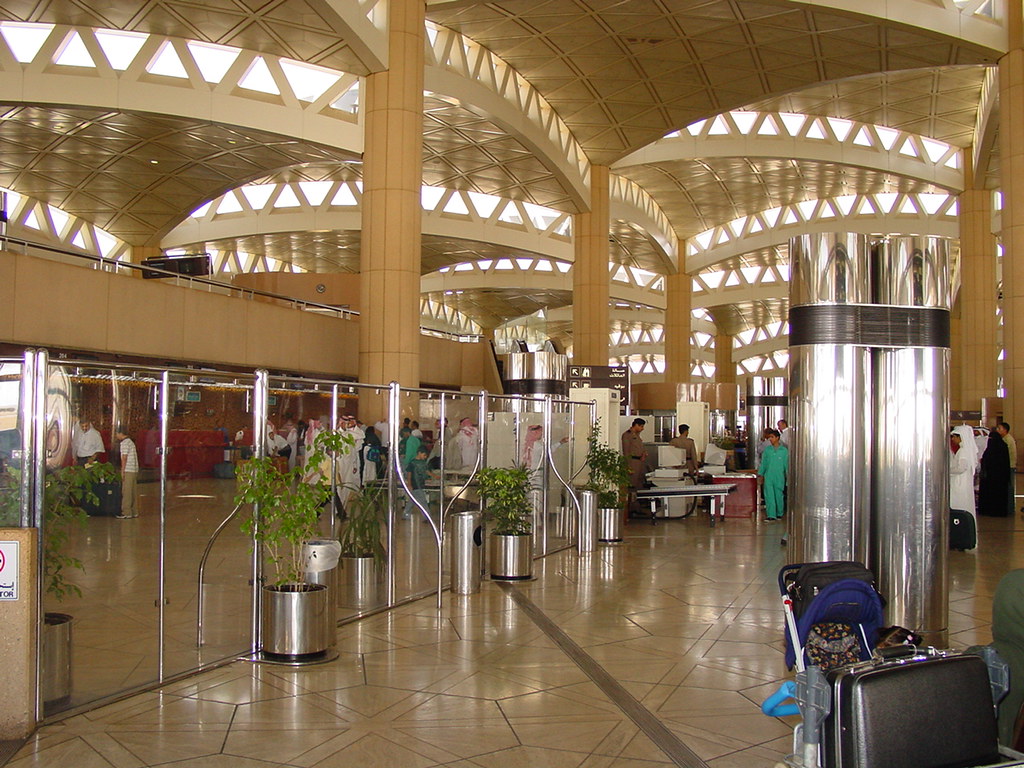

Quick Summary: Saudi Arabia Reopens Riyadh Airport Amid Houthi Threats
- Yemen’s Houthis renewed their warning against using Riyadh airport — they targeted airlines, travelers, and airport workers.
- Saudi Arabia reopened Riyadh airport despite the threat — this move questions the credibility of Saudi defenses.
- Recent Houthi attacks killed 17 and injured over 330 — these incidents highlight vulnerabilities in Saudi air-defense systems.
- Saudi Arabia faces pressure to secure its infrastructure — the kingdom’s stability image is at stake amid ongoing attacks.
- International carriers are assessing the risk — their decision will impact Riyadh’s status as a major transport hub.
Source: Open external resource
Source: Read original article
The renewed warning from Yemen’s Houthis against using Riyadh airport is a stark reminder of the ongoing conflict’s reach and intensity. Despite the threat, Saudi Arabia has reopened the airport, raising questions about its ability to protect critical infrastructure.
In recent weeks, the Houthis have launched a series of attacks on Saudi airports, resulting in significant casualties. These actions have exposed gaps in Saudi Arabia’s air-defense systems, leading to increased scrutiny from international observers.
As the situation unfolds, the focus remains on whether Saudi Arabia can assure airlines, insurers, and foreign governments of the airport’s safety. The decision of international carriers to continue operations in Riyadh will be a litmus test for the kingdom’s stability and security measures.
Ultimately, the broader implications of these developments extend beyond immediate flight resumption. They underscore the geopolitical tensions in the region and the challenges Saudi Arabia faces in maintaining its image as a stable and secure nation.
Houthi military spokesperson Yahya Saree said in reporting published today by The Straits Times that the group targeted King Khalid International Airport in Riyadh, an Aramco facility in Yanbu, the Rabigh refinery, crude pumping stations and the East-West Pipeline. Separate reporting says the Houthis have now explicitly renewed their warning that airlines, staff and travelers should avoid the airport because they still regard it as a military objective.
Reuters-derived reporting carried by Al-Monitor said the Houthis issued their warning on Oct. In earlier statements, the movement warned “airlines, travellers and airport workers” to stay away from Saudi airports, a threat aimed not just at Saudi officials but at international carriers deciding whether to resume service.
A particularly damaging revelation in the past week was Reuters reporting, carried by The Straits Times, that Saudi Arabia’s public warning system “stayed silent before deadly airport attacks,” even though Riyadh had been attacked about a dozen times in October before public alerts were finally issued on Oct. Saudi Civil Defense briefly issued alerts on Saturday for Taif and Yanbu and also for Mecca and Jeddah, according to The Straits Times, a sign that the threat environment is no longer being framed as limited to one airport or one city.
21, Saudi authorities announced that one person had been killed in an attack on Dammam airport. 25, Saudi Arabia had reopened Riyadh airport despite the renewed Houthi warning.
The immediate practical decision is flight resumption at Riyadh, but the broader next step is military and political: more Saudi and allied defensive deployments, more possible retaliatory strikes on Houthi territory, and more scrutiny of why existing warning and air-defense systems failed to prevent mass casualties at a major civilian airport. The story to watch over the coming days is not just whether another missile is launched, but whether international carriers keep serving Riyadh after the Houthis’ renewed warning, because that will determine whether the kingdom can restore normal operations or whether the rebels have succeeded in imposing a de facto security veto over one of the Gulf’s most important transport hubs.
In earlier statements, the movement warned “airlines, travellers and airport workers” to stay away from Saudi airports, a threat aimed not just at Saudi officials but at international carriers deciding whether to resume service. 21, Saudi authorities announced that one person had been killed in an attack on Dammam airport.
25, Saudi Arabia had reopened Riyadh airport despite the renewed Houthi warning. The immediate practical decision is flight resumption at Riyadh, but the broader next step is military and political: more Saudi and allied defensive deployments, more possible retaliatory strikes on Houthi territory, and more scrutiny of why existing warning and air-defense systems failed to prevent mass casualties at a major civilian airport.
Saudi Arabia reopened Riyadh airport despite the threat — this move questions the credibility of Saudi defenses. International carriers are assessing the risk — their decision will impact Riyadh’s status as a major transport hub.
The scale and speed of this development has caught many observers off guard. Each new update adds another dimension to a story that is still unfolding, and the full picture will only become clear as more verified details emerge from the people and institutions directly involved.
Analysts who have tracked this issue closely say the current moment represents a genuine turning point. The decisions made in the coming weeks are expected to set the direction for months ahead, with ripple effects likely to extend well beyond the immediate actors in the story.
For those directly affected, the practical impact is already visible. People navigating this fast-changing situation are dealing with real consequences while new information continues to reshape what is known and what remains open to interpretation.
Historical parallels offer some context, though experts caution against drawing too close a comparison. Similar situations have played out before, but the specific combination of pressures, personalities, and timing here makes this moment distinct in ways that matter for how it ultimately resolves.
The political and economic dimensions of this story are deeply intertwined. What appears as a single event on the surface is in practice the convergence of multiple pressures that have been building quietly over a longer period than most public reporting has captured.