


Quick Summary: Low Approval Ratings Challenge Trump as Midterms Approach
- Donald Trump told supporters that non-voters would “go to hell,” sparking controversy over election rhetoric.
- At a Dallas convention, Trump made supporters pledge to “cheat like hell,” escalating political tensions.
- Trump’s $5,000-per-adult proposal ties Republican control of Congress to financial incentives.
- An appeals court blocked Trump’s mail-voting order, complicating his election strategy.
- Trump’s approval ratings are low, with Republicans facing tough races in battleground states.
Source: Open external resource
Source: Read original article
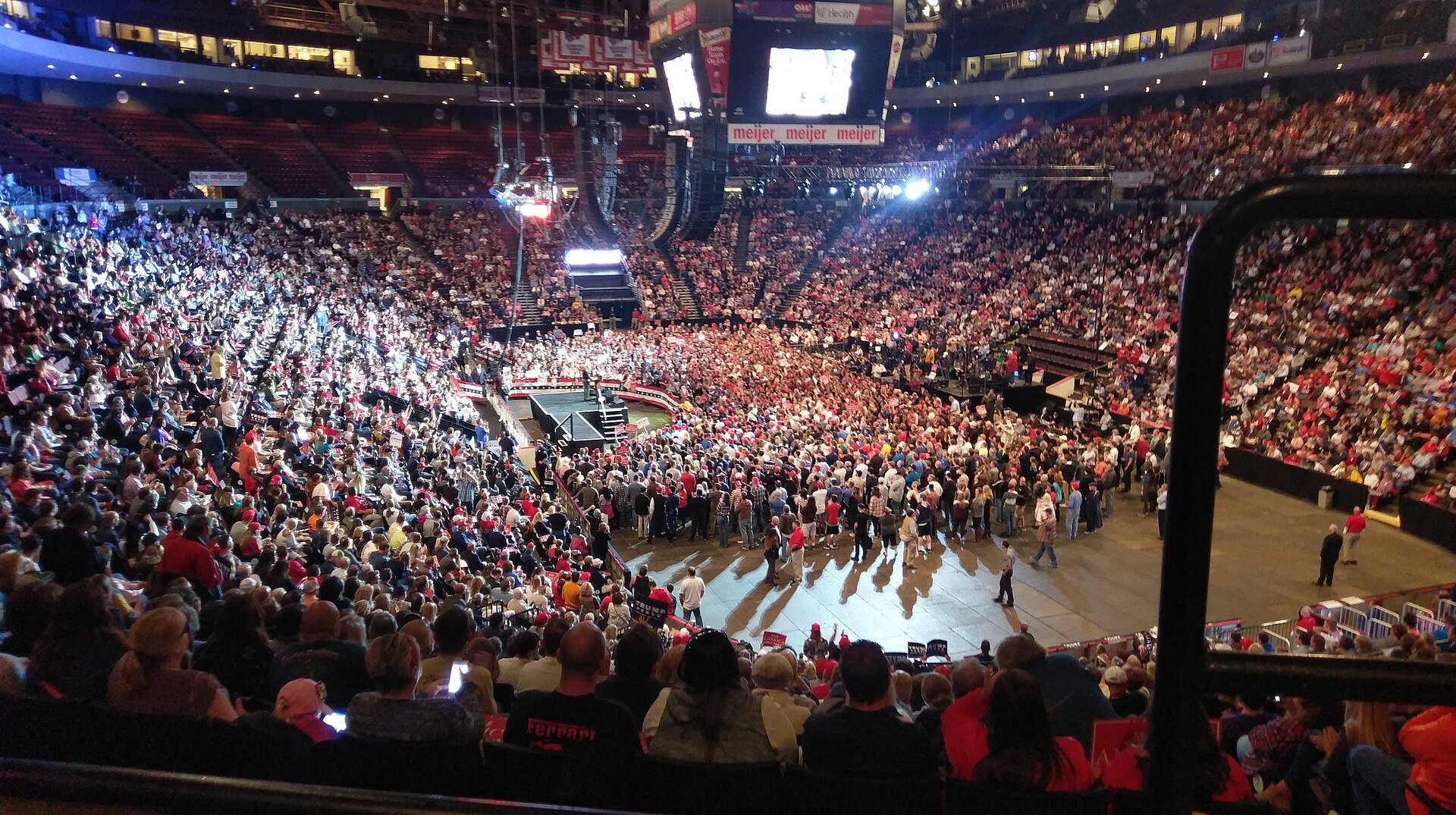
Donald Trump has never been one to shy away from controversy, but his latest rhetoric at the Dallas midterm convention has taken things to a new level. Telling supporters that if they don’t vote, they’ll “go to hell,” Trump has ignited a fresh firestorm in the already heated political climate.
In a theatrical display, Trump asked his audience to raise their hands and pledge to “cheat like hell,” a move that has raised eyebrows and questions about the nature of political discourse today. This dramatic moment was part of a broader strategy to energize his base and frame the midterms as a personal referendum.
Adding to the spectacle, Trump promised a $5,000 payment to every American adult if Republicans take control of Congress, a proposal that would cost over $1 trillion and require significant legislative approval. This promise, however, is seen more as an electoral tactic than a feasible policy plan.
Meanwhile, legal challenges continue to mount against Trump’s election strategies. An appeals court recently upheld a block on his executive order limiting mail voting, highlighting the ongoing legal battles that parallel his rhetoric.
As Republicans head into the final stretch before the midterms, they face the dual challenge of leveraging Trump’s influence while managing the controversies his statements generate. With Trump’s approval ratings in the low thirties, the stakes are high, and the outcome remains uncertain.
” Also on Thursday, AP reported, an appeals court kept the block on his mail-voting order in place, and Missouri election officials moved to use the 2022 congressional map after the Supreme Court struck down a Trump-backed map, underscoring how election administration and legal fights are moving in parallel with his rhetoric. On Wednesday, September 10, Trump used the convention to unveil the $5,000-per-adult proposal and frame Republican control of Congress as the condition for receiving it.
At the same time, AP reported Thursday that an appeals court upheld a block on Trump’s executive order limiting mail voting, a significant setback as he tries to make election rules themselves part of his closing midterm message. AP described the Dallas gathering as the closing day of the party’s two-day midterm convention meant to highlight Trump’s influence before the November 3, 2026 election.
Donald Trump’s most striking new escalation this week was not just telling supporters at the GOP’s Dallas midterm convention that “if you don’t vote, you go to hell,” but also making them raise their hands and repeat a loyalty-style pledge that included, “I’m going to try and cheat like hell,” in one of the most politically explosive moments of the 2026 midterm campaign. 11 transcript said he urged people to vote “whether they’re registered or not,” turning what might have been dismissed as a throwaway joke into a direct new controversy over election rhetoric.
What makes this especially newsworthy right now is that Trump delivered it while trying to nationalize the midterms around his own political survival and agenda, explicitly tying turnout to a promised $5,000 payment for every American adult if Republicans hold both chambers. The Post reported that Trump again accused Democrats of opposing his “Save America Act” because “they want to cheat,” but the bill, which would require proof of citizenship to register and photo ID at the polls, does not have enough Republican support to pass the Senate.
The Independent reported that Trump’s approval rating is sitting in the “mid-to-low thirties,” and that Republicans face difficult battleground races, including North Carolina, where GOP Senate nominee Michael Whatley is reportedly trailing by double digits in polls. The practical tests will be whether the fallout forces Republicans to clarify or distance themselves, whether courts continue checking Trump’s voting-rule agenda, and whether his convention promises — especially the $5,000 payment plan — survive scrutiny as an actual legislative proposal rather than a campaign gimmick.
An appeals court blocked Trump’s mail-voting order, complicating his election strategy. At the same time, AP reported Thursday that an appeals court upheld a block on Trump’s executive order limiting mail voting, a significant setback as he tries to make election rules themselves part of his closing midterm message.
The scale and speed of this development has caught many observers off guard. Each new update adds another dimension to a story that is still unfolding, and the full picture will only become clear as more verified details emerge from the people and institutions directly involved.
Analysts who have tracked this issue closely say the current moment represents a genuine turning point. The decisions made in the coming weeks are expected to set the direction for months ahead, with ripple effects likely to extend well beyond the immediate actors in the story.
For those directly affected, the practical impact is already visible. People navigating this fast-changing situation are dealing with real consequences while new information continues to reshape what is known and what remains open to interpretation.
Historical parallels offer some context, though experts caution against drawing too close a comparison. Similar situations have played out before, but the specific combination of pressures, personalities, and timing here makes this moment distinct in ways that matter for how it ultimately resolves.
The political and economic dimensions of this story are deeply intertwined. What appears as a single event on the surface is in practice the convergence of multiple pressures that have been building quietly over a longer period than most public reporting has captured.