

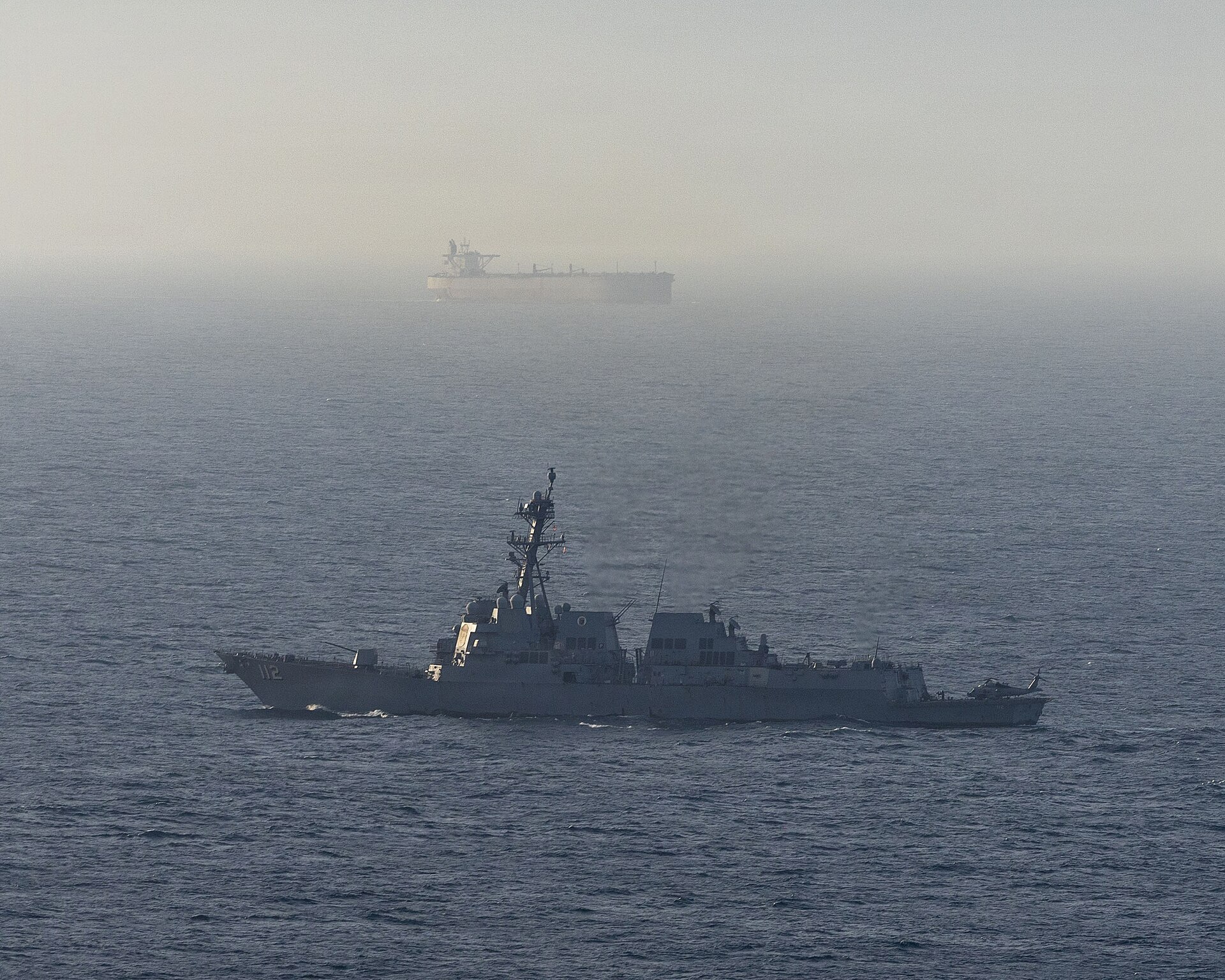

Quick Summary: US Strikes Iranian Launchers as Tensions Flare in Strait of Hormuz
- The US targeted Iranian rocket launchers on Larak Island on August 30, marking the first direct escalation in over a month.
- Iran retaliated by firing missiles and drones at two US air bases in Jordan, though no impacts were reported.
- The exchange follows the US observation of Iranian preparations to launch rockets with mines into the Strait of Hormuz.
- Oil prices surged with Brent crude rising 2.8% and US crude climbing 2.7% following the military actions.
- Diplomatic efforts by Oman and Qatar to restore maritime traffic are clashing with military tensions.
Source: Open external resource
Source: Read original article
In a dramatic turn of events, the United States and Iran have exchanged military strikes, ending a month-long pause in hostilities. On August 30, US forces targeted Iranian rocket launchers on Larak Island, a move prompted by concerns over Iranian activities in the Strait of Hormuz, a crucial global oil passage.
The Iranian response was swift. Missiles and drones were launched at US air bases in Jordan, though they were intercepted without causing damage. This tit-for-tat marks the first significant escalation between the two nations in over a month, raising alarms about the stability of the region.
This recent conflict underscores the fragile balance in the Strait of Hormuz, where military and economic interests collide. The US strike was a clear message against Iran’s perceived attempts to militarize this vital waterway. Meanwhile, diplomatic efforts by Oman and Qatar to ensure safe maritime passage are being overshadowed by rising military tensions.
The implications are vast, not just for US-Iran relations but for global oil markets as well. The immediate reaction saw a spike in oil prices, reflecting the market’s sensitivity to disruptions in the Strait. As the world watches, the question remains whether this is a contained incident or a precursor to a broader conflict.
The White House had said on Thursday, August 27, that there were no ongoing negotiations with Iran over the six-month war, even as Oman and Qatar were still involved in discussions tied to maritime access. side, Trump had warned just days earlier that “any ship or boat placing new mines will be immediately and systematically destroyed,” tying military action directly to shipping security.
That jump is especially notable because the latest flare-up comes as CENTCOM had only just completed clearing sea mines from international shipping routes in the strait last week, according to the administration’s account. official said American forces struck after observing Iranian personnel on Larak preparing to launch rockets with mines into the Strait of Hormuz, one of the world’s most critical energy chokepoints.
” Iranian missiles fired into Jordan were intercepted, and the same official said there were no reported impacts so far. completed what the KQ2/CNN report described as a “heavy wave of strikes” after an attempted attack on American military positions the day before.
strike on Iran in 32 days, a concrete sign that the Trump administration’s recent emphasis on economic pressure had not displaced the military option. ” That earlier cycle already showed how quickly local military incidents near Hormuz could spill across the region, and the August 30 exchange suggests those underlying dynamics never truly went away.
The KQ2/CNN report says Iran and Oman are still discussing a proposed arrangement to restore maritime traffic, with Qatar backing the talks, but those diplomatic efforts are colliding with hard-line military signaling from both sides. The central conflict now is no longer just retaliation for retaliation’s sake; it is a fight over who controls security and navigation in and around Hormuz.
Trump had warned just days earlier that “any ship or boat placing new mines will be immediately and systematically destroyed,” tying military action directly to shipping security. That jump is especially notable because the latest flare-up comes as CENTCOM had only just completed clearing sea mines from international shipping routes in the strait last week, according to the administration’s account.
strike on Iran in 32 days, a concrete sign that the Trump administration’s recent emphasis on economic pressure had not displaced the military option. The KQ2/CNN report says Iran and Oman are still discussing a proposed arrangement to restore maritime traffic, with Qatar backing the talks, but those diplomatic efforts are colliding with hard-line military signaling from both sides.
In a dramatic turn of events, the United States and Iran have exchanged military strikes, ending a month-long pause in hostilities. Meanwhile, diplomatic efforts by Oman and Qatar to ensure safe maritime passage are being overshadowed by rising military tensions.
The scale and speed of this development has caught many observers off guard. Each new update adds another dimension to a story that is still unfolding, and the full picture will only become clear as more verified details emerge from the people and institutions directly involved.
Analysts who have tracked this issue closely say the current moment represents a genuine turning point. The decisions made in the coming weeks are expected to set the direction for months ahead, with ripple effects likely to extend well beyond the immediate actors in the story.
For those directly affected, the practical impact is already visible. People navigating this fast-changing situation are dealing with real consequences while new information continues to reshape what is known and what remains open to interpretation.
Historical parallels offer some context, though experts caution against drawing too close a comparison. Similar situations have played out before, but the specific combination of pressures, personalities, and timing here makes this moment distinct in ways that matter for how it ultimately resolves.
The political and economic dimensions of this story are deeply intertwined. What appears as a single event on the surface is in practice the convergence of multiple pressures that have been building quietly over a longer period than most public reporting has captured.