

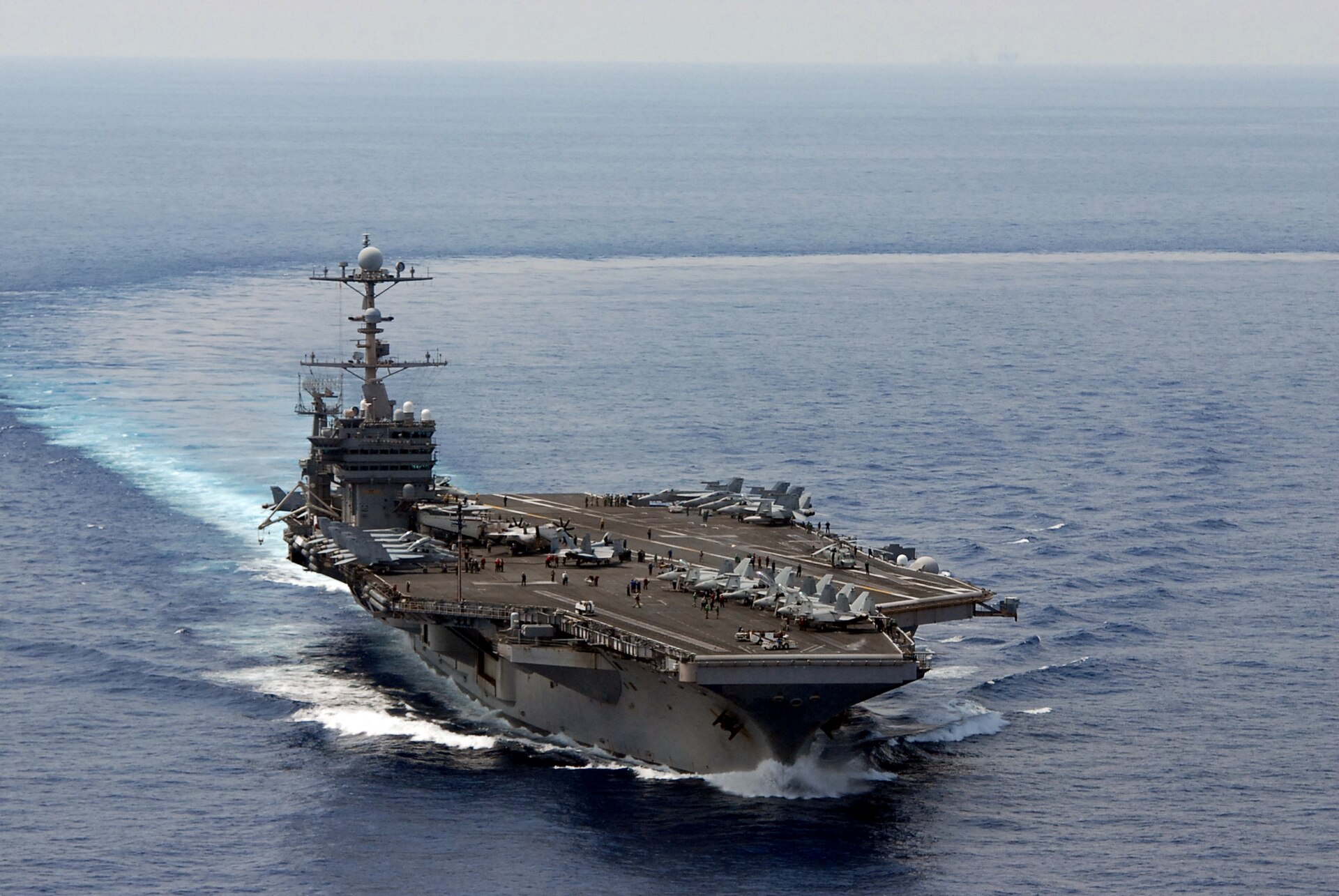

Quick Summary: Navy Faces Pressure as USS Lincolns Conditions Spark Outcry
- The USS George Washington is moving towards the Middle East to relieve the USS Abraham Lincoln, which has been at sea for over 260 days.
- Reports of mental-health crises and supply strains aboard the Lincoln have emerged, with multiple sailors attempting to go overboard.
- President Trump dismissed concerns about the crew’s welfare, turning the issue into a political controversy.
- Families of sailors have reported deteriorating conditions on the Lincoln, including poor food quality and broken facilities.
- The Navy’s decision to send a replacement carrier indicates pressure to address the crisis despite official denials.
Source: Open external resource
Source: Read original article
The USS Abraham Lincoln’s extended deployment has become a flashpoint of controversy, with the Navy sending the USS George Washington to relieve it amid reports of dire conditions. This move, confirmed on August 13, underscores the mounting pressure the Navy faces to address the situation.
The Lincoln has been at sea for an unprecedented duration, leading to reports of mental-health crises among the crew. Multiple sailors have attempted to go overboard, highlighting the strain on the crew. Despite this, President Trump has downplayed the concerns, suggesting the deployment length is justified by strategic needs.
Families of the sailors have painted a grim picture of life aboard the Lincoln, citing issues such as poor food, broken toilets, and moldy showers. These accounts starkly contrast with official denials, raising questions about the Navy’s handling of the situation.
The deployment of the George Washington, a carrier with its own history of quality-of-life issues, adds another layer of complexity to the story. It suggests that the Navy is taking steps to address the crisis, even if its public messaging has been less forthcoming.
As the situation unfolds, the focus will be on how quickly the George Washington can take over duties and whether the Navy will take further steps to address the welfare of its personnel.
That relief move became concrete on Thursday, August 13, when AP reported that a Navy official confirmed George Washington was already in the Strait of Malacca, putting it on a path into the Indian Ocean and toward the Middle East. The same report said a sailor aboard Lincoln went overboard in early August, was “quickly recovered,” treated by the ship’s medical department and transferred off ship for follow-on care.
Military-focused outlets, later amplified by AP, Axios and others, said multiple sailors had tried to go overboard during the extended deployment. President Donald Trump escalated the controversy on Friday, August 14, by dismissing the distress aboard the ship rather than calming it.
” Axios and AP both reported that his comments landed as lawmakers and relatives were already pressing for scrutiny of morale, food quality and mental-health support aboard the carrier. That contradiction is what gives the story its force: military leaders are projecting endurance, while families and some reporting from inside the carrier describe a force already stretched past a reasonable limit.
The sharpest revelation from this week’s reporting is the apparent gap between family accounts and official denials. One sailor’s wife told Military Times, as cited in follow-up reporting, that her husband had attempted to jump overboard and is now on medical hold, while another account described a sailor being in the water for about an hour before rescue.
Other reports described deteriorating food, broken toilets, moldy showers and deep exhaustion among a shipboard population of roughly 5,000 sailors and Marines. The biggest new turn in this story is that the USS George Washington is now physically moving toward the Middle East to relieve the USS Abraham Lincoln after a cascade of reports about mental-health crises, supply strain and a record-smashing deployment that has kept Lincoln at sea for more than 240 uninterrupted days and on overall deployment for more than 260 days.
USS George Washington heads to Middle East amid 'poor condition' reports – The Economic Times The USS George Washington is moving towards the Middle East to relieve the USS Abraham Lincoln, which has been at sea for over 260 days. This move, confirmed on August 13, underscores the mounting pressure the Navy faces to address the situation.
President Donald Trump escalated the controversy on Friday, August 14, by dismissing the distress aboard the ship rather than calming it. That contradiction is what gives the story its force: military leaders are projecting endurance, while families and some reporting from inside the carrier describe a force already stretched past a reasonable limit.
President Trump dismissed concerns about the crew’s welfare, turning the issue into a political controversy. The Navy’s decision to send a replacement carrier indicates pressure to address the crisis despite official denials.
Despite this, President Trump has downplayed the concerns, suggesting the deployment length is justified by strategic needs. These accounts starkly contrast with official denials, raising questions about the Navy’s handling of the situation.
The scale and speed of this development has caught many observers off guard. Each new update adds another dimension to a story that is still unfolding, and the full picture will only become clear as more verified details emerge from the people and institutions directly involved.
Analysts who have tracked this issue closely say the current moment represents a genuine turning point. The decisions made in the coming weeks are expected to set the direction for months ahead, with ripple effects likely to extend well beyond the immediate actors in the story.
For those directly affected, the practical impact is already visible. People navigating this fast-changing situation are dealing with real consequences while new information continues to reshape what is known and what remains open to interpretation.
Historical parallels offer some context, though experts caution against drawing too close a comparison. Similar situations have played out before, but the specific combination of pressures, personalities, and timing here makes this moment distinct in ways that matter for how it ultimately resolves.
The political and economic dimensions of this story are deeply intertwined. What appears as a single event on the surface is in practice the convergence of multiple pressures that have been building quietly over a longer period than most public reporting has captured.