

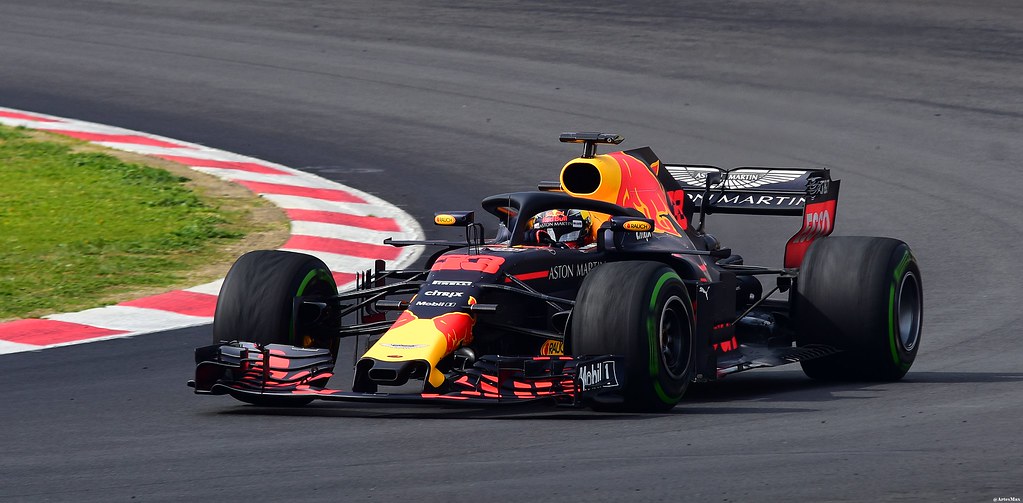

Quick Summary: Red Bulls Verstappen Secures Crucial Win in Malaysia
- Max Verstappen secured his first Formula 1 victory of the season on October 4, 2026, at the Bahrain Grand Prix in Malaysia, ending a significant winless streak.
- Chase Briscoe won the NASCAR race at Las Vegas Motor Speedway on October 4, leading 175 laps and earning 75 playoff points.
- Verstappen’s victory followed his first pole position of the year, marking a critical turnaround for Red Bull in the F1 season.
- Briscoe’s victory moved him to sixth in the NASCAR playoff standings, significantly boosting his championship prospects.
- Both victories were achieved under intense pressure, with Briscoe fending off Kyle Larson’s last-lap challenge.
Source: Open external resource
Source: Read original article
In a weekend filled with high-stakes drama, Max Verstappen and Chase Briscoe emerged as the heroes of their respective racing circuits. Verstappen’s victory at the Bahrain Grand Prix in Malaysia was not just a win but a statement, breaking a winless streak that had become a glaring issue for the Red Bull team this season.
Verstappen’s triumph was a testament to his resilience and strategic prowess. Starting from his first pole of the year, he managed to fend off fierce competition, reminding everyone why he remains a formidable force in Formula 1. This victory was crucial, especially after Verstappen had set a modest goal of winning at least one race to avoid a winless season.
Meanwhile, Chase Briscoe’s performance at the Las Vegas Motor Speedway was nothing short of spectacular. Leading a race-high 175 laps and securing maximum playoff points, Briscoe’s win was a game-changer in the NASCAR playoffs. His ability to hold off Kyle Larson’s aggressive last-lap push underscored his defensive skills and strategic acumen.
Both races highlighted the intense pressure and competition inherent in motorsports. Verstappen’s win came amid frustrations over F1’s operational issues, while Briscoe’s victory reshaped the NASCAR playoff landscape. As the season progresses, these wins could prove pivotal in the championship narratives for both drivers.
Just three days before the race, on October 1, Verstappen had openly set himself the modest target of winning “one race” before season’s end to avoid his first winless F1 season since 2015, according to Associated Press reporting aggregated by The Washington Post and FOX Sports. On October 4, he converted that into his first 2026 victory in F1, while Briscoe on the same date won at Las Vegas with a last-lap defensive stand.
On the F1 side, the most consequential detail is how Verstappen did it: he won the Bahrain Grand Prix in Malaysia on October 4, 2026, after starting from his first pole of the year, and that victory ended what had become an increasingly glaring winless stretch. ” The central tension in the latest 2026 reporting is similar: Verstappen is no longer coasting through the field but fighting under sustained pressure, and every win now carries championship implications because Mercedes driver Kimi Antonelli had entered the weekend as the standings leader while George Russell’s retirement reportedly altered the points picture.
On October 4 at Las Vegas Motor Speedway, Briscoe held off Kyle Larson on the last lap, led a race-high 175 laps, swept all three stages, and earned the maximum 75 playoff points, according to AP reporting carried by The Washington Post. Briscoe said, “I saw Kyle charging hard behind me on those final laps,” and added, “I just tried to stick to my defensive marks, stay smooth, and protect the bottom.
” That quote captures the actual debate now driving the NASCAR side of the story: whether Larson’s edge is durable, or whether Briscoe’s win signals a real late-playoff threat. 4-second margin over Lando Norris at Suzuka, with Oscar Piastri another six-tenths back.
The controversy around the F1 event was not just sporting but procedural. That gave the race an unusual backdrop: Verstappen arrived under frustration over F1’s operational failures, then left with his first win of the year.
Verstappen’s victory followed his first pole position of the year, marking a critical turnaround for Red Bull in the F1 season. Starting from his first pole of the year, he managed to fend off fierce competition, reminding everyone why he remains a formidable force in Formula 1.
Leading a race-high 175 laps and securing maximum playoff points, Briscoe’s win was a game-changer in the NASCAR playoffs. Verstappen’s win came amid frustrations over F1’s operational issues, while Briscoe’s victory reshaped the NASCAR playoff landscape.
The scale and speed of this development has caught many observers off guard. Each new update adds another dimension to a story that is still unfolding, and the full picture will only become clear as more verified details emerge from the people and institutions directly involved.
Analysts who have tracked this issue closely say the current moment represents a genuine turning point. The decisions made in the coming weeks are expected to set the direction for months ahead, with ripple effects likely to extend well beyond the immediate actors in the story.
For those directly affected, the practical impact is already visible. People navigating this fast-changing situation are dealing with real consequences while new information continues to reshape what is known and what remains open to interpretation.
Historical parallels offer some context, though experts caution against drawing too close a comparison. Similar situations have played out before, but the specific combination of pressures, personalities, and timing here makes this moment distinct in ways that matter for how it ultimately resolves.
The political and economic dimensions of this story are deeply intertwined. What appears as a single event on the surface is in practice the convergence of multiple pressures that have been building quietly over a longer period than most public reporting has captured.