

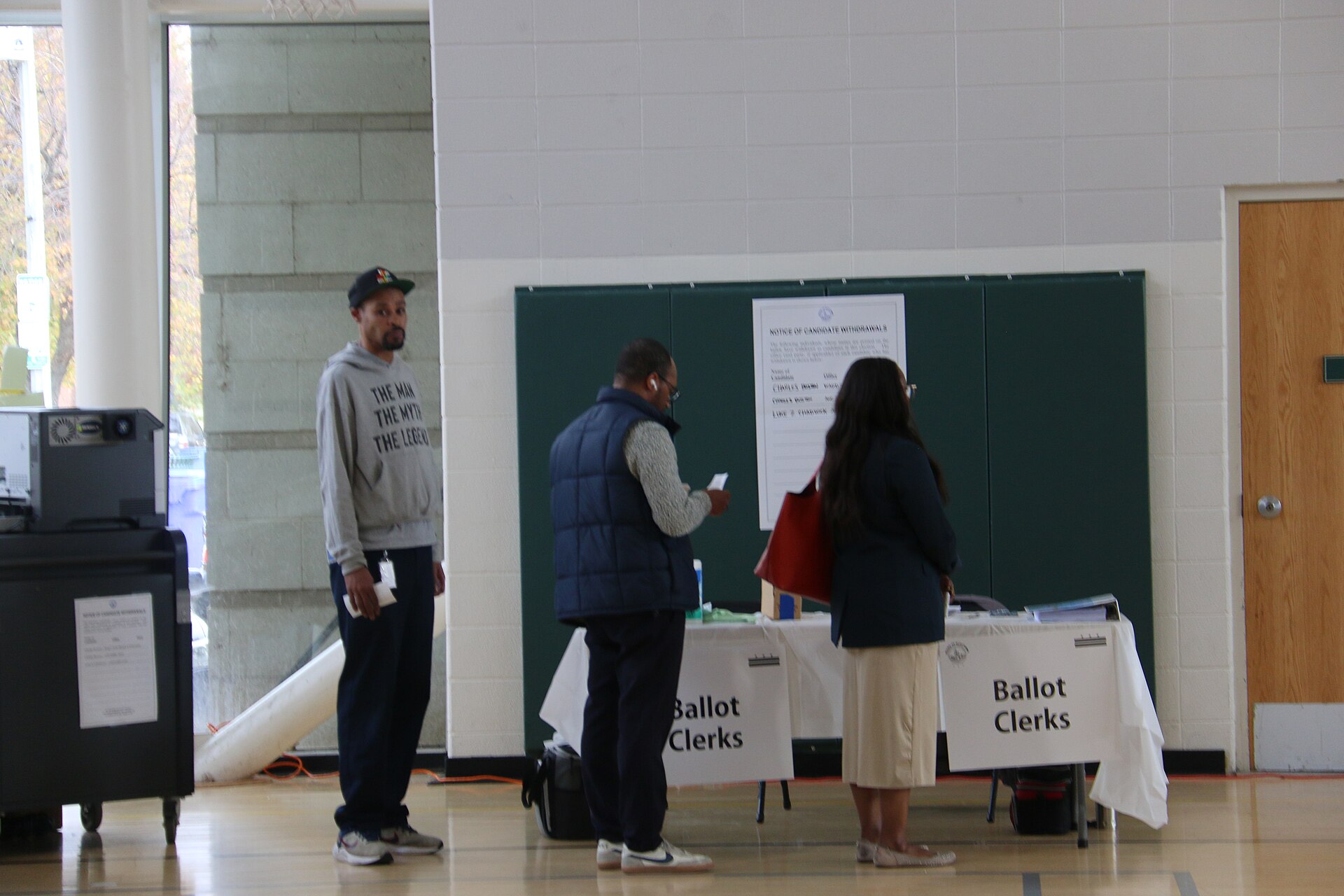

Quick Summary: Utah Election Overseer Defends Mail Voting Against Trumps Criticism
- Deidre Henderson, Utah’s election overseer, stated over 90% of voters use mail voting, countering Trump’s claims.
- Utah’s court-ordered map creates a Democratic-friendly district, challenging the GOP’s House plans.
- New York’s primary sees a $7 million anti-Alex Bores campaign, spotlighting AI regulation battles.
- Maryland’s primaries could be the last under current maps as Democrats eye redistricting changes.
- Mayor Zohran Mamdani’s influence tested in New York’s Democratic primary endorsements.
Source: Open external resource
Source: Read original article
As Tuesday’s primaries unfold in Maryland, Utah, and New York, the stakes are higher than ever, with each state facing unique political battles that could reshape the electoral landscape. Voting is at the center of this development.
In Utah, the battle centers around a newly court-ordered map that introduces a Democratic-friendly district in Salt Lake City, disrupting the GOP’s traditional stronghold. This change follows a court decision rebuking the 2021 map for partisan gerrymandering. Meanwhile, Utah’s mail voting system faces scrutiny as former President Trump criticizes the practice, despite over 90% of voters using it.
New York’s primary has turned into a high-stakes confrontation over AI regulation, with Assemblyman Alex Bores facing a $7 million campaign against him funded by AI industry supporters. This race has become a litmus test for the influence of tech money in politics and the power of progressive endorsements, notably from Mayor Zohran Mamdani.
Maryland’s primaries occur under the shadow of potential redistricting changes, as Democrats consider strategies to eliminate the state’s only Republican congressional seat. This possibility adds a layer of uncertainty to the current contests, which could be the last under existing boundaries.
These primaries are not just about selecting nominees; they are a precursor to a broader national debate on AI influence, redistricting fairness, and voting methods. The outcomes will signal how these issues might shape the political landscape leading up to the 2026 general elections.
Deidre Henderson, the Republican official who oversees elections, pushed back with a hard statistic, saying more than 90% of Utah voters choose to vote by mail. The court struck down the Legislature’s 2021 map after finding it violated a 2018 voter-backed anti-partisanship measure, a direct rebuke to the way Republican lawmakers had split Salt Lake City among four GOP-leaning districts.
On June 22, AP published separate decision guides laying out the stakes in Maryland and Utah, emphasizing Utah’s new court-ordered map and Maryland’s possible entry into the redistricting wars. Utah’s central fight is different but just as consequential: a court-ordered congressional map has created a Democratic-friendly district in Salt Lake City and scrambled the plans of the state’s all-Republican House delegation.
Wes Moore is also on the ballot for reelection amid speculation about a 2028 presidential run, giving the state’s 2026 primary a larger national frame than a routine off-year contest would normally have. The spending against him has already topped $7 million, an enormous sum for a House primary, and it has elevated what might otherwise have been a local Manhattan race into a national test of whether candidates advocating tougher AI rules can survive a flood of tech money.
AP reports that all eight of the state’s congressional districts have contested primaries and that they could be the last primaries held under the existing boundaries, because Democratic lawmakers are considering joining the national mid-decade redistricting fight with a plan that could erase Maryland’s only Republican congressional seat before the 2028 cycle. The elections themselves are taking place on Tuesday, June 23, with NPR’s 2026 election calendar listing Maryland, New York and Utah all voting that day and November 3, 2026, looming as the general-election deadline these primaries are designed to set up.
That New York race is also entangled with a second power struggle: Mayor Zohran Mamdani’s effort to prove he can move votes beyond City Hall. Early on June 23, AP highlighted New York’s AI-money clash and Mamdani’s endorsement test as two of the biggest stories of the day.
Deidre Henderson, the Republican official who oversees elections, pushed back with a hard statistic, saying more than 90% of Utah voters choose to vote by mail. Quick Summary: What to know about Tuesday’s primary elections in Maryland, Utah, New York – Al Jazeera Deidre Henderson, Utah’s election overseer, stated over 90% of voters use mail voting, countering Trump’s claims.
The court struck down the Legislature’s 2021 map after finding it violated a 2018 voter-backed anti-partisanship measure, a direct rebuke to the way Republican lawmakers had split Salt Lake City among four GOP-leaning districts. Meanwhile, Utah’s mail voting system faces scrutiny as former President Trump criticizes the practice, despite over 90% of voters using it.
On June 22, AP published separate decision guides laying out the stakes in Maryland and Utah, emphasizing Utah’s new court-ordered map and Maryland’s possible entry into the redistricting wars. Utah’s court-ordered map creates a Democratic-friendly district, challenging the GOP’s House plans.
New York’s primary sees a $7 million anti-Alex Bores campaign, spotlighting AI regulation battles. In Utah, the battle centers around a newly court-ordered map that introduces a Democratic-friendly district in Salt Lake City, disrupting the GOP’s traditional stronghold.
New York’s primary has turned into a high-stakes confrontation over AI regulation, with Assemblyman Alex Bores facing a $7 million campaign against him funded by AI industry supporters. Utah’s central fight is different but just as consequential: a court-ordered congressional map has created a Democratic-friendly district in Salt Lake City and scrambled the plans of the state’s all-Republican House delegation.
The scale and speed of this development has caught many observers off guard. Each new update adds another dimension to a story that is still unfolding, and the full picture will only become clear as more verified details emerge from the people and institutions directly involved.
Analysts who have tracked this issue closely say the current moment represents a genuine turning point. The decisions made in the coming weeks are expected to set the direction for months ahead, with ripple effects likely to extend well beyond the immediate actors in the story.
For those directly affected, the practical impact is already visible. People navigating this fast-changing situation are dealing with real consequences while new information continues to reshape what is known and what remains open to interpretation.
Historical parallels offer some context, though experts caution against drawing too close a comparison. Similar situations have played out before, but the specific combination of pressures, personalities, and timing here makes this moment distinct in ways that matter for how it ultimately resolves.
The political and economic dimensions of this story are deeply intertwined. What appears as a single event on the surface is in practice the convergence of multiple pressures that have been building quietly over a longer period than most public reporting has captured.