

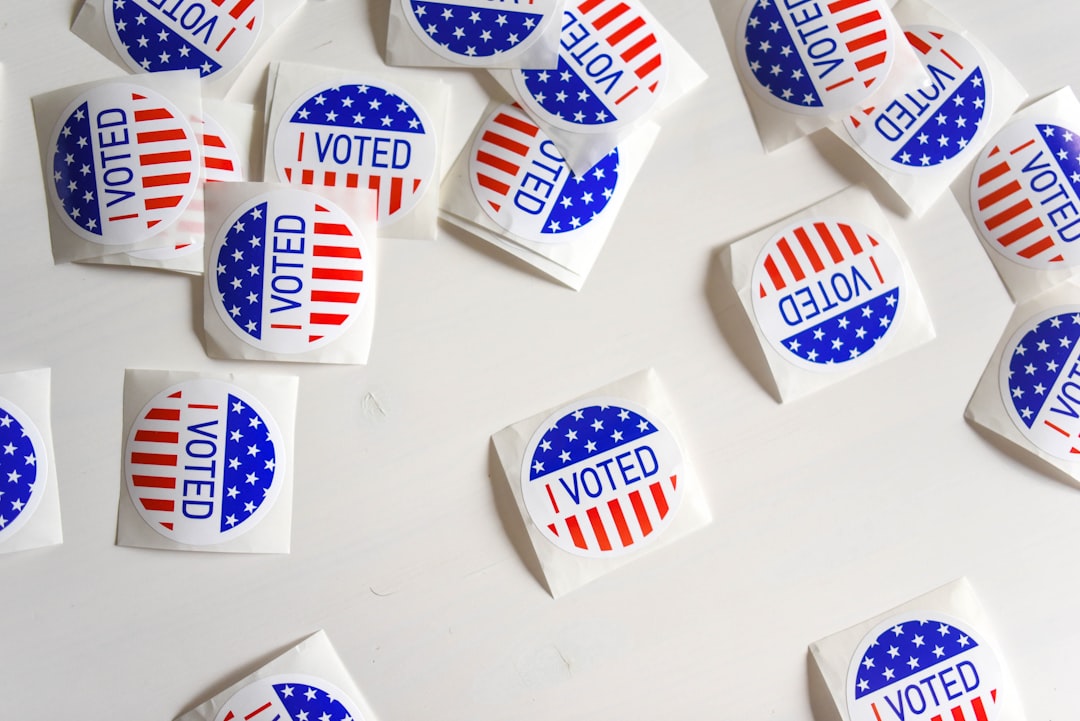

Quick Summary: House Republicans Push Election Security Measures in $95 Billion Defense Bill
- House Republicans are incorporating parts of the SAVE America Act into a $95 billion defense package — this move highlights ongoing election security debates.
- New Jersey revealed a software error that registered 6,600 noncitizens to vote — fewer than 400 cast ballots, sparking a political firestorm.
- The American Thinker argues that foreign influence and campaign money are bigger threats than voter fraud — this shifts the focus from voter ID to systemic vulnerabilities.
- President Trump emphasized election security in a national speech, saying, “If we don’t have safe and secure elections, we cannot have a country.”.
- Senator Thom Tillis warned that voter-ID provisions could complicate passing the defense bill — this reveals internal GOP tensions.
Source: Open external resource
Source: Read original article
America’s election system is under siege, not just from faulty voting machines or long lines at polling stations, but from a more insidious threat: foreign influence and opaque campaign financing. This crisis isn’t just about counting ballots; it’s about who controls the narrative before a single vote is cast.
Recent developments have thrown this issue into sharp relief. House Republicans are trying to merge election security measures from Trump’s SAVE America Act with a massive defense bill. Meanwhile, New Jersey’s admission of a software error that mistakenly registered 6,600 noncitizens, with fewer than 400 casting ballots, has become a political flashpoint. This isn’t just a numbers game; it’s a narrative battleground.
The American Thinker argues that the real vulnerability lies in the murky waters of foreign influence and campaign money. The piece suggests that the reform agenda should connect Federal Election Commission disclosures with the Foreign Agents Registration Act, aiming to expose the hidden hands shaping our elections long before voters hit the polls.
President Trump has made election security a rallying cry, declaring that without secure elections, America cannot sustain its democracy. Yet, the path forward is fraught with political tension. Senator Thom Tillis cautioned that including voter-ID requirements could jeopardize the broader defense bill, revealing fractures within the GOP.
The stakes are high. As New Jersey officials scramble to correct their voter rolls and replace flawed systems, the national spotlight turns to Congress and state election offices. The next chapter in this saga will unfold not at polling places but in legislative halls and state offices, where the integrity of America’s elections hangs in the balance.
Governor Mikie Sherrill said last week that a Motor Vehicle Commission software error in 2023 and 2024 caused roughly 6,600 people who identified themselves as noncitizens while applying for licenses or state IDs to be improperly registered to vote. Rather than stopping at the New Jersey numbers, it reaches back to the 1996 campaign-finance investigations involving Chinese influence efforts and to James Riady’s 2001 guilty plea in a foreign-funds scheme, then argues that today’s reform agenda should connect Federal Election Commission disclosures with Foreign Agents Registration Act records.
President Donald Trump intensified that campaign in a prime-time election-security speech on July 16, saying, “If we don’t have safe and secure elections in our country, we cannot have a country,” according to Reuters. 9 million registered voters and more than 4 million ballots cast in the 2024 presidential election, but politically it gave Trump and his allies an immediate, concrete example to cite.
Reuters noted that Trump has used the issue to press Congress for stricter federal election rules despite longstanding findings that voter fraud is rare. The freshest, most consequential turn in this story is not a new ballot-count scandal but the collision, over the last week, between House Republicans’ push to fold parts of the SAVE America Act into a $95 billion defense package and New Jersey’s disclosure that a software error improperly registered about 6,600 self-identified noncitizens, fewer than 400 of whom later cast ballots.
The American Thinker piece published on July 26, 2026, argues that the real election vulnerability is broader than voter check-in lines and voting machines: it says foreign influence, lobbying networks, and campaign money can shape outcomes long before Election Day. Even as House leaders move aggressively, Reuters reported that Senator Thom Tillis warned that including voter-ID provisions in reconciliation would make the broader bill harder to pass.
A preliminary review found that fewer than 400 actually cast ballots. That has turned election administration into a live midterm battlefield rather than a theoretical policy dispute.
Rather than stopping at the New Jersey numbers, it reaches back to the 1996 campaign-finance investigations involving Chinese influence efforts and to James Riady’s 2001 guilty plea in a foreign-funds scheme, then argues that today’s reform agenda should connect Federal Election Commission disclosures with Foreign Agents Registration Act records. President Donald Trump intensified that campaign in a prime-time election-security speech on July 16, saying, “If we don’t have safe and secure elections in our country, we cannot have a country,” according to Reuters.
New Jersey revealed a software error that registered 6,600 noncitizens to vote — fewer than 400 cast ballots, sparking a political firestorm. Senator Thom Tillis warned that voter-ID provisions could complicate passing the defense bill — this reveals internal GOP tensions.
The freshest, most consequential turn in this story is not a new ballot-count scandal but the collision, over the last week, between House Republicans’ push to fold parts of the SAVE America Act into a $95 billion defense package and New Jersey’s disclosure that a software error improperly registered about 6,600 self-identified noncitizens, fewer than 400 of whom later cast ballots. The American Thinker piece published on July 26, 2026, argues that the real election vulnerability is broader than voter check-in lines and voting machines: it says foreign influence, lobbying networks, and campaign money can shape outcomes long before Election Day.
Even as House leaders move aggressively, Reuters reported that Senator Thom Tillis warned that including voter-ID provisions in reconciliation would make the broader bill harder to pass. America’s election system is under siege, not just from faulty voting machines or long lines at polling stations, but from a more insidious threat: foreign influence and opaque campaign financing.
This crisis isn’t just about counting ballots; it’s about who controls the narrative before a single vote is cast. Meanwhile, New Jersey’s admission of a software error that mistakenly registered 6,600 noncitizens, with fewer than 400 casting ballots, has become a political flashpoint.
The scale and speed of this development has caught many observers off guard. Each new update adds another dimension to a story that is still unfolding, and the full picture will only become clear as more verified details emerge from the people and institutions directly involved.
Analysts who have tracked this issue closely say the current moment represents a genuine turning point. The decisions made in the coming weeks are expected to set the direction for months ahead, with ripple effects likely to extend well beyond the immediate actors in the story.
For those directly affected, the practical impact is already visible. People navigating this fast-changing situation are dealing with real consequences while new information continues to reshape what is known and what remains open to interpretation.
Historical parallels offer some context, though experts caution against drawing too close a comparison. Similar situations have played out before, but the specific combination of pressures, personalities, and timing here makes this moment distinct in ways that matter for how it ultimately resolves.
The political and economic dimensions of this story are deeply intertwined. What appears as a single event on the surface is in practice the convergence of multiple pressures that have been building quietly over a longer period than most public reporting has captured.