

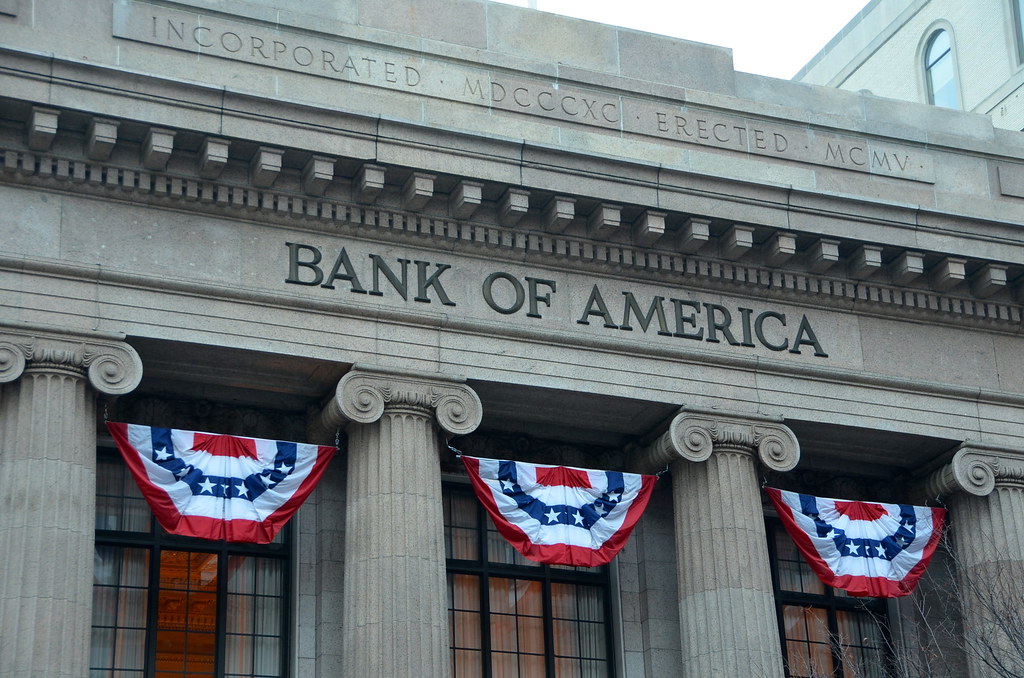

Quick Summary: Bank of America’s Trading Revenue Jumps 33%, Driving Profit Surge
- Bank of America announced a 14% dividend increase to 32 cents per share, signaling strong financial performance.
- The bank’s net income for Q2 2026 rose 27% to $9.1 billion, with revenue up 15% to $31.6 billion.
- Net interest income grew by 9% to $16 billion, indicating a favorable rate environment.
- Bank of America’s trading and dealmaking activities significantly boosted profits, with sales and trading revenue up 33%.
- CEO Brian Moynihan emphasized the bank’s commitment to returning excess capital to shareholders.
Source: Open external resource
Source: Read original article
Bank of America has made a bold move by raising its dividend by 14%, a clear signal of its robust financial health and confidence in future earnings. This decision comes on the heels of a strong second-quarter performance, where the bank reported a 27% increase in net income, reaching $9.1 billion, and a 15% rise in revenue to $31.6 billion.
The bank’s net interest income, a key indicator of financial strength, grew by 9% to $16 billion, suggesting that the favorable interest rate environment is here to stay. This growth was not just a result of a steeper yield curve but also due to a surge in trading and dealmaking activities, which saw sales and trading revenue increase by 33%.
CEO Brian Moynihan has tied the dividend hike directly to the bank’s capital strength, stating that it reflects a commitment to return excess capital to shareholders. This move follows the Federal Reserve’s stress-test results, which paved the way for major banks to increase payouts.
While the bank’s performance is impressive, the debate remains whether this is a sustainable trend or a temporary boost from favorable market conditions. With a 59% efficiency ratio and $202 billion in CET1 capital, the bank appears well-positioned, but the reliance on volatile trading and dealmaking could pose risks if market conditions change.
As the financial landscape continues to evolve, investors will be closely watching Bank of America’s ability to maintain its growth trajectory. The key question is whether the bank can sustain its net interest income growth and continue to capitalize on market opportunities without being overly reliant on temporary conditions.
The most specific shareholder-friendly follow-through arrived on July 24, 2026, when Bank of America said it would raise its quarterly common dividend by 4 cents, or 14%, to 32 cents a share. ET investor call, followed by July 24, 2026, when it announced the dividend increase.
The standout detail for anyone focused on the “steeper curve” angle is that management said full-year 2026 net interest income should land at the upper end of its previously forecast 6% to 8% growth range, a sign that the bank sees the earnings tailwind persisting rather than fading. Moynihan fronted the July 14 investor call, while Borthwick delivered the most market-moving guidance by saying 2026 net interest income should come in at the upper end of the 6% to 8% forecast range.
4 billion, with every business segment contributing year-over-year growth. The freshest, most consequential turn in the Bank of America story is that the bank’s strong second-quarter blowout has now been followed by a 14% dividend hike, underscoring that investors are rewarding exactly the same forces Kalkine flagged — stronger financials, higher net interest income and a steeper-rate backdrop — but with hard cash and a more explicit shareholder payout.
The immediate next step is less about a vote or hearing than about proof: investors will now watch whether the upper-end 6% to 8% NII growth guidance holds through the next quarter and whether the trading-and-dealmaking surge proves repeatable. Reuters quoted CEO Brian Moynihan tying the move directly to capital strength, saying the increase reflected the lender’s commitment to return “excess capital” to shareholders.
That matters because it reframes the BAC story from a narrow yield-curve trade into a broader Wall Street operating-strength story. In other words, the curve helped, but so did volatility and corporate activity, which is why BAC has remained in focus versus peers.
Net interest income grew by 9% to $16 billion, indicating a favorable rate environment. Bank of America’s trading and dealmaking activities significantly boosted profits, with sales and trading revenue up 33%.
The bank’s net interest income, a key indicator of financial strength, grew by 9% to $16 billion, suggesting that the favorable interest rate environment is here to stay. With a 59% efficiency ratio and $202 billion in CET1 capital, the bank appears well-positioned, but the reliance on volatile trading and dealmaking could pose risks if market conditions change.
Moynihan fronted the July 14 investor call, while Borthwick delivered the most market-moving guidance by saying 2026 net interest income should come in at the upper end of the 6% to 8% forecast range. 4 billion, with every business segment contributing year-over-year growth.
The scale and speed of this development has caught many observers off guard. Each new update adds another dimension to a story that is still unfolding, and the full picture will only become clear as more verified details emerge from the people and institutions directly involved.
Analysts who have tracked this issue closely say the current moment represents a genuine turning point. The decisions made in the coming weeks are expected to set the direction for months ahead, with ripple effects likely to extend well beyond the immediate actors in the story.
For those directly affected, the practical impact is already visible. People navigating this fast-changing situation are dealing with real consequences while new information continues to reshape what is known and what remains open to interpretation.
Historical parallels offer some context, though experts caution against drawing too close a comparison. Similar situations have played out before, but the specific combination of pressures, personalities, and timing here makes this moment distinct in ways that matter for how it ultimately resolves.
The political and economic dimensions of this story are deeply intertwined. What appears as a single event on the surface is in practice the convergence of multiple pressures that have been building quietly over a longer period than most public reporting has captured.