

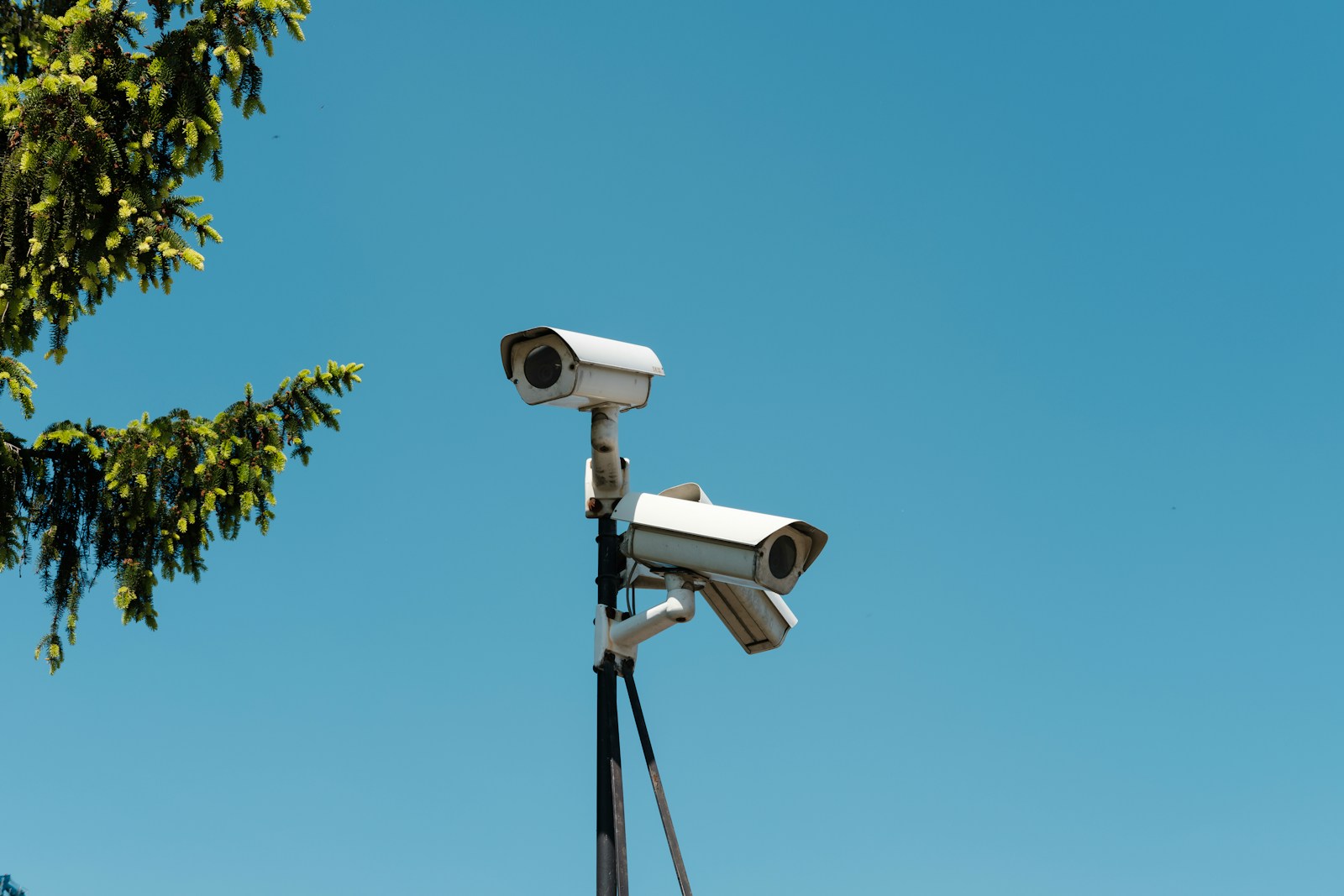

Quick Summary: Abbott Halts $30 Million Funding for Texas Surveillance Cameras Amid Backlash
- Gov. Abbott halted state funding for Flock cameras on August 28 — this move coincided with a Texas Tribune investigation revealing $30 million in state spending on the network.
- The Motor Vehicle Crime Prevention Authority, with a board mostly appointed by Abbott, has installed over 3,200 Flock cameras since 2023 — raising concerns about state involvement in surveillance.
- Abbott’s order followed backlash over a 2023 law that raised an auto-insurance fee, generating $81 million, with $50.8 million allocated to anti-vehicle crime efforts.
- Politicians from both parties are now opposing the technology — citing privacy concerns and the potential for misuse without warrants.
- Flock Safety announced reforms to address misuse, but critics remain skeptical, calling the changes insufficient.
Source: Open external resource
Source: Read original article
In a dramatic turn of events, Gov. Greg Abbott has put the brakes on state funding for Flock license-plate cameras, a move that has ignited bipartisan outrage and raised questions about government surveillance.
The timing of Abbott’s decision, coming just as a Texas Tribune investigation exposed $30 million in state spending on these cameras, suggests a hurried attempt to distance his administration from a growing scandal. The cameras, installed across Texas under the Motor Vehicle Crime Prevention Authority’s auspices, have become a flashpoint in the debate over privacy and state surveillance.
This controversy is rooted in a 2023 law that increased a Texas auto-insurance fee, generating an estimated $81 million, much of which has been funneled into anti-vehicle crime initiatives, including these cameras. Yet, the backlash isn’t just about the money; it’s about the principle of unwarranted surveillance.
Politicians from both sides are now raising alarms. Abbott’s Democratic challenger, Gina Hinojosa, has criticized the governor for allowing mass tracking without warrants. At the same time, Republican Rep. Keith Self is pushing for federal legislation to require warrants for accessing camera data.
As the debate intensifies, the focus will likely shift to the legal and financial underpinnings of these surveillance systems. Abbott’s attempt to contain the fallout might have inadvertently highlighted the very issues critics are rallying against: state complicity in building a surveillance network.
” What makes the story politically potent is that the money came from a 2023 law that raised a Texas auto-insurance fee by $1 per year, a measure passed unanimously and sold as a response to catalytic-converter theft, not as a way to underwrite mass surveillance. On August 28, the Tribune published its funding investigation and reported Abbott’s order blocking state-agency spending.
That means the next battles will be over whether lawmakers or Congress impose warrant requirements, whether cities cancel or narrow contracts, and whether investigators uncover even more state spending than the at least $30 million already documented. Greg Abbott’s abrupt order late Thursday, August 28, to stop Texas state agencies from spending money on Flock license-plate cameras landed just as a Texas Tribune investigation was about to show that a state program had already poured at least $30 million into expanding the network, turning what looked like a surveillance backlash into a damaging funding scandal for the governor.
Abbott spokesman Andrew Mahaleris said, “To the extent that cities get any funding for those cameras, most of it comes from the federal government. 8 million distributed through 234 grants for anti-vehicle-crime efforts, including drones and surveillance devices.
7 million for 201 cameras in Dallas, while entire city systems such as Laredo’s 165 cameras and El Paso’s 150 cameras were fully subsidized. In response, Flock announced changes requiring officers to enter a records-management code tying each search to a specific case, and letting local customers restrict what kinds of outside investigations can query their data.
The debate is no longer framed only as public safety versus privacy; it is increasingly framed as whether government built a statewide surveillance web without voters realizing it. On August 24, the Tribune documented growing local backlash and the difficulty of unwinding multiyear contracts, including Harris County’s deal running through June 2027 at roughly $869,000.
Greg Abbott’s abrupt order late Thursday, August 28, to stop Texas state agencies from spending money on Flock license-plate cameras landed just as a Texas Tribune investigation was about to show that a state program had already poured at least $30 million into expanding the network, turning what looked like a surveillance backlash into a damaging funding scandal for the governor. The Motor Vehicle Crime Prevention Authority, with a board mostly appointed by Abbott, has installed over 3,200 Flock cameras since 2023 — raising concerns about state involvement in surveillance.
Flock Safety announced reforms to address misuse, but critics remain skeptical, calling the changes insufficient. Abbott spokesman Andrew Mahaleris said, “To the extent that cities get any funding for those cameras, most of it comes from the federal government.
8 million distributed through 234 grants for anti-vehicle-crime efforts, including drones and surveillance devices. 7 million for 201 cameras in Dallas, while entire city systems such as Laredo’s 165 cameras and El Paso’s 150 cameras were fully subsidized.
In response, Flock announced changes requiring officers to enter a records-management code tying each search to a specific case, and letting local customers restrict what kinds of outside investigations can query their data. On August 24, the Tribune documented growing local backlash and the difficulty of unwinding multiyear contracts, including Harris County’s deal running through June 2027 at roughly $869,000.
The scale and speed of this development has caught many observers off guard. Each new update adds another dimension to a story that is still unfolding, and the full picture will only become clear as more verified details emerge from the people and institutions directly involved.
Analysts who have tracked this issue closely say the current moment represents a genuine turning point. The decisions made in the coming weeks are expected to set the direction for months ahead, with ripple effects likely to extend well beyond the immediate actors in the story.
For those directly affected, the practical impact is already visible. People navigating this fast-changing situation are dealing with real consequences while new information continues to reshape what is known and what remains open to interpretation.
Historical parallels offer some context, though experts caution against drawing too close a comparison. Similar situations have played out before, but the specific combination of pressures, personalities, and timing here makes this moment distinct in ways that matter for how it ultimately resolves.
The political and economic dimensions of this story are deeply intertwined. What appears as a single event on the surface is in practice the convergence of multiple pressures that have been building quietly over a longer period than most public reporting has captured.