


Quick Summary: Accusations Fly as Police Raid Sparks Osun Election Dispute
- Adeleke was declared the winner with 511,067 votes, leading in 19 out of 30 local government areas.
- The police arrested several individuals for alleged vote buying and conspiracy, sparking accusations of bias from the Osun government.
- INEC reported 985,079 valid votes and 20,721 rejected ballots, with a total of 1,005,800 votes cast.
- Security operations were criticized as politically motivated, with accusations of targeting Accord Party officials.
- The APC called the police raid evidence of electoral manipulation, while the Osun government decried it as illegal.
Source: Open external resource
Source: Read original article
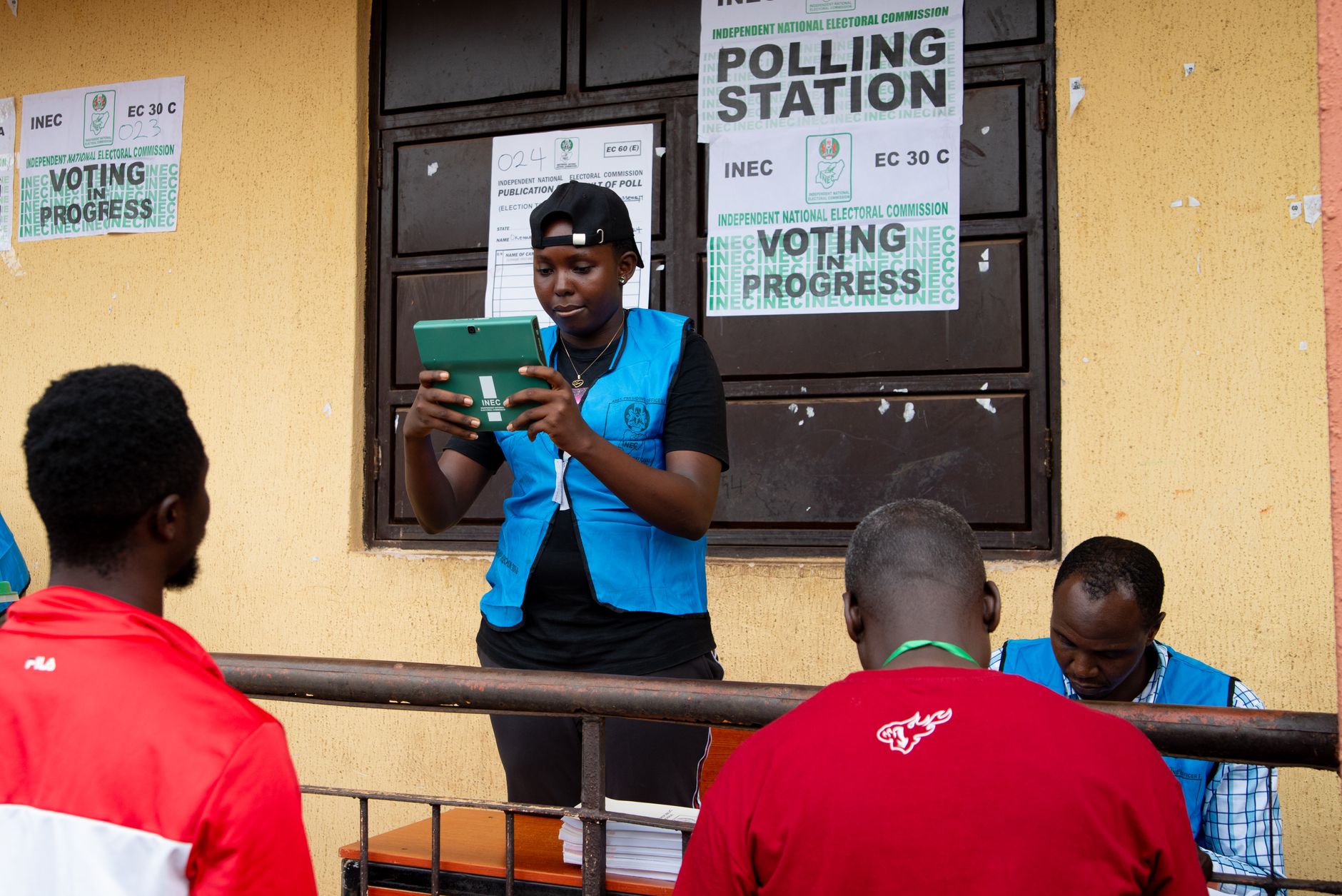
The Osun poll has become a battleground of accusations and allegations, overshadowing the democratic process. Governor Ademola Adeleke’s victory, declared by INEC with 511,067 votes, should have been a straightforward win. Instead, it has been marred by claims of vote-buying, conspiracy, and partisan policing.
On election day, the police arrested several individuals, including a top government official, on charges of vote-buying and criminal conspiracy. This operation, however, was labeled illegal by the Osun government, which accused security agencies of targeting Accord Party officials. The clash has raised questions about whether these actions were genuine attempts to curb electoral sabotage or politically motivated interventions.
Despite the controversies, the election process was largely peaceful, according to the Centre for Democracy and Development. Yet, reports of disruptions and vote-buying allegations persisted, adding layers of complexity to the election’s integrity. The APC seized on these incidents to claim electoral manipulation, while the Osun government pushed back, alleging a pattern of targeted actions against its allies.
As the dust settles, the focus shifts to potential legal challenges and further investigations. The APC’s call for a review of the election outcome suggests a move towards legal contestation. Whether this results in formal challenges or prosecutions remains to be seen, as Nigeria prepares for its 2027 general election.
” The group also highlighted uneven voter education and a worsening threat environment, while The Nation separately reported police had recovered 34 illegal firearms ahead of the August 15 poll, underscoring how seriously authorities viewed the risk of organized disruption. Total votes cast were reported at 1,005,800, made up of 985,079 valid votes and 20,721 rejected ballots, giving Adeleke victory in 19 of Osun’s 30 local government areas.
The police said the case involved “vote buying, criminal conspiracy, and harbouring a wanted suspect,” while the Osun government called the operation illegal and accused security agencies of targeting top officials of the ruling Accord Party. The next phase to watch is whether APC converts that review into a formal election challenge, and whether the police, ICPC, EFCC or other agencies actually prosecute any of the vote-buying, violence or ballot-integrity allegations that dominated the final week before and during the August 15, 2026 poll.
INEC, through returning officer Professor Joshua Ogunwole, declared Adeleke of the Accord Party re-elected on Sunday, August 16, 2026, with 511,067 votes, ahead of APC candidate Bola Oyebamiji on 444,815, while ADC’s Najeem Salaam finished a distant third on 17,180. 8 million in cash, Permanent Voter Cards, a voter register, a Dynabook laptop, photocopying machines and a printer.
CDD said suspected thugs disrupted voting at Ejigbo Ward 4, Polling Unit 13, where ADC candidate Najeem Salaam voted, and cited allegations that voters were tear-gassed in Modakeke and Obokun. ” The Osun government, through Information Commissioner Kolapo Alimi, pushed the opposite line, alleging “a pattern of targeted actions” against Adeleke’s allies and asking President Bola Tinubu, the Inspector-General of Police and the National Security Adviser to intervene.
Separately, The Nation reported that thugs disrupted voting at former governor Rauf Aregbesola’s polling unit, with voters chased away before an APC polling agent denied the attackers were party members, saying, “those thugs are not our members. ” has been overtaken by a much bigger and more concrete development: the Osun governorship election has now been held, Governor Ademola Adeleke has been officially declared winner, and the fiercest dispute is no longer rhetorical blame-casting but whether arrests, vote-buying allegations and security incidents tainted a result decided by 66,252 votes.
– The Nation Newspaper Adeleke was declared the winner with 511,067 votes, leading in 19 out of 30 local government areas. On election day, the police arrested several individuals, including a top government official, on charges of vote-buying and criminal conspiracy.
Total votes cast were reported at 1,005,800, made up of 985,079 valid votes and 20,721 rejected ballots, giving Adeleke victory in 19 of Osun’s 30 local government areas. The police said the case involved “vote buying, criminal conspiracy, and harbouring a wanted suspect,” while the Osun government called the operation illegal and accused security agencies of targeting top officials of the ruling Accord Party.
8 million in cash, Permanent Voter Cards, a voter register, a Dynabook laptop, photocopying machines and a printer. INEC reported 985,079 valid votes and 20,721 rejected ballots, with a total of 1,005,800 votes cast.
Governor Ademola Adeleke’s victory, declared by INEC with 511,067 votes, should have been a straightforward win. ” The Osun government, through Information Commissioner Kolapo Alimi, pushed the opposite line, alleging “a pattern of targeted actions” against Adeleke’s allies and asking President Bola Tinubu, the Inspector-General of Police and the National Security Adviser to intervene.
The scale and speed of this development has caught many observers off guard. Each new update adds another dimension to a story that is still unfolding, and the full picture will only become clear as more verified details emerge from the people and institutions directly involved.
Analysts who have tracked this issue closely say the current moment represents a genuine turning point. The decisions made in the coming weeks are expected to set the direction for months ahead, with ripple effects likely to extend well beyond the immediate actors in the story.
For those directly affected, the practical impact is already visible. People navigating this fast-changing situation are dealing with real consequences while new information continues to reshape what is known and what remains open to interpretation.
Historical parallels offer some context, though experts caution against drawing too close a comparison. Similar situations have played out before, but the specific combination of pressures, personalities, and timing here makes this moment distinct in ways that matter for how it ultimately resolves.
The political and economic dimensions of this story are deeply intertwined. What appears as a single event on the surface is in practice the convergence of multiple pressures that have been building quietly over a longer period than most public reporting has captured.