

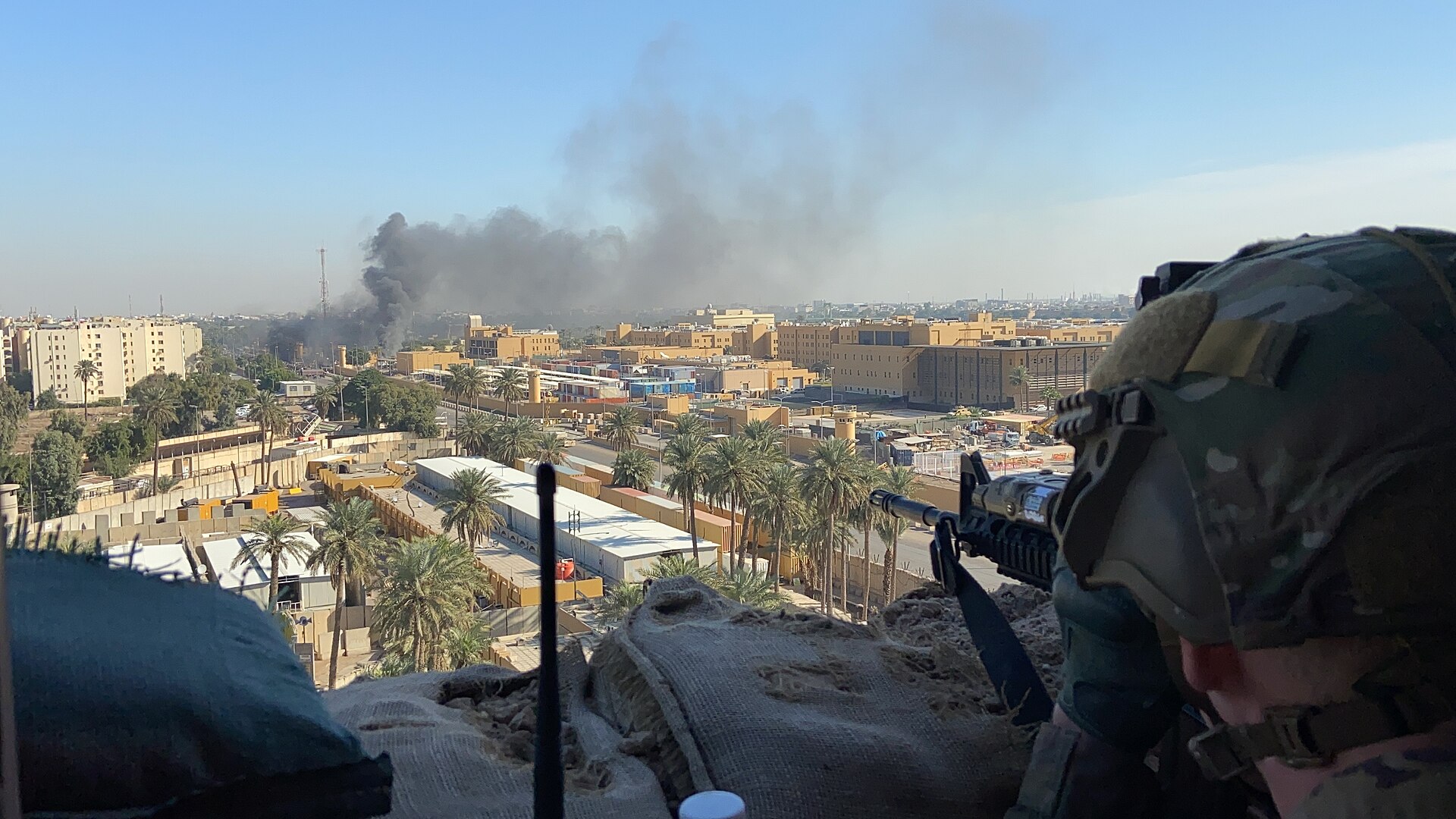

Summary Points
- U.S. Central Command said Iranian ballistic missiles targeting American forces in the Middle East were successfully intercepted.
- Iran said it had launched ballistic missiles at U.S. military installations in Jordan amid renewed regional fighting.
- U.S. and Saudi fighter aircraft separately carried out coordinated strikes against Iran-aligned armed groups in Iraq on July 28.
- CENTCOM said the strikes targeted logistics and weapons facilities linked to more than 30 IRGC-directed drone attacks over the previous 72 hours.
- The U.S. military said those drone attacks had targeted American forces and Saudi energy infrastructure.
- Iraq’s Popular Mobilisation Forces said at least 20 of its members were killed and 32 wounded in the U.S.-Saudi strikes.
- Saudi Arabia said it did not seek escalation but would respond to attacks against the kingdom.
- The operation marked the first time Saudi Arabia had publicly joined U.S. forces in strikes during the current conflict.
Article Content
The United States says it successfully intercepted an Iranian ballistic missile attack targeting American forces in the Middle East as regional fighting intensified, while U.S. and Saudi forces separately carried out coordinated airstrikes against Iran-aligned armed groups in Iraq.
U.S. Central Command said air defenses intercepted Iranian missiles launched against American forces and that U.S. personnel remained at a high state of readiness following the attack. Iran’s Revolutionary Guard said it had fired several ballistic missiles at U.S. military installations in Jordan. Jordan’s military said it intercepted five Iranian missiles.
The missile barrage came as tensions between Washington and Tehran rose again after a brief period of reduced fighting.
Hours around the same period, U.S. and Saudi Arabian forces carried out coordinated strikes against Iran-aligned groups operating in Iraq. CENTCOM said U.S. and Saudi fighter aircraft targeted multiple logistics and weapons facilities across eastern Iraq.
The U.S. military said the targets were connected to armed groups directed by Iran’s Islamic Revolutionary Guard Corps and accused them of launching attacks against American forces and Saudi Arabia’s energy infrastructure.
CENTCOM said the operation followed more than 30 IRGC-directed aerial drone attacks during the previous 72 hours. The U.S. military said attempted attacks against American forces had been unsuccessful.
However, U.S. officials said the Iranian ballistic missile attack and the U.S.-Saudi operation in Iraq should not be presented as a direct attack-and-retaliation sequence. An American official said the Iranian missiles were launched before the strikes in Iraq and that the two events were not directly connected.
Iraq’s Popular Mobilisation Forces, an umbrella organization that includes several Iran-aligned factions but is formally incorporated into Iraq’s security structure, said at least 20 members were killed and another 32 wounded in strikes on bases across the country.
The Iraqi government condemned the strikes as a violation of the country’s sovereignty while also calling for armed groups to stop using Iraqi territory to launch attacks against neighboring states. The competing pressures have placed Baghdad in an increasingly difficult position as it attempts to maintain relations with both Washington and Tehran.
Saudi Arabia confirmed its participation in the operation. The Saudi Defense Ministry said the kingdom did not seek further escalation but would respond to aggression.
Saudi authorities had reported intercepting drones aimed at petroleum facilities in the country’s eastern region. Iran-backed Iraqi militias denied responsibility for those attacks, with some groups disputing Saudi and U.S. accusations about their involvement.
Saudi Arabia’s participation represents a significant development in the conflict. Reuters reported that the operation marked the first time Riyadh had publicly joined Washington in strikes during the current fighting.
The escalation comes against the backdrop of continuing conflict between the United States and Iran and disputes over the Strait of Hormuz, one of the world’s most important energy shipping routes.
Fighting surrounding the strait and attacks on regional energy infrastructure have increased concerns that the conflict could draw additional Middle Eastern countries into direct military action.
The latest developments also demonstrate the growing military coordination between Washington and Riyadh as both governments seek to protect American forces and Saudi energy infrastructure from missile and drone attacks.
At the same time, the strikes inside Iraq risk adding another layer of instability to the conflict. Baghdad has sought to avoid becoming a battlefield between Iran, the United States and their respective allies, but the presence of powerful Iran-aligned armed groups continues to complicate those efforts.
With missile attacks, drone strikes and retaliatory military operations continuing across several countries, the latest confrontation highlights the growing risk that the conflict could expand further across the Middle East.