

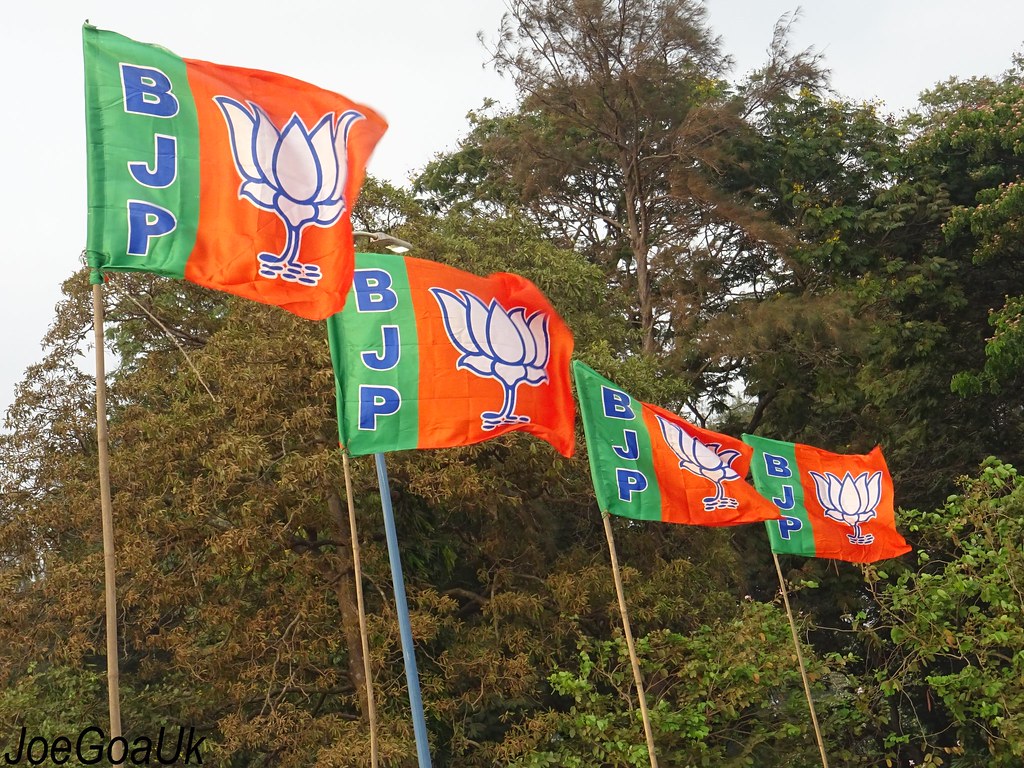

Quick Summary: BJP Defends Election Commission Amid Voter Roll Controversy
- Bihar minister Ramkripal Yadav defends the Election Commission amid allegations of bias — his stance frames the issue as an attack on democratic institutions.
- The Special Intensive Revision process has removed over 13 crore names from voter rolls — sparking a political firestorm over voter inclusion.
- Rahul Gandhi labels the voter roll deletions as a “crime against the Indian people” — escalating the issue into a constitutional debate.
- Two election commissioners reportedly objected 14 times to the deletions — raising questions about internal dissent within the Election Commission.
- The BJP challenges the Opposition to take formal action — pushing the debate into a potential parliamentary showdown.
Source: Open external resource
Source: Read original article
Bihar minister Ramkripal Yadav has stepped into the eye of a political storm, defending the Election Commission of India amid a fierce backlash over the removal of 13 crore names from voter rolls. Yadav’s defense comes as the BJP frames the controversy not as a scandal but as an attack on the integrity of democratic institutions.
The controversy centers on the Special Intensive Revision (SIR) process, which began in Bihar and has led to massive voter roll deletions across India. Critics, including Rahul Gandhi, have labeled this as a direct attack on the Constitution, accusing the Election Commission of undermining voter inclusion. Yadav, however, insists that the Commission is a “sacred constitutional body” and that the allegations are harmful to democracy.
Reports reveal that two election commissioners raised objections 14 times over the SIR process, suggesting internal discord. The BJP, meanwhile, has been unusually aggressive in its defense, challenging the Opposition to move an impeachment motion against the Chief Election Commissioner if they believe there has been wrongdoing.
The situation has escalated into a constitutional crisis, with the BJP daring critics to take formal parliamentary action. The next phase could see Parliament, the courts, or the Election Commission itself forced to open a formal review of the SIR deletions, testing India’s ability to resolve a crisis of confidence in its electoral processes.
As the debate widens beyond party lines, commentators are questioning the accountability of the Election Commission and the processes it follows. The outcome of this controversy could have lasting implications for India’s democratic framework and the trust in its electoral machinery.
The debate has also widened beyond party politics, with commentators such as Yogendra Yadav and Rajat Sethi asking why commissioners who allegedly believed decisions were illegal did not escalate the matter to a full Commission meeting or even the President, raising fresh questions about both process and accountability. What makes the story more explosive is the reporting that the internal dispute was not marginal: according to The Indian Express report now driving the national argument, commissioners Sukhbir Singh Sandhu and Vivek Joshi objected repeatedly to decisions associated with Chief Election Commissioner Gyanesh Kumar, with the paper putting the number at 14 objections over 10 months.
The same report says the SIR process, which began in Bihar in June 2025, has so far removed more than 13 crore names from draft rolls nationwide, turning what might have been a technical revision into a politically combustible issue with obvious consequences for voter inclusion. India Today reported that Gandhi called it a “crime against the Indian people” and a “direct attack” on the Constitution, while other Opposition leaders demanded action against Chief Election Commissioner Gyanesh Kumar.
On September 23, major national outlets reported the internal-objection story and the resulting Opposition backlash; by September 24, BJP leaders were publicly defending the Commission and calling the deliberations normal; and by September 25, Ramkripal Yadav had added his voice, saying public allegations against the ECI were harmful to democracy. The immediate next phase to watch is whether Parliament, the courts, or the Election Commission itself is forced to open a more formal review of the SIR deletions and the reported 14 objections, because that is the point where this stops being a war of statements and becomes a test of how India resolves a crisis of confidence in its election machinery.
In the latest comments published Friday, Ramkripal Yadav called the Election Commission a “sacred constitutional body” and said allegations against it were “not good for democracy,” sharpening the BJP’s effort to frame the dispute as an attack on institutions rather than a scandal inside the poll panel itself. ” Parallel reporting also says BJP figures have challenged the Opposition to move an impeachment motion against the Chief Election Commissioner in Parliament if they truly believe wrongdoing occurred, an escalation that shows the party is trying to force critics from rhetoric into formal institutional combat.
He also urged political parties to respect the Commission, a line that comes as the Opposition escalates its accusations over the Bihar-linked SIR exercise. That has transformed an administrative dispute into a high-stakes constitutional fight over whether India’s election referee can still command bipartisan trust.
The BJP, meanwhile, has been unusually aggressive in its defense, challenging the Opposition to move an impeachment motion against the Chief Election Commissioner if they believe there has been wrongdoing. In the latest comments published Friday, Ramkripal Yadav called the Election Commission a “sacred constitutional body” and said allegations against it were “not good for democracy,” sharpening the BJP’s effort to frame the dispute as an attack on institutions rather than a scandal inside the poll panel itself.
Rahul Gandhi labels the voter roll deletions as a “crime against the Indian people” — escalating the issue into a constitutional debate. The BJP challenges the Opposition to take formal action — pushing the debate into a potential parliamentary showdown.
The scale and speed of this development has caught many observers off guard. Each new update adds another dimension to a story that is still unfolding, and the full picture will only become clear as more verified details emerge from the people and institutions directly involved.
Analysts who have tracked this issue closely say the current moment represents a genuine turning point. The decisions made in the coming weeks are expected to set the direction for months ahead, with ripple effects likely to extend well beyond the immediate actors in the story.
For those directly affected, the practical impact is already visible. People navigating this fast-changing situation are dealing with real consequences while new information continues to reshape what is known and what remains open to interpretation.
Historical parallels offer some context, though experts caution against drawing too close a comparison. Similar situations have played out before, but the specific combination of pressures, personalities, and timing here makes this moment distinct in ways that matter for how it ultimately resolves.
The political and economic dimensions of this story are deeply intertwined. What appears as a single event on the surface is in practice the convergence of multiple pressures that have been building quietly over a longer period than most public reporting has captured.