

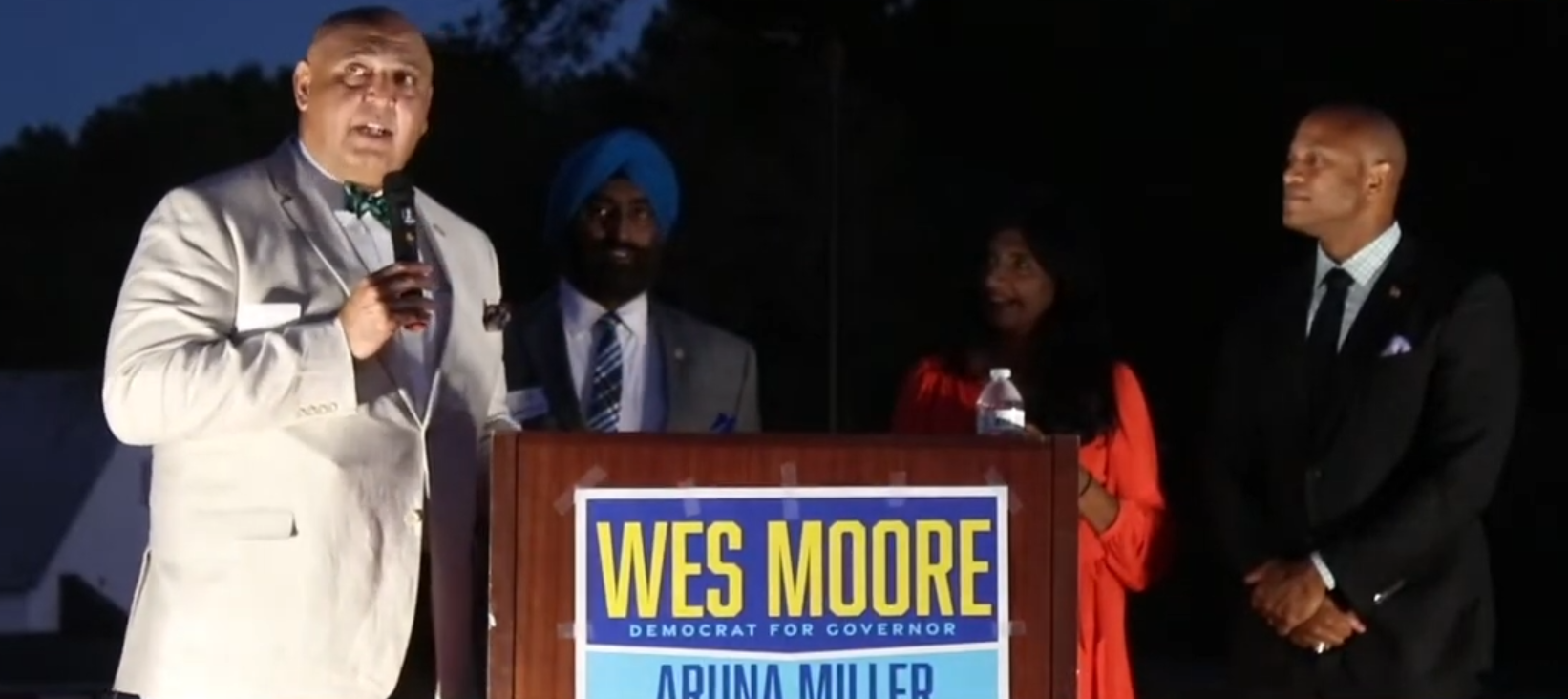

Quick Summary: Maryland Governor Wes Moore Faces Scrutiny Over 2028 Aspirations
- Wes Moore launched his second-term campaign in 2025 with a clear promise to serve a full term and not run for president in 2028.
- During a recent debate, Moore declined to commit to serving a full second term, raising questions about his future political ambitions.
- Moore is seen as a potential 2028 Democratic contender, drawing national attention and speculation about his political intentions.
- In a debate with Dan Cox, Moore’s refusal to pledge a full-term commitment became a focal point, suggesting he may have broader ambitions.
- Moore’s ambiguous responses have fueled speculation and scrutiny, potentially impacting his current gubernatorial race.
Source: Open external resource
Source: Read original article
Wes Moore’s political ambitions are under the spotlight, and the Maryland governor is caught in a swirl of speculation. His recent debate performance, where he dodged a commitment to serve a full second term if reelected, has reignited questions about his potential 2028 presidential run. This shift from his previous firm stance has opened the door to political scrutiny and media attention.
Moore’s refusal to explicitly promise a full-term commitment during his debate with Republican Dan Cox has become a pivotal issue. His earlier campaign messaging in 2025 was clear: he would serve a full term and not pursue the presidency in 2028. However, his recent evasiveness has cast doubt on those assurances, suggesting he might have his eyes set on a larger political stage.
National attention on Moore has intensified, especially as he is seen as a possible Democratic contender for 2028. His clash with the Trump White House over a Maryland event and his role in launching a bipartisan governors’ group on artificial intelligence have further elevated his profile beyond state politics. This national framing adds complexity to his reelection campaign, where credibility and ambition are now central themes.
The political stakes are high for Moore. If he continues with vague commitments like being “committed to the people of Maryland,” he risks allowing his opponents to dominate the narrative with claims of national ambition. The decision to clarify his intentions is crucial as it could either reinforce his gubernatorial campaign or keep the presidential speculation alive.
When he launched his second-term campaign in 2025, the messaging was unusually direct: he would seek reelection, serve the term, and not run for president in 2028. ” That wording matters because The Washington Post reported when Moore formally launched his reelection bid on September 9, 2025, he had explicitly promised to “serve a full four-year term” and forgo a 2028 presidential run.
A January 2026 Gonzales poll highlighted by Maryland Matters found 50% of Maryland voters said they would reelect Moore, 28% backed a Republican challenger, 6% preferred a third-party candidate, and 16% were undecided. Wes Moore’s biggest new political problem is not that Republicans are calling him a 2028 presidential hopeful — it’s that, in this week’s Maryland governor’s debate, he would not plainly say he would serve a full second term, reopening a question he had previously tried to shut down.
AP’s reporting today noted that Moore, while running for reelection, is widely seen as a possible 2028 Democratic contender and has continued to draw national attention, including in a fresh dispute involving President Donald Trump’s appearance in Maryland. That shift has turned a routine campaign question into a live controversy in the closing stretch of the 2026 race.
Maryland Matters described the exchange as one of the notable moments of the only scheduled gubernatorial debate, held October 6, 2026, between Moore and Republican nominee Dan Cox. That is why the reporting keeps pairing his debate performance with the now well-established label of “potential 2028 presidential candidate,” a phrase used repeatedly in national coverage.
On October 6, 2026, he debated Cox and declined to make the unqualified full-term pledge that became the headline. Today, AP published fresh reporting that again cast Moore as a likely 2028 name while detailing his clash with the Trump White House over a Maryland event.
When he launched his second-term campaign in 2025, the messaging was unusually direct: he would seek reelection, serve the term, and not run for president in 2028. Quick Summary: Wes Moore – potential 2028 White House hopeful – won’t commit to serving full term if re-elected Maryland governor – New York Post Wes Moore launched his second-term campaign in 2025 with a clear promise to serve a full term and not run for president in 2028.
Wes Moore’s biggest new political problem is not that Republicans are calling him a 2028 presidential hopeful — it’s that, in this week’s Maryland governor’s debate, he would not plainly say he would serve a full second term, reopening a question he had previously tried to shut down. AP’s reporting today noted that Moore, while running for reelection, is widely seen as a possible 2028 Democratic contender and has continued to draw national attention, including in a fresh dispute involving President Donald Trump’s appearance in Maryland.
Moore is seen as a potential 2028 Democratic contender, drawing national attention and speculation about his political intentions. His recent debate performance, where he dodged a commitment to serve a full second term if reelected, has reignited questions about his potential 2028 presidential run.
His earlier campaign messaging in 2025 was clear: he would serve a full term and not pursue the presidency in 2028. National attention on Moore has intensified, especially as he is seen as a possible Democratic contender for 2028.
The scale and speed of this development has caught many observers off guard. Each new update adds another dimension to a story that is still unfolding, and the full picture will only become clear as more verified details emerge from the people and institutions directly involved.
Analysts who have tracked this issue closely say the current moment represents a genuine turning point. The decisions made in the coming weeks are expected to set the direction for months ahead, with ripple effects likely to extend well beyond the immediate actors in the story.
For those directly affected, the practical impact is already visible. People navigating this fast-changing situation are dealing with real consequences while new information continues to reshape what is known and what remains open to interpretation.
Historical parallels offer some context, though experts caution against drawing too close a comparison. Similar situations have played out before, but the specific combination of pressures, personalities, and timing here makes this moment distinct in ways that matter for how it ultimately resolves.
The political and economic dimensions of this story are deeply intertwined. What appears as a single event on the surface is in practice the convergence of multiple pressures that have been building quietly over a longer period than most public reporting has captured.