

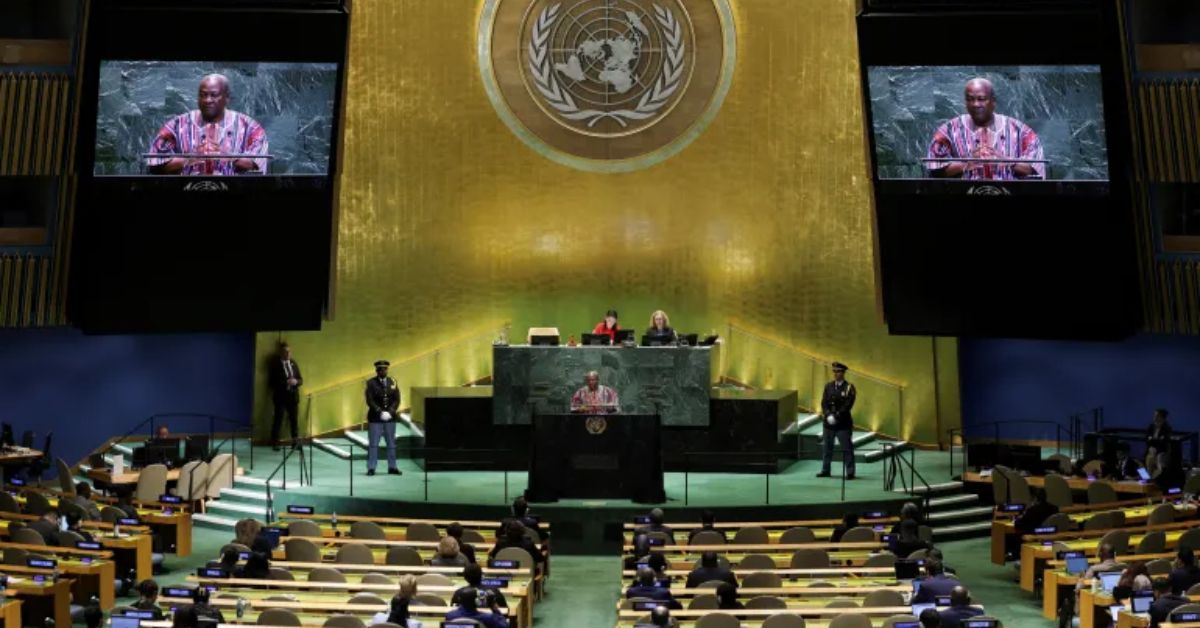

The UN slave trade resolution marks a defining moment in international diplomacy, as nations came together to formally recognize the transatlantic slave trade as one of the most severe crimes in human history. The vote signals a renewed global willingness to confront historical injustices and address their lasting consequences.
The decision, adopted after extensive negotiations, reflects growing international pressure to acknowledge the systemic and long-term impacts of slavery. While not legally binding, the resolution is expected to shape future discussions on justice, accountability, and reparatory measures.
Introduction
The UN slave trade resolution represents a major shift in how the international community frames the legacy of slavery. For decades, discussions around slavery have been fragmented across academic, political, and social platforms. This resolution consolidates those conversations into a unified global acknowledgment.
The declaration describes the transatlantic slave trade as the gravest crime against humanity, highlighting its scale, brutality, and enduring impact on societies worldwide.
Global Support for UN Slave Trade Decision
The UN slave trade resolution received overwhelming support from member states, demonstrating a broad consensus on the need to formally recognize the severity of historical injustices.
A large majority of nations voted in favor, while a smaller group opposed the measure or chose to abstain. The voting pattern reflects ongoing geopolitical differences in how countries interpret historical responsibility and accountability.
Support from African and Caribbean nations played a significant role in advancing the resolution. These regions, deeply affected by the legacy of slavery, have long advocated for formal recognition and reparatory justice.
UN Slave Trade Resolution and Reparatory Justice Debate
One of the most discussed aspects of the UN slave trade resolution is its emphasis on reparatory justice. The resolution calls for meaningful efforts to address the long-term social, economic, and cultural consequences of slavery.
Advocates argue that reparations are not merely financial but also involve systemic changes, including education reforms, economic opportunities, and institutional recognition of historical injustices.
Critics, however, express concerns about how reparations should be implemented and whether they can effectively address centuries-old harm. Despite differing views, the resolution has reignited global debate on the issue.
Historical Context Behind UN Slave Trade Recognition
The UN slave trade resolution draws attention to the historical scale of the transatlantic slave trade, which lasted for more than four centuries. During this period, millions of Africans were forcibly transported across the Atlantic under brutal conditions.
The system reduced individuals to property, stripping them of identity, rights, and dignity. Generations were born into enslavement, creating a cycle of exploitation that shaped global economic systems.
Historians emphasize that wealth generated from slavery significantly contributed to the development of major economies. This historical reality continues to influence modern disparities in wealth and opportunity.
Political Reactions to UN Slave Trade Resolution
The UN slave trade resolution has prompted varied reactions from governments and political leaders worldwide. While many countries welcomed the move as a step toward justice, others expressed reservations.
Some nations argued against ranking historical events, stating that all atrocities should be treated with equal seriousness. Others raised concerns about the potential implications of reparations and how they might affect current geopolitical relationships.
Despite these differences, the resolution underscores a growing international acknowledgment of slavery’s lasting impact.
UN Slave Trade Resolution and Modern Inequality
The UN slave trade resolution highlights the connection between historical slavery and contemporary inequality. Experts argue that systemic racism, economic disparities, and social challenges in many parts of the world can be traced back to the legacy of slavery.
The resolution encourages governments to examine these links and consider policies that address structural inequalities. This includes investments in education, healthcare, and economic development in historically marginalized communities.
The acknowledgment of these connections is seen as a critical step toward achieving long-term social justice.
Calls for Accountability After UN Slave Trade Vote
The UN slave trade resolution has intensified calls for accountability at both national and international levels. Activists and scholars argue that acknowledgment must be followed by concrete actions.
These actions may include formal apologies, policy reforms, and initiatives aimed at preserving historical memory. Educational institutions are also being encouraged to incorporate more comprehensive narratives about slavery into their curricula.
The resolution is expected to influence how history is taught and understood across generations.
UN Slave Trade Resolution and Global Policy Impact
Although the UN slave trade resolution is not legally binding, its symbolic significance is substantial. It sets a precedent for future international agreements and policy discussions.
Governments may use the resolution as a framework for developing domestic policies related to equality and social justice. International organizations are also likely to reference it in their work on human rights and development.
The resolution’s impact will depend on how countries choose to interpret and implement its principles.
Ongoing Debate Around Historical Interpretation
The UN slave trade resolution has sparked renewed debate over how history should be interpreted and presented. Some argue that recognizing one atrocity as the gravest could overshadow others.
Others believe that the scale and systemic nature of slavery justify its classification. This debate reflects broader questions about collective memory, historical responsibility, and the role of international institutions in shaping narratives.
Despite differing opinions, the resolution has brought global attention to an issue that continues to influence modern society.
Public Response to UN Slave Trade Recognition
Public reaction to the UN slave trade resolution has been largely positive, particularly among communities directly affected by the legacy of slavery. Many see it as a long-overdue acknowledgment of historical injustice.
At the same time, the resolution has encouraged wider public discourse on topics such as racism, inequality, and historical accountability. Social movements and advocacy groups are using the moment to push for further reforms.
The increased awareness is expected to drive continued engagement on these issues.
UN Slave Trade Resolution and Future Discussions
The UN slave trade resolution is likely to serve as a starting point for future international discussions on justice and equality. It has opened the door for more detailed conversations about reparations, policy reforms, and global cooperation.
As countries navigate the implications of the resolution, it may lead to new agreements and initiatives aimed at addressing historical injustices. The outcome of these discussions will shape the global approach to human rights in the years ahead.
Conclusion
The UN slave trade resolution represents a significant milestone in the global recognition of historical injustice. By formally declaring the transatlantic slave trade as the gravest crime against humanity, the international community has taken an important step toward acknowledging the past.
While challenges remain in translating this acknowledgment into concrete action, the resolution sets a powerful precedent. It signals a growing commitment to addressing the legacy of slavery and its impact on modern societies.
The path forward will require continued dialogue, cooperation, and a willingness to confront difficult truths. The resolution has laid the foundation for that journey.
For more updates, read the latest news on Digital Chew.