


Quick Summary: VP Vance Would Decide on Missile Strike If Iran Targets Trump
- Trump claims a ‘dead man’s switch’ with 1,000 missiles aimed at Iran — the execution of this threat would fall to VP JD Vance.
- The threat comes amid heightened U.S.-Iran tensions and follows public anti-Trump rhetoric in Tehran.
- Trump’s comments raise questions about legal command authority and the succession of military orders.
- U.S. officials demand Iran assure the safety of the Strait of Hormuz amidst internal Iranian power struggles.
- The debate centers on whether Trump’s statement is a credible deterrent or dangerous brinkmanship.
Source: Open external resource
Source: Read original article
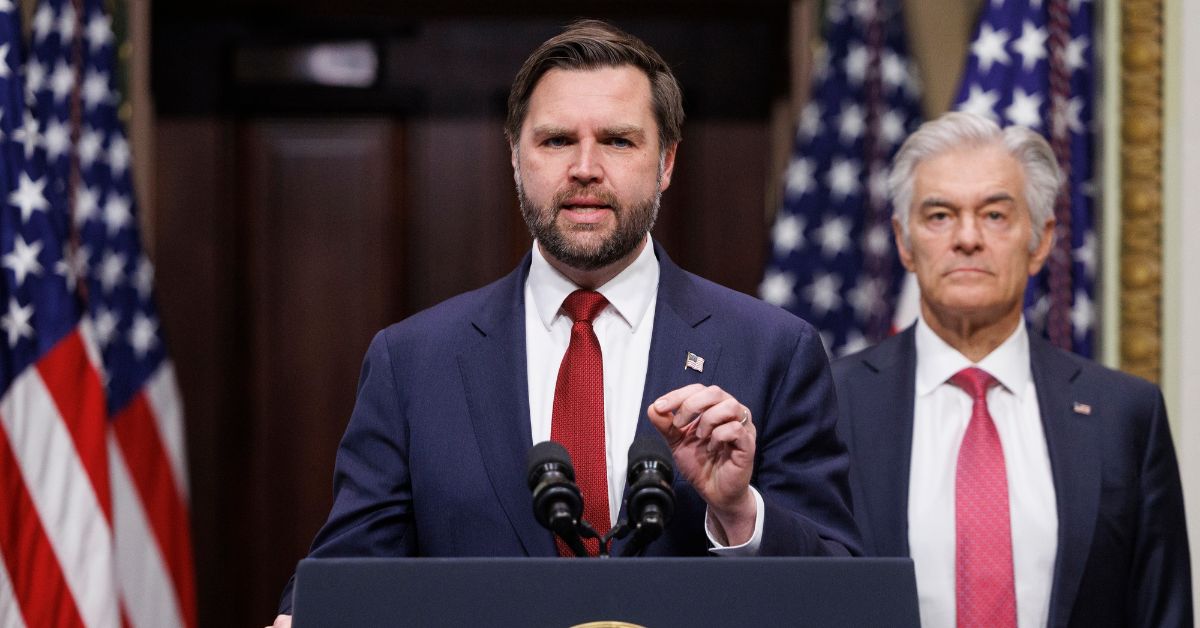
President Donald Trump has thrown a volatile new element into the already tense U.S.-Iran relations by suggesting a ‘dead man’s switch’ that would unleash 1,000 missiles on Iran if he were assassinated. This bold claim, however, rests on a crucial legal and constitutional question: if Trump were incapacitated, Vice President JD Vance would be the one to decide whether to follow through on such a drastic military action.
The backdrop to this dramatic statement is a week marked by increased hostility and threats, with Iranian mourners openly calling for Trump’s death. Trump’s specific mention of ‘1,000 missiles’ transforms what might have been dismissed as bluster into a chillingly specific threat, raising the stakes in an already fraught geopolitical landscape.
Legal experts and observers are now grappling with the implications of Trump’s statement. Does it represent a credible deterrent strategy, or is it an irresponsible dive into nuclear brinkmanship? National security law expert Brian Graff has pointed out that any such order would legally fall to Vance, not Trump, highlighting a critical issue of command and succession.
The timing of Trump’s comments, amid U.S. demands for Iran to ensure the open passage of ships through the Strait of Hormuz, adds another layer of complexity. While some U.S. officials are pushing for de-escalation, Trump’s rhetoric suggests a hardline stance that could escalate tensions further.
As Washington’s political machinery continues to churn with upcoming hearings and nominations, the focus remains on whether Trump’s words will translate into policy or remain a provocative rhetorical flourish. The world waits to see if this escalation will harden into a new phase of conflict or if cooler heads will prevail.
military to hit Iran “at levels they’ve never seen before,” yet any real execution of that retaliation would depend on Vance as the surviving commander in chief. demand on shipping, any White House clarification of whether Trump’s “1,000 missiles” comment reflects an actual standing military order, and whether Vance or other administration officials publicly define the legal chain of command.
AP’s broader July 7 reporting also noted that former Trump lawyer Todd Blanche is expected to appear July 15 before the committee considering his nomination to become attorney general, a reminder that Washington’s institutional machinery is still moving even as the administration faces a volatile military and constitutional test abroad. President Donald Trump’s most explosive new claim is that he has effectively set a “dead man’s switch” for Iran, boasting that “1,000 missiles are Locked and Loaded” if Tehran assassinates him, even though the actual legal decision to strike would fall to Vice President JD Vance if Trump were dead or incapacitated.
The debate is sharpened by the fact that AP’s report frames the issue around succession and lawful command authority, not just military posture. The story is being driven by Trump’s own words, posted Friday, July 10, and amplified in reports published Saturday, July 11.
officials were publicly demanding assurances on Hormuz; and by July 11 the focus had shifted to Trump’s personal retaliation doctrine. president is trying to deter assassination with an explicit promise of massive state vengeance.
National security law expert Brian Graff sharpened that point by saying Trump could tell Vance, “If I’m killed, nuke Iran,” and that such an instruction would make “more sense” legally because Vance, not Trump, would have to make the final call. One widely circulated image in the coverage shows a mourner at the July 6 funeral procession for slain Iranian Supreme Leader Ayatollah Ali Khamenei carrying a sign reading, “We Will Kill Trump,” underscoring how open the rhetoric has become.
Trump’s specific mention of ‘1,000 missiles’ transforms what might have been dismissed as bluster into a chillingly specific threat, raising the stakes in an already fraught geopolitical landscape. military to hit Iran “at levels they’ve never seen before,” yet any real execution of that retaliation would depend on Vance as the surviving commander in chief.
demand on shipping, any White House clarification of whether Trump’s “1,000 missiles” comment reflects an actual standing military order, and whether Vance or other administration officials publicly define the legal chain of command. AP’s broader July 7 reporting also noted that former Trump lawyer Todd Blanche is expected to appear July 15 before the committee considering his nomination to become attorney general, a reminder that Washington’s institutional machinery is still moving even as the administration faces a volatile military and constitutional test abroad.
Trump’s comments raise questions about legal command authority and the succession of military orders. President Donald Trump’s most explosive new claim is that he has effectively set a “dead man’s switch” for Iran, boasting that “1,000 missiles are Locked and Loaded” if Tehran assassinates him, even though the actual legal decision to strike would fall to Vice President JD Vance if Trump were dead or incapacitated.
The debate is sharpened by the fact that AP’s report frames the issue around succession and lawful command authority, not just military posture. -Iran relations by suggesting a ‘dead man’s switch’ that would unleash 1,000 missiles on Iran if he were assassinated.
The scale and speed of this development has caught many observers off guard. Each new update adds another dimension to a story that is still unfolding, and the full picture will only become clear as more verified details emerge from the people and institutions directly involved.
Analysts who have tracked this issue closely say the current moment represents a genuine turning point. The decisions made in the coming weeks are expected to set the direction for months ahead, with ripple effects likely to extend well beyond the immediate actors in the story.
For those directly affected, the practical impact is already visible. People navigating this fast-changing situation are dealing with real consequences while new information continues to reshape what is known and what remains open to interpretation.
Historical parallels offer some context, though experts caution against drawing too close a comparison. Similar situations have played out before, but the specific combination of pressures, personalities, and timing here makes this moment distinct in ways that matter for how it ultimately resolves.
The political and economic dimensions of this story are deeply intertwined. What appears as a single event on the surface is in practice the convergence of multiple pressures that have been building quietly over a longer period than most public reporting has captured.