

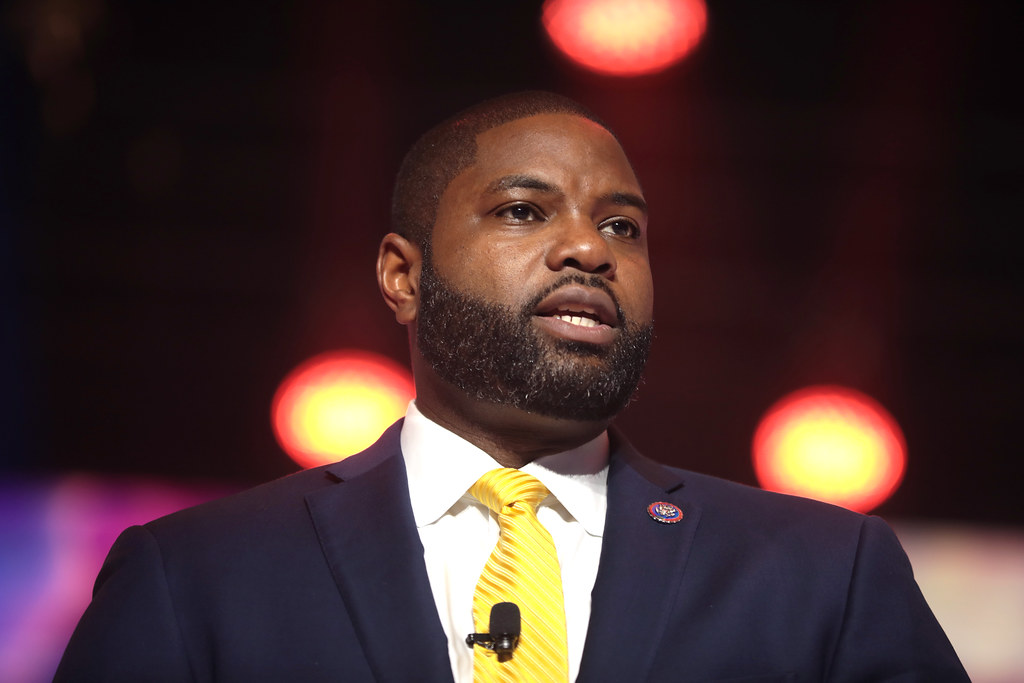

Quick Summary: Donalds Launches Attack Ads on Jolly Highlighting Transgender Issues
- Byron Donalds emerged as the Republican frontrunner in the 2026 Governor’s race, backed by substantial financial resources.
- Democrat David Jolly is focusing on affordability issues, challenging the Republican dominance in Florida.
- A poll shows Donalds leading Jolly 46% to 41%, indicating a competitive race despite Republican advantages.
- The Republican primary was influenced by the rivalry between Ron DeSantis and Donald Trump, impacting Donalds’ campaign.
- Donalds’ campaign has already launched significant attack ads against Jolly, highlighting transgender issues.
Source: Open external resource
Source: Read original article
Florida’s political landscape is heating up as the 2026 Governor’s race transitions rapidly into its general-election phase. Just days after the primary, Byron Donalds has emerged as the Republican frontrunner, wielding a formidable financial advantage. His campaign has amassed over $81 million, with a substantial portion still in reserve, allowing for an aggressive statewide ad blitz.
On the Democratic side, David Jolly seeks to challenge this dominance by focusing on pressing affordability issues such as insurance premiums, housing prices, and healthcare costs. Despite being outmatched financially, Jolly’s campaign is centered on a message of economic relief for Floridians, attempting to turn these issues into a referendum on Republican governance.
The backdrop of this race is shaped by the enduring rivalry between Ron DeSantis and Donald Trump, which has cast a shadow over the Republican primary. Donalds’ campaign, closely aligned with Trump, is leveraging this dynamic to solidify his standing. Meanwhile, Democrats are aiming to capitalize on economic discontent in a state that has leaned Republican in recent years.
As the race intensifies, the focus will be on whether Jolly can effectively counter Donalds’ financial and organizational might. With the election set for November 3, 2026, both candidates are gearing up for a critical fall sprint, with Donalds expected to continue his financial onslaught and Jolly striving to bring affordability issues to the forefront.
Florida Politics reported that Jolly had raised about $4 million for his main campaign account and just under $4 million for his political committee, a serious sum in most states but nowhere near Donalds’ financial apparatus. Florida’s hottest political story this morning is that the 2026 Governor’s race has effectively snapped into its general-election frame just 48 hours after the August 18 primary, with Byron Donalds emerging from the Republican side backed by a colossal cash machine and Democrats trying to turn Florida affordability into a live referendum on Republican rule.
In a July 21 Sunburn item, a poll snapshot showed Donalds leading Democrat David Jolly 46% to 41%, close enough to keep Democrats in the conversation but still a Republican advantage in a state that has trended right. That same operation said it had already knocked on more than 150,000 doors, giving Donalds a field and air-war advantage that no other Florida candidate could match.
What happens next is straightforward but consequential: both campaigns now move into the fall sprint toward the November 3, 2026 general election, with Donalds expected to continue leveraging his unmatched bankroll and Jolly trying to force the race onto insurance premiums, housing prices and healthcare costs. Watch for three immediate decisions in the coming days and weeks: whether Donalds formally names a running mate soon after the primary chatter, whether his campaign expands beyond conservative-base messaging into a broader affordability pitch, and whether Jolly can raise enough money to answer a Republican operation that already spent $20 million on ads before the general election truly began.
The Associated Press, in a race guide published August 17, said the Republican contest was shaped by the “longstanding rivalry” between Ron DeSantis and Donald Trump, a dynamic that hung over the primary even as Donalds’ position appeared stronger than his rivals’. Donalds’ side has already shown willingness to define Jolly early; a Florida Politics weekend election email on August 9 said Donalds’ campaign had released its first major attack ad of the presumptive general-election matchup, targeting Jolly over transgender issues.
On August 18, Florida held its primary election for Governor and other offices. By August 20, the political conversation documented in Florida Politics had already shifted away from who would win the Republican nomination and toward how Donalds would deploy his money, who might join his ticket and whether Democrats can turn a five-point polling deficit into a true fall battleground.
Florida’s political landscape is heating up as the 2026 Governor’s race transitions rapidly into its general-election phase. Florida’s hottest political story this morning is that the 2026 Governor’s race has effectively snapped into its general-election frame just 48 hours after the August 18 primary, with Byron Donalds emerging from the Republican side backed by a colossal cash machine and Democrats trying to turn Florida affordability into a live referendum on Republican rule.
A poll shows Donalds leading Jolly 46% to 41%, indicating a competitive race despite Republican advantages. His campaign has amassed over $81 million, with a substantial portion still in reserve, allowing for an aggressive statewide ad blitz.
With the election set for November 3, 2026, both candidates are gearing up for a critical fall sprint, with Donalds expected to continue his financial onslaught and Jolly striving to bring affordability issues to the forefront. In a July 21 Sunburn item, a poll snapshot showed Donalds leading Democrat David Jolly 46% to 41%, close enough to keep Democrats in the conversation but still a Republican advantage in a state that has trended right.
The scale and speed of this development has caught many observers off guard. Each new update adds another dimension to a story that is still unfolding, and the full picture will only become clear as more verified details emerge from the people and institutions directly involved.
Analysts who have tracked this issue closely say the current moment represents a genuine turning point. The decisions made in the coming weeks are expected to set the direction for months ahead, with ripple effects likely to extend well beyond the immediate actors in the story.
For those directly affected, the practical impact is already visible. People navigating this fast-changing situation are dealing with real consequences while new information continues to reshape what is known and what remains open to interpretation.
Historical parallels offer some context, though experts caution against drawing too close a comparison. Similar situations have played out before, but the specific combination of pressures, personalities, and timing here makes this moment distinct in ways that matter for how it ultimately resolves.
The political and economic dimensions of this story are deeply intertwined. What appears as a single event on the surface is in practice the convergence of multiple pressures that have been building quietly over a longer period than most public reporting has captured.