

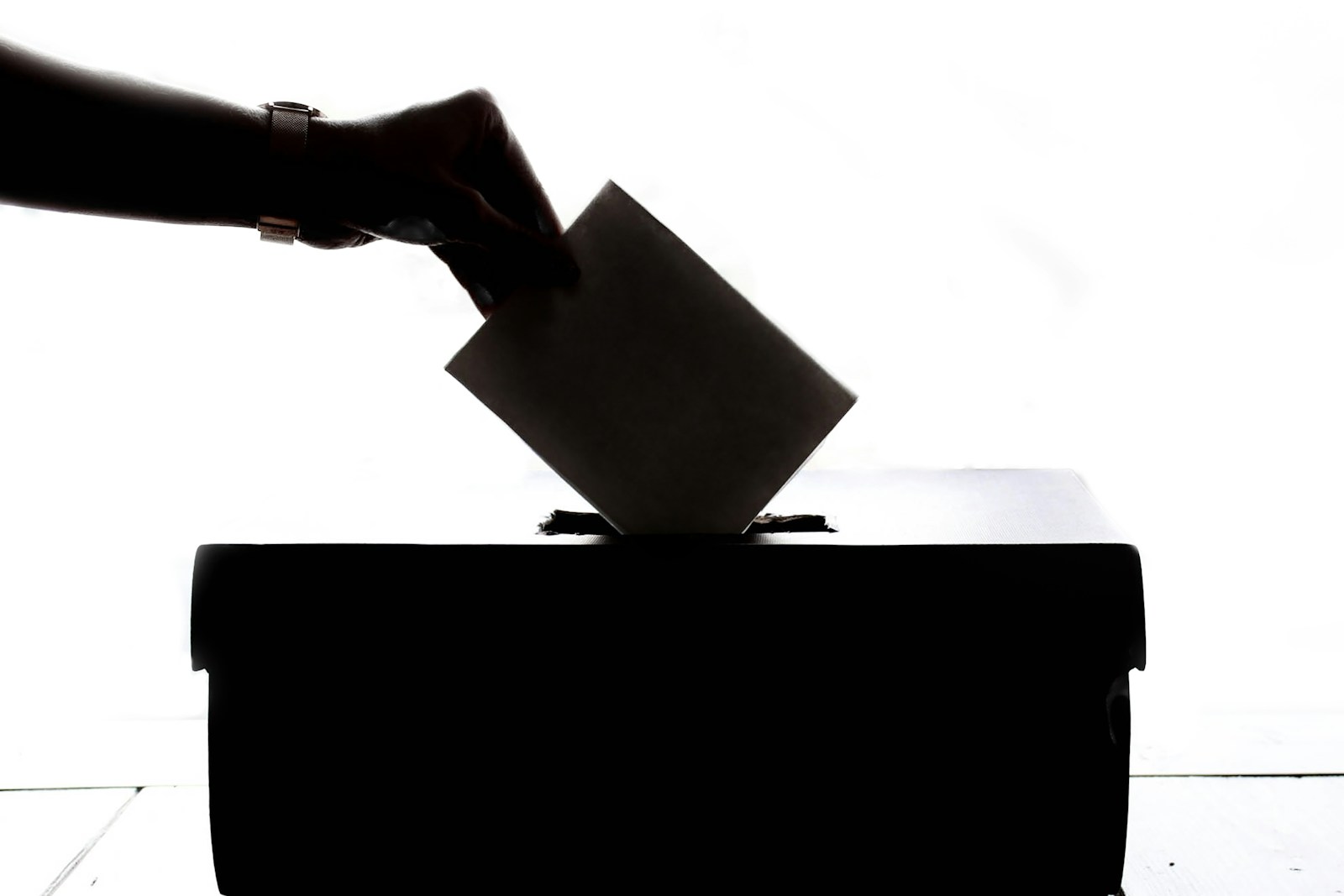

Quick Summary: State Board Reviews Photo ID Rules Amid Voter Support
- A recent poll shows 66% of likely North Carolina voters support requiring government-issued photo ID, with 47% strongly supporting it.
- The opinion piece argues that opposition to voter ID is mainly from Democratic pundits, not voters, suggesting a divide between elites and the electorate.
- Carolina Journal’s poll indicates economic concerns like inflation and healthcare are more immediate voter priorities than voter ID.
- The North Carolina State Board of Elections is currently reviewing updates to photo-ID rules, highlighting ongoing administrative debates.
- 241,000 North Carolina voters received letters about mismatched identifying numbers, spotlighting election integrity and voter access issues.
Source: Open external resource
Source: Read original article
The voter ID debate in North Carolina is heating up, driven by a recent poll showing strong public support for requiring government-issued photo identification. A whopping 66% of likely voters are in favor, with nearly half of them expressing strong support. This statistic has become the centerpiece of an opinion piece claiming the debate is over, though the reality is far more nuanced.
This opinion piece suggests that the real divide isn’t between Republicans and Democrats but between political elites and the general public. It argues that while pundits may oppose voter ID laws, the electorate is largely in favor. However, the broader context reveals that while voter ID might have support, issues like inflation, healthcare, and Social Security remain top concerns for voters, overshadowing the ID debate.
Adding complexity to the discussion, the North Carolina State Board of Elections is actively reviewing photo-ID rules, with potential changes pending approval. This ongoing administrative process underscores that the debate is far from settled, as the practicalities of implementing these rules are still contested.
Moreover, with 241,000 voters having received letters about mismatched identifying numbers, the intersection of election integrity and voter access becomes tangible. Proponents of stricter ID laws point to these mismatches as justification, while critics argue they create unnecessary barriers, especially for students and new registrants.
As we approach the 2026 midterms, the question remains whether the polling numbers will translate into electoral momentum or be bogged down by procedural hurdles and the broader economic concerns dominating voter priorities.
The freshest angle on this item is that it is not actually driving new reported facts on its own so much as piggybacking on a brand-new North Carolina polling result: a Carolina Journal opinion piece published August 25, 2026 argues the “voter ID debate is over” because 66% of likely voters support requiring government-issued photo identification, including 47% who “strongly support” it. That 66% figure is the core new development, and it appears to be the number the commentary is built around rather than any legislative breakthrough or court ruling.
Senate race, while also saying inflation and cost of living led voter concerns at 43%, followed by Social Security and Medicare at 23% and healthcare at 23%. ” In other words, the news value here is the attempt to turn a polling snapshot into a broader political argument about where the center of gravity now sits in the 2026 North Carolina and national election debate.
The State Board of Elections says it sent letters in early 2026 to more than 241,000 North Carolina voters whose identifying numbers did not validate against other databases when they registered. On August 25, 2026, the opinion piece itself was published, leaning heavily on the 66% support finding.
On August 26, 2026, additional reporting citing Carolina Journal polling described the summer as “brutal” for Republicans overall even while noting the poll was otherwise “relatively good news” for them on some issues. Politically, the issue is likely to remain a talking point through the 2026 midterm campaign, especially if campaigns decide that a 66% support number and 47% strong-support number are persuasive enough to feature in ads, debates, and turnout messaging.
That detail highlights the unresolved operational fight underneath the rhetoric, especially for younger voters, and it undercuts any simple claim that consensus has ended the dispute. That creates a political irony at the center of this story: Republicans may have found a favorable message issue in voter ID, but the same batch of recent polling still shows them struggling in marquee statewide races.
Senate race, while also saying inflation and cost of living led voter concerns at 43%, followed by Social Security and Medicare at 23% and healthcare at 23%. A whopping 66% of likely voters are in favor, with nearly half of them expressing strong support.
On August 25, 2026, the opinion piece itself was published, leaning heavily on the 66% support finding. On August 26, 2026, additional reporting citing Carolina Journal polling described the summer as “brutal” for Republicans overall even while noting the poll was otherwise “relatively good news” for them on some issues.
241,000 North Carolina voters received letters about mismatched identifying numbers, spotlighting election integrity and voter access issues. Moreover, with 241,000 voters having received letters about mismatched identifying numbers, the intersection of election integrity and voter access becomes tangible.
The scale and speed of this development has caught many observers off guard. Each new update adds another dimension to a story that is still unfolding, and the full picture will only become clear as more verified details emerge from the people and institutions directly involved.
Analysts who have tracked this issue closely say the current moment represents a genuine turning point. The decisions made in the coming weeks are expected to set the direction for months ahead, with ripple effects likely to extend well beyond the immediate actors in the story.
For those directly affected, the practical impact is already visible. People navigating this fast-changing situation are dealing with real consequences while new information continues to reshape what is known and what remains open to interpretation.
Historical parallels offer some context, though experts caution against drawing too close a comparison. Similar situations have played out before, but the specific combination of pressures, personalities, and timing here makes this moment distinct in ways that matter for how it ultimately resolves.
The political and economic dimensions of this story are deeply intertwined. What appears as a single event on the surface is in practice the convergence of multiple pressures that have been building quietly over a longer period than most public reporting has captured.