

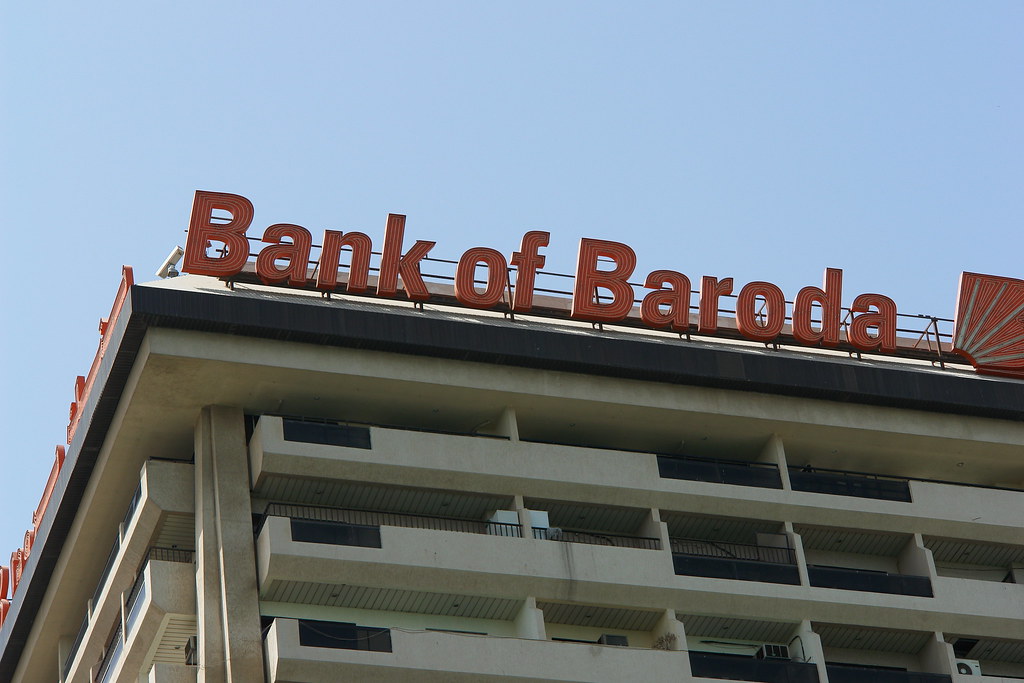

Quick Summary: Investors React to BR Shettys Allegations, Bank of Baroda Stock Falls
- Bank of Baroda has not yet been served with BR Shetty’s $15 billion lawsuit, which has already impacted its stock value.
- The lawsuit claims $5 billion each for direct losses, consequential damages, and reputational harm, plus 18% annual interest.
- Shetty accuses the bank of facilitating fund diversion and ignoring anti-money laundering warnings.
- The bank counters that the allegations are unproven and highlights its own recovery actions against Shetty.
- Investors reacted sharply, with Bank of Baroda shares dropping over 3% following the lawsuit news.
Source: Open external resource
Source: Read original article
Bank of Baroda finds itself in the eye of a financial storm as it grapples with a $15 billion lawsuit filed by BR Shetty. The bank asserts it has not yet been served with the suit, yet the mere news of it has already sent shockwaves through the market, erasing significant stock value.
BR Shetty’s lawsuit is nothing short of staggering, demanding $5 billion each for direct losses, consequential damages, and reputational harm, along with an 18% annual interest rate. The allegations are serious, accusing the bank of enabling fund diversion and ignoring anti-money laundering red flags. This lawsuit revives old questions about the bank’s involvement in the collapse of Shetty’s business empire.
The bank’s defense is clear: it claims the allegations are unproven and points to its ongoing recovery actions against Shetty in both India and the UAE. Bank of Baroda is also leveraging past legal victories, including a recent settlement related to NMC-linked litigation.
Investors are understandably jittery. The bank’s shares fell more than 3% following the news, highlighting the market’s sensitivity to the lawsuit’s headline number, even though the bank has yet to receive official court papers. This situation underscores the precarious balance between legal proceedings and market perceptions.
As the legal battle unfolds, all eyes will be on the procedural developments. The court’s next steps could either substantiate Shetty’s claims or reveal them as mere market-moving headlines. For now, the financial community watches closely, aware that the outcome could reshape perceptions of corporate accountability and governance in the region.
The disconnect is notable: a lawsuit not yet served still erased value from the stock because of the sheer scale of the damages sought and because the allegations revive questions about the bank’s role in the NMC collapse, where hidden debt had previously been reported at more than $4 billion. Shishir Shetty, in the Bombay High Court on Tuesday, October 13, 2026.
If the case advances, the immediate questions will be whether the court entertains interim relief, whether the defendants seek dismissal or challenge jurisdiction, and whether Shetty can turn a sensational $15 billion filing into a substantiated courtroom case rather than just a market-moving headline. He is also asking for interest at 18% a year from the date of filing until payment.
The central conflict is not just whether fraud occurred, but who enabled it and who should bear the financial and legal fallout from the collapse of Shetty’s business empire. A striking twist in the latest reports is the collision between this new $15 billion damages claim and the bank’s recent legal history around NMC.
BR Shetty, the founder of NMC Healthcare and UAE Exchange, is seeking $5 billion in direct losses, $5 billion in consequential damages tied to lost business and investment opportunities, and another $5 billion for reputational damage and loss of goodwill. Market coverage highlighted that this Bombay suit comes after Bank of Baroda had already settled NMC-linked litigation in July by paying about $600 million, roughly Rs 5,700 crore, to the administrators of the insolvent healthcare group and its affiliates.
The first real checkpoint will be service of the suit on Bank of Baroda and the other defendants, after which the court process in Bombay should force clearer public positions on jurisdiction, maintainability, and the underlying fraud allegations. Bank of Baroda’s most consequential new line of defense is that it says it still has not even been served with BR Shetty’s Bombay High Court suit, while simultaneously framing the case as a counterattack by a borrower the bank says still owes it about Rs 2,800 crore.
The bank’s shares fell more than 3% following the news, highlighting the market’s sensitivity to the lawsuit’s headline number, even though the bank has yet to receive official court papers. The disconnect is notable: a lawsuit not yet served still erased value from the stock because of the sheer scale of the damages sought and because the allegations revive questions about the bank’s role in the NMC collapse, where hidden debt had previously been reported at more than $4 billion.
The lawsuit claims $5 billion each for direct losses, consequential damages, and reputational harm, plus 18% annual interest. Investors reacted sharply, with Bank of Baroda shares dropping over 3% following the lawsuit news.
BR Shetty’s lawsuit is nothing short of staggering, demanding $5 billion each for direct losses, consequential damages, and reputational harm, along with an 18% annual interest rate. Shishir Shetty, in the Bombay High Court on Tuesday, October 13, 2026.
He is also asking for interest at 18% a year from the date of filing until payment. The central conflict is not just whether fraud occurred, but who enabled it and who should bear the financial and legal fallout from the collapse of Shetty’s business empire.
The scale and speed of this development has caught many observers off guard. Each new update adds another dimension to a story that is still unfolding, and the full picture will only become clear as more verified details emerge from the people and institutions directly involved.
Analysts who have tracked this issue closely say the current moment represents a genuine turning point. The decisions made in the coming weeks are expected to set the direction for months ahead, with ripple effects likely to extend well beyond the immediate actors in the story.
For those directly affected, the practical impact is already visible. People navigating this fast-changing situation are dealing with real consequences while new information continues to reshape what is known and what remains open to interpretation.
Historical parallels offer some context, though experts caution against drawing too close a comparison. Similar situations have played out before, but the specific combination of pressures, personalities, and timing here makes this moment distinct in ways that matter for how it ultimately resolves.
The political and economic dimensions of this story are deeply intertwined. What appears as a single event on the surface is in practice the convergence of multiple pressures that have been building quietly over a longer period than most public reporting has captured.