


Quick Summary: Agility Robotics Secures $620 Million for Digit Robot Expansion
- Agility Robotics announced a $2.5 billion SPAC deal with Churchill Capital Corp XI, aiming to go public by 2026.
- The merger is expected to generate over $620 million in gross proceeds, bolstering Agility’s efforts to scale its Digit robots.
- Agility claims to be the first publicly traded company focused entirely on humanoid robots, challenging the market’s reliance on hype and prototypes.
- Agility’s backers include Amazon, Nvidia, SoftBank, and Foxconn, with early customers like Toyota and Mercado Libre.
- The company’s Digit v5 platform reportedly secured over $300 million in multiyear contracted orders, though this figure is not officially confirmed.
Source: Open external resource
Source: Read original article
Agility Robotics is making waves with its bold $2.5 billion SPAC merger, aiming to revolutionize warehouse staffing with humanoid robots. This isn’t just another tech listing; it’s a litmus test for Wall Street’s willingness to back humanoid robots as a viable industrial solution rather than a sci-fi spectacle.
The merger with Churchill Capital Corp XI, expected to close by 2026, could bring over $620 million in gross proceeds, positioning Agility to scale its Digit robots beyond pilot projects. This move marks a significant shift, as Agility claims it will be the first publicly traded company dedicated solely to humanoid robots, a sector long dominated by hype and flashy prototypes.
Agility’s strategy is underpinned by heavyweights like Amazon, Nvidia, SoftBank, and Foxconn, with early adopters including Toyota and Mercado Libre. The company reports $300 million in multiyear orders for its Digit v5 platform, a promising yet unofficial figure. The real question is whether these humanoid robots can transition from novelty to necessity in industrial operations.
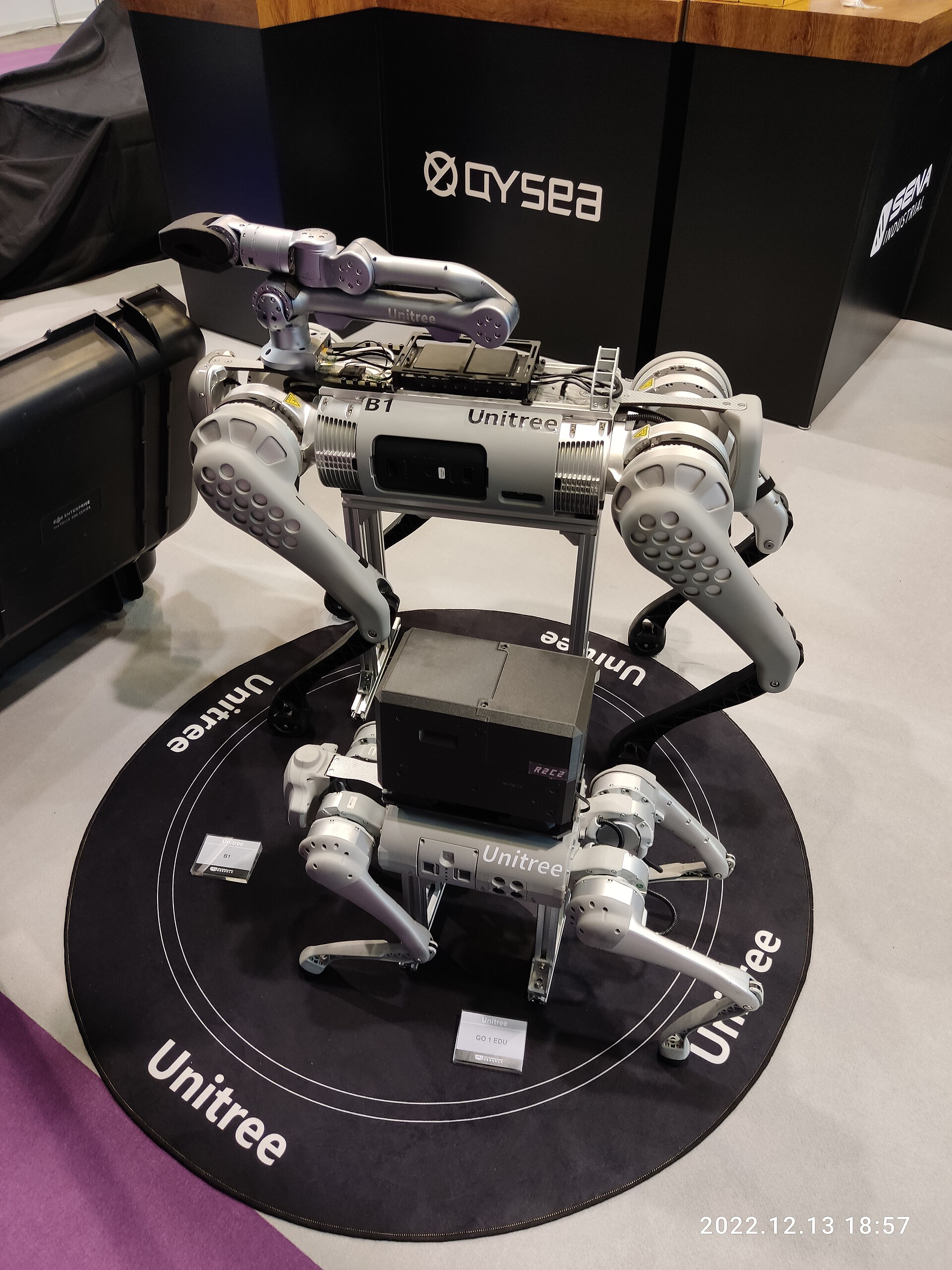
As Agility heads to market via a SPAC, it faces the challenge of proving that warehouse clients will invest in these advanced, AI-driven machines. The competition is fierce, with Tesla and Chinese firms like Unitree also vying for dominance in the humanoid robotics space. Co-founder Jonathan Hurst emphasizes that Digit is designed for practicality, not human imitation, aiming to tackle repetitive and hazardous warehouse tasks.
The stakes are high as Churchill shareholders and regulators decide on Agility’s public debut. Success would not only validate Agility’s vision but also set a precedent for the humanoid robotics industry, forcing Wall Street to evaluate the real-world potential of these machines to solve staffing challenges at scale.
Separate market reporting this week said Agility’s Digit v5 platform has secured more than $300 million in multiyear contracted orders, though that figure appears in market coverage rather than the core wire and company announcement, so it should be treated as an important but still secondary data point. The companies said the deal is structured to deliver more than $620 million in gross proceeds, including roughly $420 million held in Churchill XI’s trust and about $200 million from a PIPE financing, giving Agility a much larger war chest as it tries to scale its Digit robots beyond pilot deployments and into mainstream warehouse operations.
5 billion SPAC deal is not just another AI listing; it is a live test of whether investors will fund humanoid robots as a real warehouse-labor business rather than a futuristic demo. 5 billion and is expected to close by the end of 2026, subject to regulatory and shareholder approval.
The public listing is expected by the end of 2026 if shareholders approve the transaction and regulators sign off, so the next phase is not a product launch but a financing and credibility test in the public markets. On June 24, Agility and Churchill announced the definitive merger agreement and began pitching investors on the transaction.
The robot’s birdlike legs and clawlike grippers are being sold as a practical design choice for moving bins and totes in warehouses, and Johnson’s message is that Agility is commercializing a tool for repetitive, dirty and injury-prone work, not building a general-purpose android. The Washington Post and other major outlets moved the story the same day, with follow-on market coverage on June 24 and June 25 emphasizing the unusually large capital raise for a humanoid-robotics company and Foxconn’s role in leading the PIPE.
The central conflict is whether humanoid robotics can become a durable industrial category before public investors lose patience. There is also a notable twist in how Agility is trying to differentiate itself from the broader humanoid mania.
5 billion SPAC deal with Churchill Capital Corp XI, aiming to go public by 2026. The merger is expected to generate over $620 million in gross proceeds, bolstering Agility’s efforts to scale its Digit robots.
5 billion SPAC merger, aiming to revolutionize warehouse staffing with humanoid robots. The merger with Churchill Capital Corp XI, expected to close by 2026, could bring over $620 million in gross proceeds, positioning Agility to scale its Digit robots beyond pilot projects.
The company reports $300 million in multiyear orders for its Digit v5 platform, a promising yet unofficial figure. On June 24, Agility and Churchill announced the definitive merger agreement and began pitching investors on the transaction.
The scale and speed of this development has caught many observers off guard. Each new update adds another dimension to a story that is still unfolding, and the full picture will only become clear as more verified details emerge from the people and institutions directly involved.
Analysts who have tracked this issue closely say the current moment represents a genuine turning point. The decisions made in the coming weeks are expected to set the direction for months ahead, with ripple effects likely to extend well beyond the immediate actors in the story.
For those directly affected, the practical impact is already visible. People navigating this fast-changing situation are dealing with real consequences while new information continues to reshape what is known and what remains open to interpretation.
Historical parallels offer some context, though experts caution against drawing too close a comparison. Similar situations have played out before, but the specific combination of pressures, personalities, and timing here makes this moment distinct in ways that matter for how it ultimately resolves.
The political and economic dimensions of this story are deeply intertwined. What appears as a single event on the surface is in practice the convergence of multiple pressures that have been building quietly over a longer period than most public reporting has captured.