

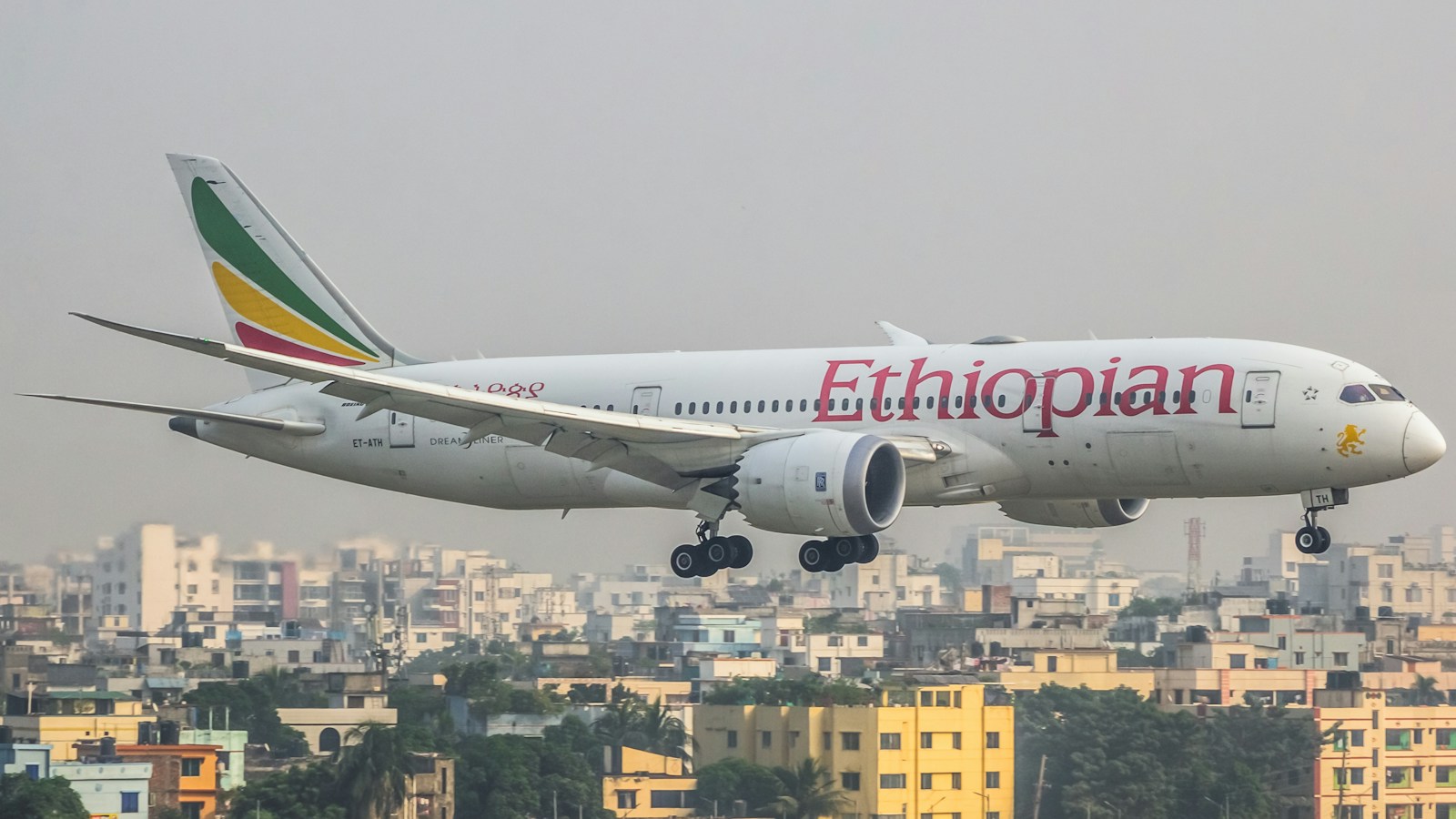

Quick Summary: Ethiopian Airlines Expands With New Mauritius Route
- Ethiopian Airlines launched a new Mauritius route — enhancing connectivity and showcasing Africa’s travel growth.
- Air Zimbabwe plans to resume Harare-London flights by 2026 — a significant move after a 14-year hiatus.
- International arrivals reached 1.52 billion in 2025 — Africa recorded robust growth, outpacing global trends.
- South Africa, Morocco, Egypt, Kenya, and Tanzania are key tourist destinations — contributing to Africa’s travel surge.
- Johannesburg-based Cruise Vacations won Africa’s Best Cruise Travel Agency — highlighting growth beyond airlines.
Source: Open external resource
Source: Read original article
Africa’s travel industry is soaring to new heights, driven by strategic airline expansions and a resurgence in tourism. Ethiopian Airlines’ recent launch of a Mauritius route is a clear testament to this upward trajectory, setting the stage for increased connectivity across continents.
Equally ambitious is Air Zimbabwe’s plan to restore its Harare to London Gatwick service by 2026, marking a triumphant return after a 14-year absence. This move, facilitated by a partnership with Spanish carrier Plus Ultra, aims to enhance travel options for the Zimbabwean diaspora and boost air-freight capacity.
According to UN Tourism data, international arrivals are projected to reach 1.52 billion in 2025, with Africa showing particularly strong growth. Countries like South Africa, Morocco, Egypt, Kenya, and Tanzania are emerging as top tourist destinations, contributing significantly to this trend.
Beyond airlines, the travel rebound is also evident in other sectors. Johannesburg-based Cruise Vacations has been recognized as Africa’s Best Cruise Travel Agency for five consecutive years, underscoring the continent’s expanding travel industry.
As Africa continues to power its travel growth, the focus remains on sustainable expansion and leveraging strategic partnerships to ensure long-term success. The continent’s ability to bridge gaps and create new opportunities in the travel sector is a testament to its resilience and potential.
” The company had reopened only in April 2022 after the pandemic and then won African titles in 2022, 2023, 2024, 2025 and 2026, plus the World’s Best Cruise Travel Agency award in 2024. Also on July 13, CAJ reported Air Zimbabwe’s London Gatwick comeback, with launch targeted for the end of July 2026.
A second, more aggressive move came the same day in Harare, where CAJ reported that Air Zimbabwe plans to resume direct scheduled flights between Harare and London Gatwick by the end of July 2026, restoring a route absent for more than 14 years. 52 billion in 2025, up 4 percent from 2024, while Africa recorded particularly strong growth even as Europe remained the biggest destination region.
CAJ highlighted South Africa, Morocco, Egypt, Kenya and Tanzania as standout African draws, with Europe taking about 794 million international tourists in 2025—more than half the global total. Then on October 14, the cruise-agency award showed that the rebound is spreading beyond airlines into adjacent travel businesses.
What happens next is concrete rather than abstract: the Air Zimbabwe relaunch faces its end-of-July 2026 target, and its credibility will hinge on whether the three-weekly Harare-Gatwick operation actually enters scheduled service under the Plus Ultra ACMI structure. The clearest development in the reporting is Ethiopian Airlines’ July 13 launch of a new passenger service to Mauritius, which CAJ says began operations on Sunday and will run three times a week via Addis Ababa.
The relaunch is structured around a long-term ACMI deal: Spanish carrier Plus Ultra will operate an Airbus A330, and the service is expected to start with three weekly flights under Air Zimbabwe’s code. Chapman Freeborn, which helped assemble the arrangement, said the route would improve options for the Zimbabwean diaspora, business travelers and tourists while also increasing direct air-freight capacity for perishable exports bound for the UK.
52 billion in 2025 — Africa recorded robust growth, outpacing global trends. Equally ambitious is Air Zimbabwe’s plan to restore its Harare to London Gatwick service by 2026, marking a triumphant return after a 14-year absence.
52 billion in 2025, up 4 percent from 2024, while Africa recorded particularly strong growth even as Europe remained the biggest destination region. CAJ highlighted South Africa, Morocco, Egypt, Kenya and Tanzania as standout African draws, with Europe taking about 794 million international tourists in 2025—more than half the global total.
52 billion in 2025, with Africa showing particularly strong growth. Then on October 14, the cruise-agency award showed that the rebound is spreading beyond airlines into adjacent travel businesses.
The scale and speed of this development has caught many observers off guard. Each new update adds another dimension to a story that is still unfolding, and the full picture will only become clear as more verified details emerge from the people and institutions directly involved.
Analysts who have tracked this issue closely say the current moment represents a genuine turning point. The decisions made in the coming weeks are expected to set the direction for months ahead, with ripple effects likely to extend well beyond the immediate actors in the story.
For those directly affected, the practical impact is already visible. People navigating this fast-changing situation are dealing with real consequences while new information continues to reshape what is known and what remains open to interpretation.
Historical parallels offer some context, though experts caution against drawing too close a comparison. Similar situations have played out before, but the specific combination of pressures, personalities, and timing here makes this moment distinct in ways that matter for how it ultimately resolves.
The political and economic dimensions of this story are deeply intertwined. What appears as a single event on the surface is in practice the convergence of multiple pressures that have been building quietly over a longer period than most public reporting has captured.