

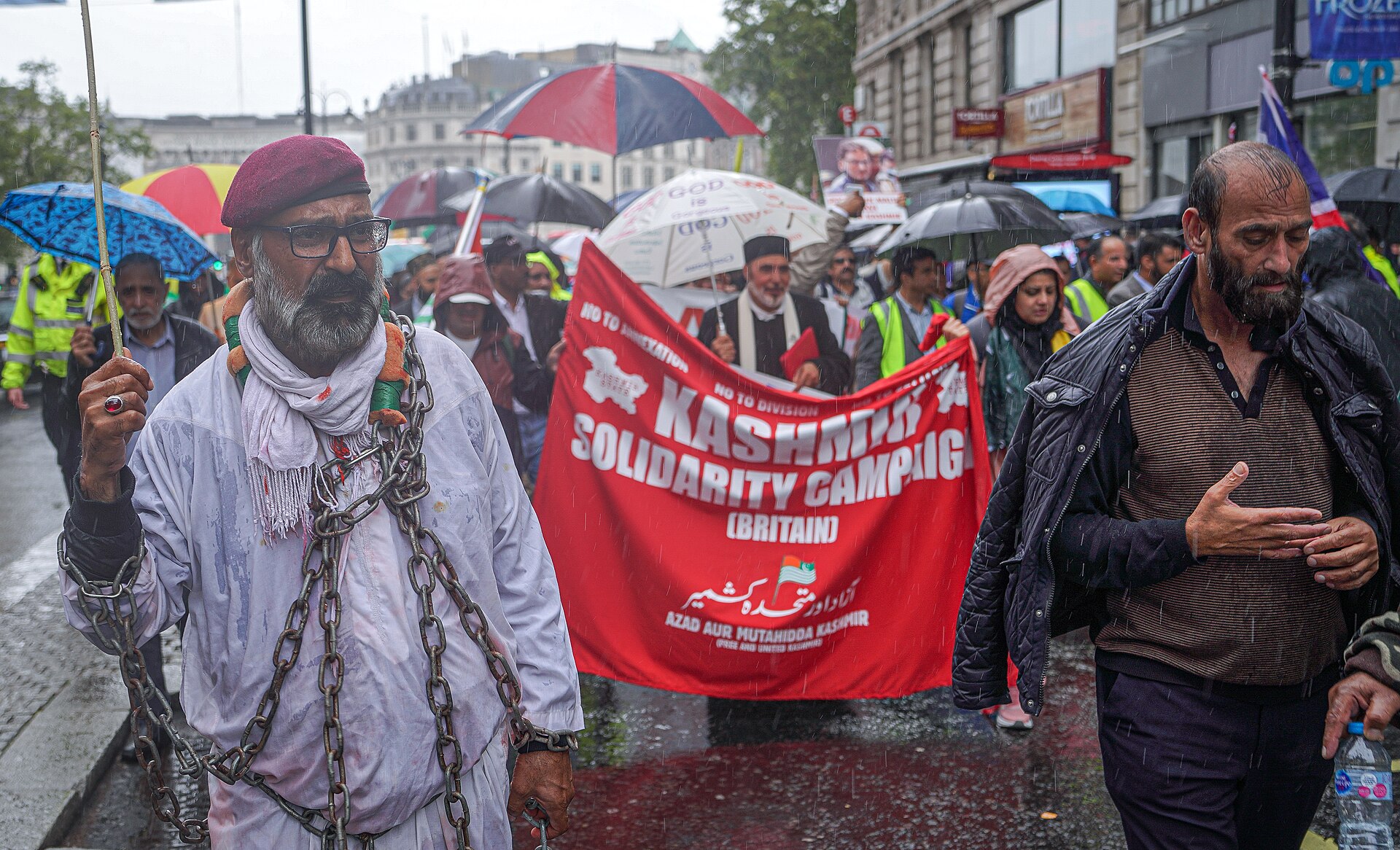

Quick Summary: APHC Calls for UN Intervention Over Kashmir’s Detainee Crisis
- APHC urged the UN and ICJ to address the illegal detention of Kashmiris — highlighting the denial of fair trials.
- APHC linked the detention issue to the killing of Arif Hussain and opposed India’s 2019 constitutional move in Kashmir.
- India’s High Court refused to halt the release of activists Parvez and Mehraj — their legal battle continues.
- APHC named over 30 detainees, including prominent leaders, underscoring the scale of the issue.
- APHC claims thousands are detained under PSA and UAPA — arguing it’s to silence dissent.
Source: Open external resource
Source: Read original article
The All Parties Hurriyat Conference (APHC) has sounded a clarion call to the international community, urging them to press India on the plight of illegally detained Kashmiris. This appeal comes amid a fresh wave of detentions and legal battles that spotlight the ongoing struggle for justice in the region.
APHC’s recent statement ties the detention controversy to the killing of 30-year-old Arif Hussain and India’s controversial 2019 constitutional changes in Kashmir. The organization argues that these moves are part of a broader strategy to suppress dissent and undermine political sovereignty.
In a twist of legal drama, India’s High Court recently declined to halt the release of activists Khurram Parvez and Irfan Mehraj, despite an appeal from the National Investigation Agency. Though released, these activists remain under strict restrictions, highlighting the ongoing legal entanglements.
APHC has named over 30 detainees, including prominent figures like Masarat Alam Butt and Shabbir Ahmed Shah, drawing attention to the scale and specificity of the detentions. They assert that thousands are held under laws like the Public Safety Act, aimed at stifling demands for self-determination.
As the legal proceedings continue in India, the international community’s response remains crucial. The APHC’s call to action emphasizes the need for global awareness and intervention to address these human rights concerns.
In the KMS report published on August 8, 2026, APHC spokesperson Advocate Abdul Rashid said the group was asking both the United Nations and the International Court of Justice to take notice of what it called the “illegal detention” of Kashmiris and the denial of fair trials. More substantively, the July 21 APHC-AJK statement tied the detention controversy to the reported killing of 30-year-old Arif Hussain in Bhaderwah, Doda district, and reiterated opposition to India’s “August 5, 2019” constitutional move in Kashmir, folding arrests, security operations and political sovereignty into one running dispute.
AP said India’s lower court granted bail last week, the NIA appealed, and the High Court then declined on Tuesday to halt their release while still tightening restrictions on their movement and activities. That is a genuine twist: the men are out of jail after arrests in 2021 and 2023, yet they are still entangled in proceedings that “will continue in the coming weeks,” underscoring how release does not end the prosecution.
AP reported that both men were released from a New Delhi jail “late Wednesday,” but remain under “tight court-imposed restrictions,” while the NIA pushes to reverse the ruling; that means the broader detention debate has shifted from purely political denunciation to an active court battle with immediate consequences. The statement named more than 30 detainees, including Masarat Alam Butt, Shabbir Ahmed Shah, Muhammad Yasin Malik, Nayeem Ahmed Khan, Aasiya Andrabi, Fehmeeda Sufi, Naheeda Nasreen, Ayaz Muhammad Akbar and Advocate Mian Abdul Qayyum, making the article notable for the specificity of who APHC says remains behind bars.
APHC-AJK leaders said on July 21 that “thousands of other Kashmiris” were being held under the PSA and other laws, and on July 26 senior APHC-AJK leader Syed Faiz Naqshbandi said political leaders, journalists, lawyers and rights defenders were being detained under PSA and UAPA to suppress demands for self-determination. What makes the story stand out right now is the collision between APHC’s sweeping political claim and the narrower, testable court developments in the Parvez-Mehraj case.
The most concrete new element around this issue in recent reporting is not a release of APHC-linked leaders, but the Delhi High Court’s refusal this week to suspend bail for Parvez and Mehraj after India’s National Investigation Agency appealed a lower-court order. APHC’s August 8 article carried a “41” engagement count on the page snapshot, while the July 21 and July 26 KMS reports showed “360” and “370” respectively, suggesting the detainee issue has remained a recurring, visible theme in KMS coverage over at least a 19-day stretch.
APHC’s recent statement ties the detention controversy to the killing of 30-year-old Arif Hussain and India’s controversial 2019 constitutional changes in Kashmir. AP said India’s lower court granted bail last week, the NIA appealed, and the High Court then declined on Tuesday to halt their release while still tightening restrictions on their movement and activities.
That is a genuine twist: the men are out of jail after arrests in 2021 and 2023, yet they are still entangled in proceedings that “will continue in the coming weeks,” underscoring how release does not end the prosecution. The statement named more than 30 detainees, including Masarat Alam Butt, Shabbir Ahmed Shah, Muhammad Yasin Malik, Nayeem Ahmed Khan, Aasiya Andrabi, Fehmeeda Sufi, Naheeda Nasreen, Ayaz Muhammad Akbar and Advocate Mian Abdul Qayyum, making the article notable for the specificity of who APHC says remains behind bars.
The scale and speed of this development has caught many observers off guard. Each new update adds another dimension to a story that is still unfolding, and the full picture will only become clear as more verified details emerge from the people and institutions directly involved.
Analysts who have tracked this issue closely say the current moment represents a genuine turning point. The decisions made in the coming weeks are expected to set the direction for months ahead, with ripple effects likely to extend well beyond the immediate actors in the story.
For those directly affected, the practical impact is already visible. People navigating this fast-changing situation are dealing with real consequences while new information continues to reshape what is known and what remains open to interpretation.
Historical parallels offer some context, though experts caution against drawing too close a comparison. Similar situations have played out before, but the specific combination of pressures, personalities, and timing here makes this moment distinct in ways that matter for how it ultimately resolves.
The political and economic dimensions of this story are deeply intertwined. What appears as a single event on the surface is in practice the convergence of multiple pressures that have been building quietly over a longer period than most public reporting has captured.