


Quick Summary: Trumps Ballroom Project Faces Public Backlash Over Safety Concerns
- Trump claims the ballroom may cost $400 million, but reports suggest it could reach $600 million, with taxpayers covering half.
- A federal judge ordered the Kennedy Center to give 30 days’ notice before major changes, highlighting court vigilance on federal property projects.
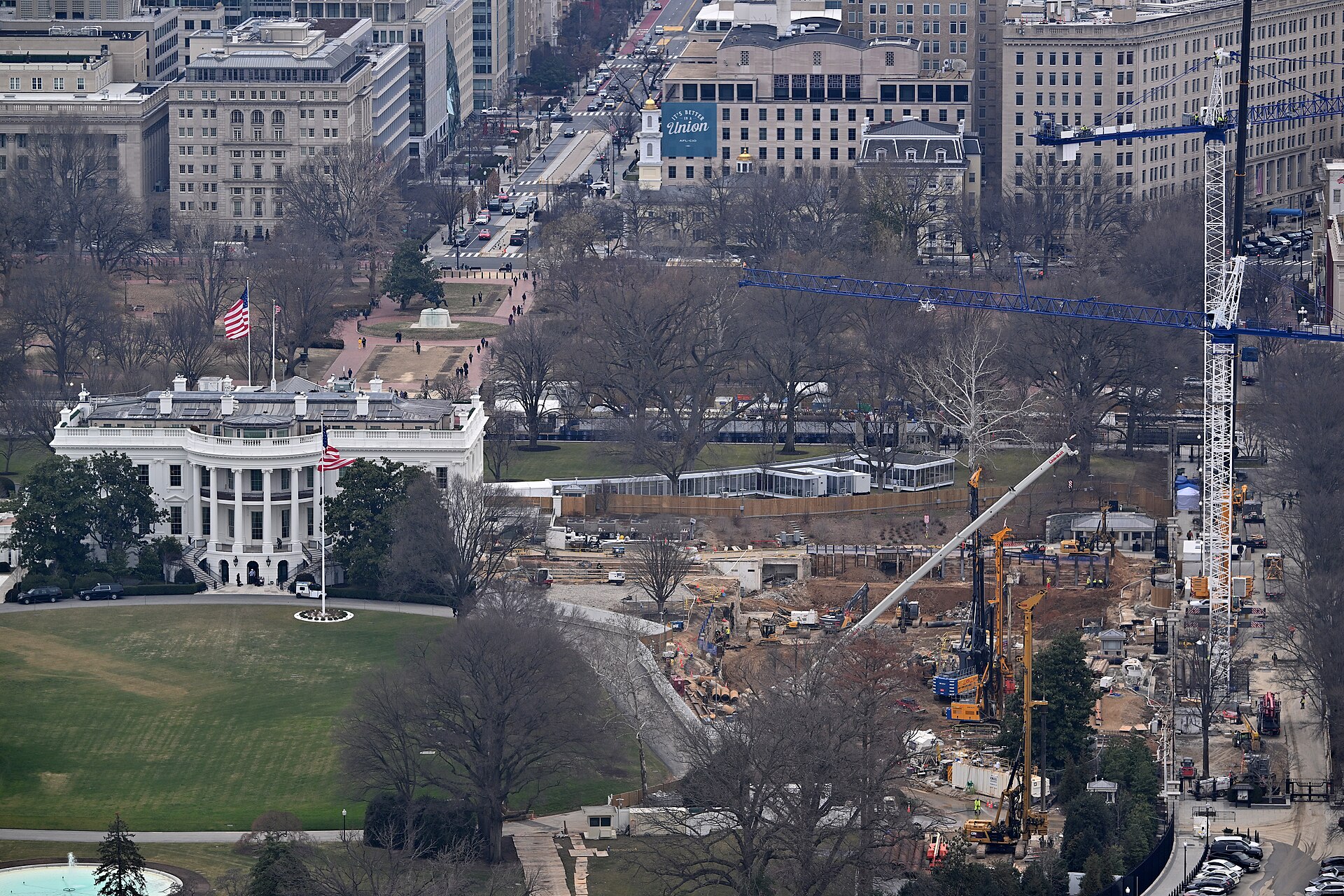
- The East Wing was demolished for the ballroom, with Trump framing construction as a security necessity.
- A poll shows 65% of the public is dissatisfied with Trump’s construction projects, indicating political vulnerability.
- Architectural concerns arose after the first architect resigned, citing safety code violations.
Source: Open external resource
Source: Read original article
The White House ballroom project has ignited a fierce debate over safety, cost, and political maneuvering. At the heart of the controversy is a clash between President Trump and architectural experts over whether the design meets essential safety codes.
Trump has touted the ballroom as a necessary security measure, estimating its cost at $400 million. However, contractor invoices suggest the price tag could soar to $600 million, with taxpayers potentially footing half the bill. This discrepancy has fueled skepticism among watchdogs and preservation groups.
Architectural concerns have taken center stage after the initial architect resigned, citing violations of life-safety rules. The current architect, Shalom Baranes, has remained tight-lipped, leaving critics questioning whether the design adheres to national safety standards.
Public sentiment is largely against the project, with a Washington Post-Ipsos poll revealing that 65% of respondents are dissatisfied with Trump’s construction endeavors. Meanwhile, the rapid pace of demolition and construction has alarmed courts, prompting a federal judge to demand advance notice for changes at the Kennedy Center.
This battle is not just about architecture; it’s a test of Trump’s ability to use security claims to sidestep traditional oversight. As the ballroom project progresses, the tension between claimed security needs and alleged safety lapses remains a critical point of contention.
The cost has become a flashpoint of its own: Trump has said the ballroom may cost about $400 million and be funded with private donations, but Washington Post reporting earlier this month said contractor invoices indicated the real cost could reach $600 million, with taxpayers covering about half. Six days ago, AP also reported a federal judge ordered the Kennedy Center to give 30 days’ notice before major physical changes, a sign that courts are increasingly alert to abrupt presidential construction decisions on symbolic federal properties.
Trump has repeatedly framed the ballroom as a security necessity, with administration allies arguing it is needed to protect the president, staff and visiting dignitaries. Within the past week, AP reported that the East Wing had already been demolished to make room for Trump’s ballroom and that the president has separately been touting a broader pattern of construction around Washington in security terms.
A Washington Post-Ipsos poll cited in recent coverage found only 32 percent of the public was “enthusiastic” or “satisfied” with Trump’s construction projects, while 65 percent was “dissatisfied” or “upset,” suggesting the political ground under the project is weak even as construction momentum continues. That gap between public claims and reported invoices has deepened suspicion among preservation groups and watchdogs challenging the project.
On one side are Trump and his allies, who argue the ballroom is “beautiful and necessary” and essential for safety, especially for large events involving senior officials. The Supreme Court cleared work to continue on the ballroom in late August while the broader case proceeds, giving Trump a major interim win, but that did not settle the merits of the dispute.
A project statement cited in follow-on reporting says the “current team of architects and consultants is responsible for designing the East Wing according to nationally recognized fire and safety codes,” but that assurance has not resolved the underlying question of what exactly McCrery objected to and whether the final plans changed. The latest 7-day timeline adds to the sense that the project is moving forward faster than the criticism can catch it.
A poll shows 65% of the public is dissatisfied with Trump’s construction projects, indicating political vulnerability. However, contractor invoices suggest the price tag could soar to $600 million, with taxpayers potentially footing half the bill.
Public sentiment is largely against the project, with a Washington Post-Ipsos poll revealing that 65% of respondents are dissatisfied with Trump’s construction endeavors. Quick Summary: Current White House ballroom architect weighs in on the building’s safety – The Washington Post Trump claims the ballroom may cost $400 million, but reports suggest it could reach $600 million, with taxpayers covering half.
Within the past week, AP reported that the East Wing had already been demolished to make room for Trump’s ballroom and that the president has separately been touting a broader pattern of construction around Washington in security terms. A Washington Post-Ipsos poll cited in recent coverage found only 32 percent of the public was “enthusiastic” or “satisfied” with Trump’s construction projects, while 65 percent was “dissatisfied” or “upset,” suggesting the political ground under the project is weak even as construction momentum continues.
Meanwhile, the rapid pace of demolition and construction has alarmed courts, prompting a federal judge to demand advance notice for changes at the Kennedy Center. On one side are Trump and his allies, who argue the ballroom is “beautiful and necessary” and essential for safety, especially for large events involving senior officials.
The scale and speed of this development has caught many observers off guard. Each new update adds another dimension to a story that is still unfolding, and the full picture will only become clear as more verified details emerge from the people and institutions directly involved.
Analysts who have tracked this issue closely say the current moment represents a genuine turning point. The decisions made in the coming weeks are expected to set the direction for months ahead, with ripple effects likely to extend well beyond the immediate actors in the story.
For those directly affected, the practical impact is already visible. People navigating this fast-changing situation are dealing with real consequences while new information continues to reshape what is known and what remains open to interpretation.
Historical parallels offer some context, though experts caution against drawing too close a comparison. Similar situations have played out before, but the specific combination of pressures, personalities, and timing here makes this moment distinct in ways that matter for how it ultimately resolves.
The political and economic dimensions of this story are deeply intertwined. What appears as a single event on the surface is in practice the convergence of multiple pressures that have been building quietly over a longer period than most public reporting has captured.