

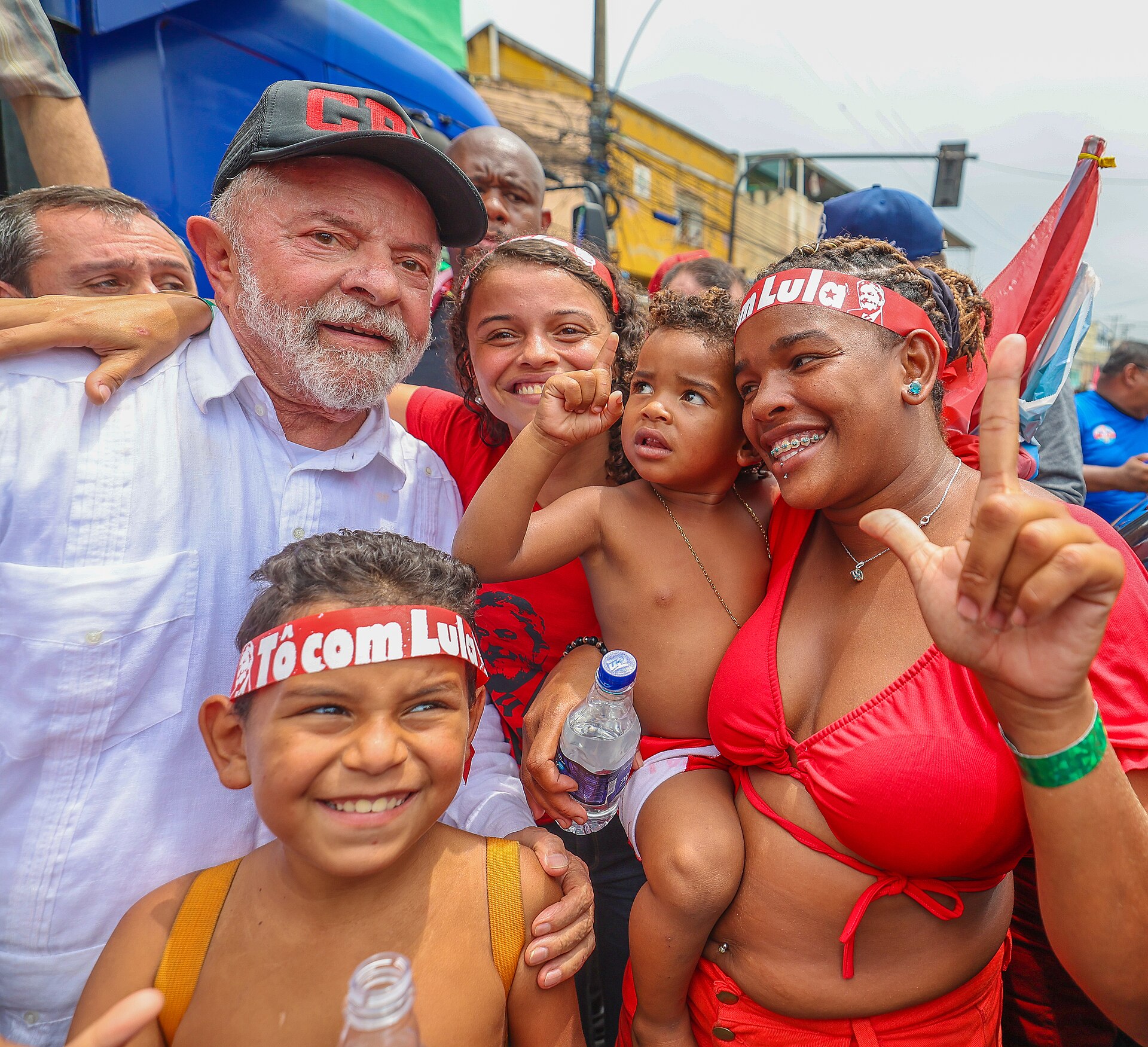

Quick Summary: Lulas Bold Crime Strategy in Rio Targets Voter Concerns Ahead of Election
- Brazil’s President Lula da Silva launched a federal crime strategy in Rio, making organized crime a key election issue.
- On September 17, Lula increased Bolsa Família payments by 15%, aligning with his anti-crime initiative.
- The strategy combines social welfare with a strong federal stance against gangs, targeting voter concerns.
- Lula’s approach challenges his main opponent, Flávio Bolsonaro, who emphasizes law-and-order policies.
- The election on October 4 will test whether Lula’s security measures sway public opinion.
Source: Open external resource
Source: Read original article
In a bold move to capture the hearts and minds of Brazilians, President Luiz Inácio Lula da Silva is reshaping the narrative of the upcoming election. On September 18, he unveiled a federal crime strategy in Rio de Janeiro, thrusting organized crime into the spotlight as a pivotal election issue.
Lula’s strategy is a two-pronged approach: boosting social welfare through a 15% increase in Bolsa Família payments and taking a hard stance against organized crime. This dual strategy is designed to address voter concerns about security and social stability.
The timing is no coincidence. With the election looming on October 4, Lula’s actions are a direct challenge to his opponent, Flávio Bolsonaro, who has built his campaign on law-and-order rhetoric. By stepping into Rio, Lula is not just addressing crime but also attempting to undermine Bolsonaro’s narrative.
However, this strategy is not without risks. The success of Lula’s plan hinges on visible results in Rio’s security landscape. The stakes are high, and the next two weeks will reveal whether this gamble pays off or if it merely highlights the severity of Rio’s crime issues.
As Brazilians prepare to vote, the nation watches closely. Will Lula’s bold federal push against crime secure him another term, or will it be dismissed as mere campaign theatrics? The outcome will shape Brazil’s future, making this election a defining moment in its political landscape.
Brazil’s president Luiz Inácio Lula da Silva escalated his election-season crime strategy on Friday, September 18, by unveiling a pilot plan that sharply expands the federal government’s role in Rio de Janeiro security operations, turning organized crime into one of the defining battlegrounds of Brazil’s October 4, 2026 presidential vote. On Thursday, September 17, one day before the Rio security announcement, Lula signed a decree raising payments under Bolsa Família by 15%, a move AP described as timed just weeks before the first round of voting.
The immediate timeline is compressed: September 17 brought the 15% Bolsa Família increase, September 18 brought the Rio anti-crime pilot, and the remaining days before the first-round election are likely to determine whether Lula’s late security offensive changes the race or simply highlights how severe Rio’s organized-crime problem has become. That welfare increase, paired with the September 18 anti-crime rollout, suggests Lula is prosecuting a two-front late campaign argument: social protection plus a tougher federal hand against gangs.
The key figures are Lula, who announced the pilot security plan; Flávio Bolsonaro, the expected October challenger whose candidacy has sharpened the law-and-order argument; Dario Durigan, who publicly defended the parallel welfare expansion; and the institutions now at the center of the fight, including Brazil’s federal government, Rio state authorities, and the Supreme Court. The clearest new development is that Lula is no longer treating Rio’s security collapse as primarily a state issue: the new plan, announced in Rio on September 18, puts Brasília more directly into intelligence, policing coordination and anti-gang operations in a state long dominated by powerful criminal networks.
AP’s latest election reporting says the vote is scheduled for October 4, while court deliberations over a politically sensitive case involving Justice Alexandre de Moraes were postponed this week, pushing resolution beyond the election and adding another layer of uncertainty to an already volatile campaign. Recent reporting has framed organized crime not just as a law-enforcement problem but as an election issue, with analysts previously warning that outside pressure and gang policy could sway the race.
Flávio Bolsonaro, son of former president Jair Bolsonaro, in what major outlets describe as a close national contest. Security in Brazil is usually led by state authorities, but the new federal push lands in a state where governance and law enforcement have been under intense strain, and where organized crime, police action and political legitimacy are all colliding before the election.
On Thursday, September 17, one day before the Rio security announcement, Lula signed a decree raising payments under Bolsa Família by 15%, a move AP described as timed just weeks before the first round of voting. The immediate timeline is compressed: September 17 brought the 15% Bolsa Família increase, September 18 brought the Rio anti-crime pilot, and the remaining days before the first-round election are likely to determine whether Lula’s late security offensive changes the race or simply highlights how severe Rio’s organized-crime problem has become.
On September 17, Lula increased Bolsa Família payments by 15%, aligning with his anti-crime initiative. Lula’s strategy is a two-pronged approach: boosting social welfare through a 15% increase in Bolsa Família payments and taking a hard stance against organized crime.
On September 18, he unveiled a federal crime strategy in Rio de Janeiro, thrusting organized crime into the spotlight as a pivotal election issue. With the election looming on October 4, Lula’s actions are a direct challenge to his opponent, Flávio Bolsonaro, who has built his campaign on law-and-order rhetoric.
That welfare increase, paired with the September 18 anti-crime rollout, suggests Lula is prosecuting a two-front late campaign argument: social protection plus a tougher federal hand against gangs. The key figures are Lula, who announced the pilot security plan; Flávio Bolsonaro, the expected October challenger whose candidacy has sharpened the law-and-order argument; Dario Durigan, who publicly defended the parallel welfare expansion; and the institutions now at the center of the fight, including Brazil’s federal government, Rio state authorities, and the Supreme Court.
The scale and speed of this development has caught many observers off guard. Each new update adds another dimension to a story that is still unfolding, and the full picture will only become clear as more verified details emerge from the people and institutions directly involved.
Analysts who have tracked this issue closely say the current moment represents a genuine turning point. The decisions made in the coming weeks are expected to set the direction for months ahead, with ripple effects likely to extend well beyond the immediate actors in the story.
For those directly affected, the practical impact is already visible. People navigating this fast-changing situation are dealing with real consequences while new information continues to reshape what is known and what remains open to interpretation.
Historical parallels offer some context, though experts caution against drawing too close a comparison. Similar situations have played out before, but the specific combination of pressures, personalities, and timing here makes this moment distinct in ways that matter for how it ultimately resolves.
The political and economic dimensions of this story are deeply intertwined. What appears as a single event on the surface is in practice the convergence of multiple pressures that have been building quietly over a longer period than most public reporting has captured.