

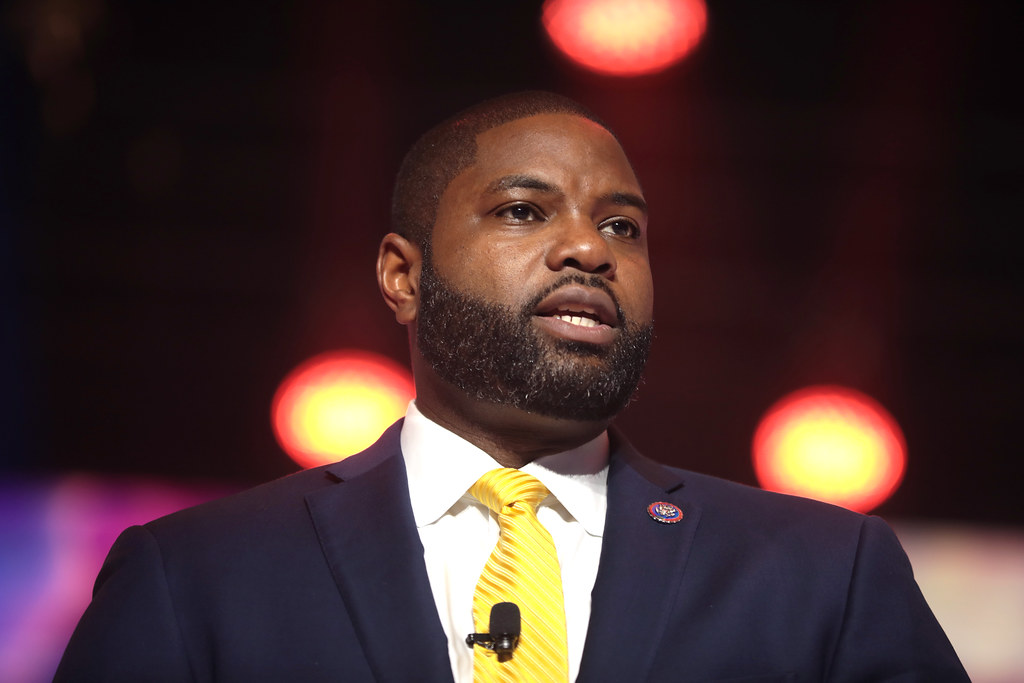

Quick Summary: Donalds Raises Over $22 Million, Demonstrates Strong Financial Backing
- Byron Donalds won the Republican nomination for governor, setting up a general-election clash with Democrat David Jolly.
- Donalds delivered a victory speech without mentioning Trump, signaling a shift from being solely Trump-endorsed.
- AIF poll showed Donalds leading by 46 points, highlighting his dominance in the Republican primary.
- Donalds raised $19.8 million for his committee and $2.64 million for his campaign, showcasing his financial strength.
- 566,263 Floridians had returned vote-by-mail ballots, indicating high voter engagement.
Source: Open external resource
Source: Read original article
Florida’s political landscape just took a dramatic turn with Byron Donalds clinching the Republican nomination for governor. His victory sets the stage for a high-stakes general election against Democrat David Jolly, a contest that could redefine the state’s political future.
Donalds’ win wasn’t just about securing the nomination; it was a strategic pivot. Despite Trump’s endorsement being a cornerstone of his primary campaign, Donalds chose not to mention the former president in his victory speech. This move suggests a calculated shift towards appealing to a broader electorate, distancing himself from being merely ‘Trump’s pick’.
The numbers leading up to this moment were telling. An AIF poll had Donalds ahead by a staggering 46 points, and his financial prowess was evident with nearly $20 million raised for his campaign. Such figures not only underscored his dominance but also highlighted the challenges his rivals faced.
As the general election looms, the dynamics between Donalds and Jolly will be closely watched. Jolly, a former Republican turned Democrat, offers a centrist alternative, advocating for a blend of capitalism and government intervention. This sets up a compelling narrative for Florida voters: continuity versus change.
With the primary behind us, the focus now shifts to the general election. Expect intense debates, aggressive advertising, and a thorough examination of whether Donalds can transcend his primary persona and whether Jolly can convert his crossover appeal into votes. The race for Florida’s governorship is just heating up.
64 million for his campaign account, while Florida Politics reported a separate $20 million television and digital ad buy tied to his effort. The primary is over as of Tuesday, August 18, 2026, and the governor’s race now enters the general-election phase with Donalds and Jolly as the headline matchup to replace term-limited Gov.
A Florida Politics-cited AIF poll earlier this month showed Donalds ahead by 46 points, and a July Florida Politics item said he was running roughly 40 points ahead of his nearest rival. Jolly has been running as a former Republican turned Democrat who argues for “capitalism and a lean government,” while still insisting government “needs to do its part to fill the gaps,” especially on education and housing, as AP reported from his victory remarks.
On August 5, Florida Politics reported that 566,263 Floridians had already returned vote-by-mail ballots, including 246,372 Democrats, 219,862 Republicans, 89,037 voters with no party affiliation and 10,992 minor-party voters. According to the Associated Press, Donalds delivered a lengthy victory speech without mentioning President Donald Trump, even though Trump’s endorsement had defined much of the Republican primary and helped cement Donalds as the front-runner for months.
Through late July and early August, Florida Politics kept documenting Donalds’ dominance in polling and paid media, while AP entered August 18 describing him as the candidate to beat in a primary field that had included former House Speaker Paul Renner and investor James Fishback. The most important new development in the latest reporting is not simply that Donalds advanced, but that he did so while showing an unusual bit of political independence on victory night.
The numbers leading into this moment underscore how lopsided the Republican primary had become before ballots were fully cast. Those figures explain why rivals such as James Fishback, Jay Collins and Paul Renner spent more time trying to wound Donalds than truly catch him.
64 million for his campaign account, while Florida Politics reported a separate $20 million television and digital ad buy tied to his effort. 26 – Florida Politics Byron Donalds won the Republican nomination for governor, setting up a general-election clash with Democrat David Jolly.
The primary is over as of Tuesday, August 18, 2026, and the governor’s race now enters the general-election phase with Donalds and Jolly as the headline matchup to replace term-limited Gov. 64 million for his campaign, showcasing his financial strength.
According to the Associated Press, Donalds delivered a lengthy victory speech without mentioning President Donald Trump, even though Trump’s endorsement had defined much of the Republican primary and helped cement Donalds as the front-runner for months. Jolly, a former Republican turned Democrat, offers a centrist alternative, advocating for a blend of capitalism and government intervention.
AIF poll showed Donalds leading by 46 points, highlighting his dominance in the Republican primary. 566,263 Floridians had returned vote-by-mail ballots, indicating high voter engagement.
The scale and speed of this development has caught many observers off guard. Each new update adds another dimension to a story that is still unfolding, and the full picture will only become clear as more verified details emerge from the people and institutions directly involved.
Analysts who have tracked this issue closely say the current moment represents a genuine turning point. The decisions made in the coming weeks are expected to set the direction for months ahead, with ripple effects likely to extend well beyond the immediate actors in the story.
For those directly affected, the practical impact is already visible. People navigating this fast-changing situation are dealing with real consequences while new information continues to reshape what is known and what remains open to interpretation.
Historical parallels offer some context, though experts caution against drawing too close a comparison. Similar situations have played out before, but the specific combination of pressures, personalities, and timing here makes this moment distinct in ways that matter for how it ultimately resolves.
The political and economic dimensions of this story are deeply intertwined. What appears as a single event on the surface is in practice the convergence of multiple pressures that have been building quietly over a longer period than most public reporting has captured.