


Quick Summary: Emirates Expands Premium Economy as A380 Heads to Delhi
- Emirates will deploy its Airbus A380 on the Dubai–Delhi route from October 25, 2026, marking Delhi as its third A380 destination in India.
- This move is part of Emirates’ strategy to enhance its premium-cabin offerings in India, a key market for the airline.
- The introduction of the A380 is tied to a broader push to reposition Indian traffic towards higher-yield travelers.
- Emirates’ decision signals a competitive strategy to capture more premium India-bound traffic.
- The deployment is part of a larger cabin-upgrade program that includes Premium Economy expansion.
Source: Open external resource
Source: Read original article
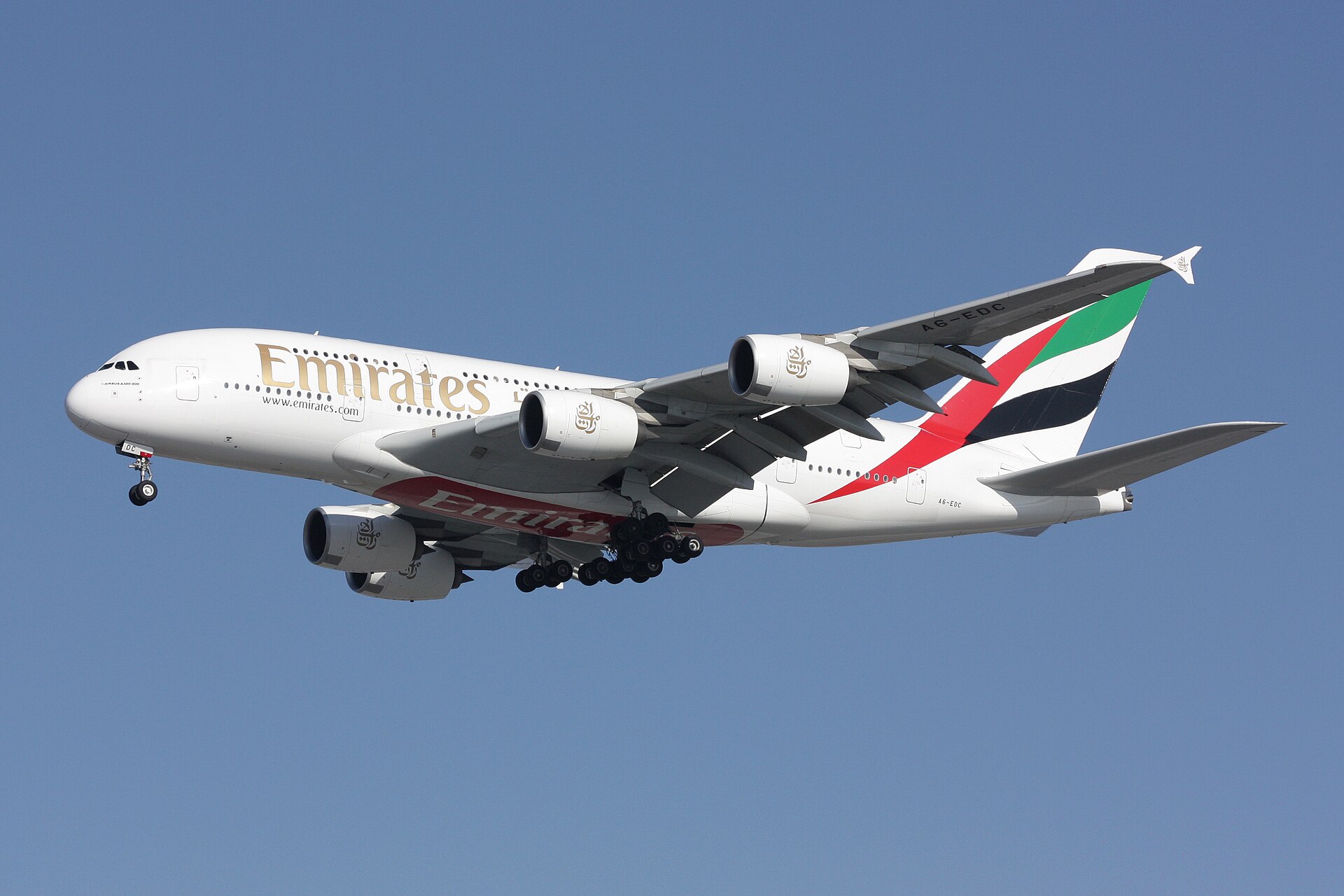
Emirates is making a bold move in the competitive airline industry by deploying its flagship Airbus A380 on the Dubai–Delhi route starting October 25, 2026. This strategic decision elevates Delhi to become Emirates’ third A380 destination in India, emphasizing the airline’s commitment to expanding its premium-cabin offerings in one of its most crucial markets.
The introduction of the A380 is not merely an aircraft upgrade but a significant step in Emirates’ broader strategy to attract higher-yield travelers. By enhancing the travel experience with features like Premium Economy, Emirates is repositioning its Indian market focus towards premium leisure and business travelers.
Analysts see this as a competitive maneuver to capture more of the premium India-bound traffic. As Emirates deploys its largest and most recognizable aircraft on one of India’s key international gateways, it underscores the airline’s intent to defend and grow its market share through product differentiation rather than just frequency increases.
Emirates’ move is part of a larger cabin-upgrade program, with the airline’s Premium Economy product now available on 76 routes. This expansion is backed by a fleet of 47 A380s, 50 Boeing 777s, and 19 A350s, offering approximately 2 million Premium Economy seats annually. This strategic deployment in Delhi is a testament to Emirates’ commitment to its India network, reflecting a multibillion-dollar investment in enhancing passenger experience.
As the October 25 start date approaches, all eyes will be on Emirates to see if they further expand their retrofitted fleet to other Indian cities or increase frequencies on newly premiumized routes. This development is not just a fleet enhancement but a clear signal of Emirates’ long-term vision for its India operations.
Emirates’ most consequential new move is that it is putting its flagship Airbus A380 on the Dubai–Delhi route starting October 25, 2026, a step that turns Delhi into the carrier’s third A380 destination in India and ties the upgrade directly to a wider premium-cabin push across one of its most strategically important markets. The most revealing numbers around the broader strategy come from Emirates’ recent annual reporting, which says the airline’s Premium Economy product had expanded to 76 routes, backed by 47 A380s, 50 Boeing 777s, and 19 A350s in the upgraded configuration, with about 2 million Premium Economy seats available annually.
The evidence in the latest coverage points strongly to the latter as well as the former: Delhi gets the A380, Kolkata gets the A350, and Premium Economy reaches more Indian points, all on a named implementation date of October 25, 2026. What happens next is straightforward but important: the October 25, 2026 start date is now the key operational milestone, and the next thing to watch is whether Emirates adds more Indian cities to the retrofitted fleet or increases frequencies on routes that are newly premiumized.
Gulf News reported that this extends Premium Economy to six Indian cities, signaling that the airline is not merely adding seats but repositioning India traffic toward higher-yield travelers and a more premium onboard mix. The sharpest detail in the latest reporting is not just the aircraft swap itself, but the scale of the product upgrade attached to it: Emirates says Delhi will get the retrofitted A380 with Premium Economy, while Kolkata’s daily EK570/EK571 service will be upgraded from a Boeing 777 to the newer A350 from the same October 25 date.
” That phrasing matters because the latest coverage frames the Delhi A380 deployment less as a one-off network tweak and more as part of a broader commercial strategy to deepen Emirates’ hold on India–Dubai flows by using product differentiation, especially Premium Economy, rather than simply chasing frequency growth. The central tension in the story is competitive rather than political: Emirates is escalating the battle for premium India-bound traffic by putting its largest and most recognizable aircraft on Delhi, one of the subcontinent’s highest-profile international gateways, while also modernizing secondary-city service such as Kolkata with the A350.
Aviation Week’s network update underscored that the Delhi launch is a deliberate route decision inside a broader pattern of schedule and fleet adjustments, suggesting Emirates sees enough demand strength, or enough need to defend market share, to commit scarce A380 capacity to the Indian capital. Because flights are already on sale and the airline has begun advertising the Delhi A380 directly to customers, the next substantive development will likely be either timetable refinements, seat-map and fare changes as bookings build, or further India network announcements as Emirates allocates additional upgraded A380, 777, and A350 aircraft in the run-up to the northern winter season.
What happens next is straightforward but important: the October 25, 2026 start date is now the key operational milestone, and the next thing to watch is whether Emirates adds more Indian cities to the retrofitted fleet or increases frequencies on routes that are newly premiumized. This strategic decision elevates Delhi to become Emirates’ third A380 destination in India, emphasizing the airline’s commitment to expanding its premium-cabin offerings in one of its most crucial markets.
Emirates’ move is part of a larger cabin-upgrade program, with the airline’s Premium Economy product now available on 76 routes. As the October 25 start date approaches, all eyes will be on Emirates to see if they further expand their retrofitted fleet to other Indian cities or increase frequencies on newly premiumized routes.
Emirates’ decision signals a competitive strategy to capture more premium India-bound traffic. The deployment is part of a larger cabin-upgrade program that includes Premium Economy expansion.
The scale and speed of this development has caught many observers off guard. Each new update adds another dimension to a story that is still unfolding, and the full picture will only become clear as more verified details emerge from the people and institutions directly involved.
Analysts who have tracked this issue closely say the current moment represents a genuine turning point. The decisions made in the coming weeks are expected to set the direction for months ahead, with ripple effects likely to extend well beyond the immediate actors in the story.
For those directly affected, the practical impact is already visible. People navigating this fast-changing situation are dealing with real consequences while new information continues to reshape what is known and what remains open to interpretation.
Historical parallels offer some context, though experts caution against drawing too close a comparison. Similar situations have played out before, but the specific combination of pressures, personalities, and timing here makes this moment distinct in ways that matter for how it ultimately resolves.
The political and economic dimensions of this story are deeply intertwined. What appears as a single event on the surface is in practice the convergence of multiple pressures that have been building quietly over a longer period than most public reporting has captured.