

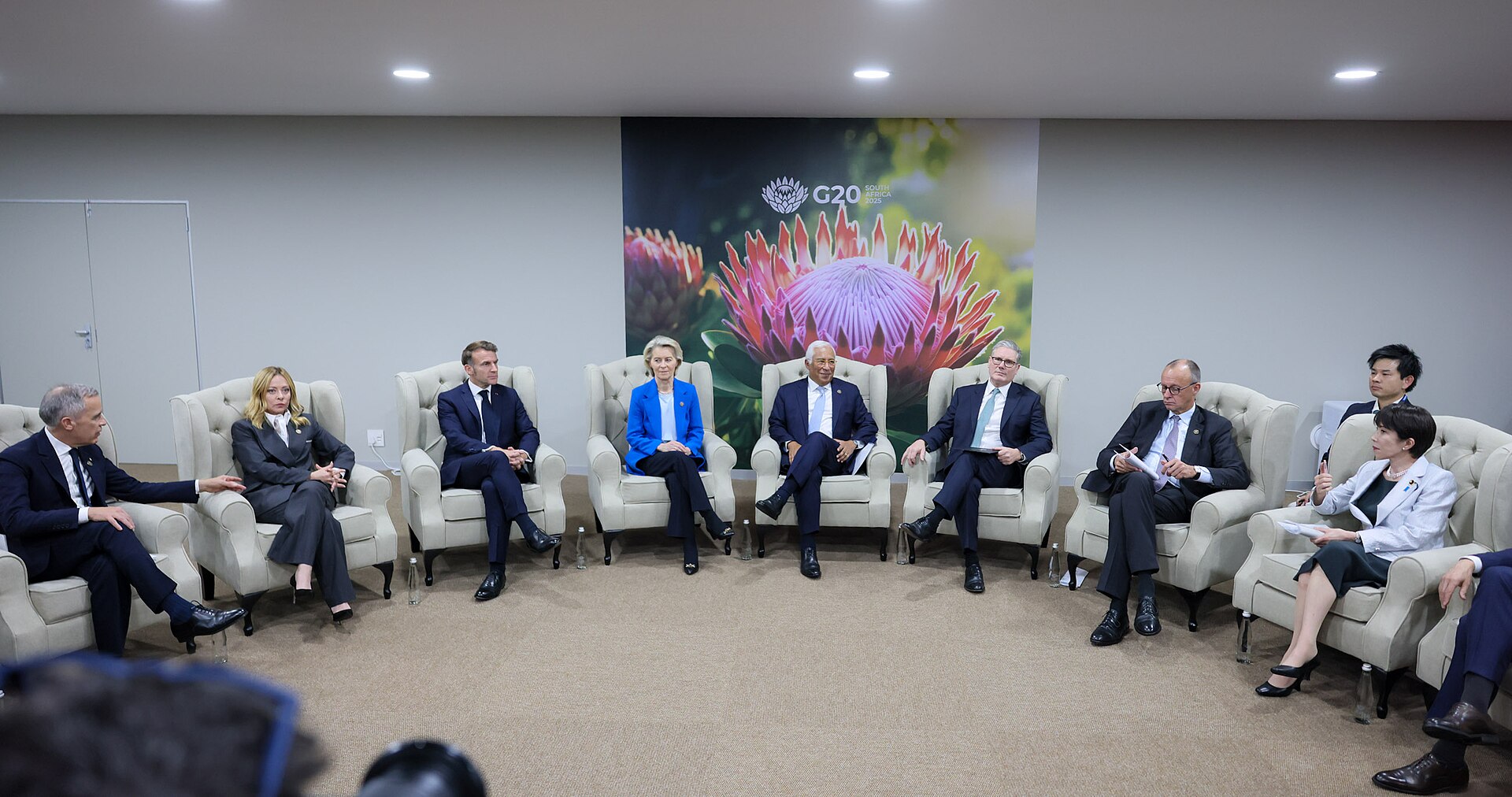

Quick Summary: G20 Meeting in Asheville Targets Chinas Export Strategy
- Scott Bessent urges G20 nations to raise trade barriers against China, citing a $1.2 trillion trade surplus.
- The U.S. Treasury secretary plans to use the G20 finance ministers’ meeting to encourage allies to reassess trade terms with China.
- Bessent argues China is exporting its way out of domestic weakness, needing a shift towards boosting household demand.
- This diplomatic push coincides with U.S. tariff policy adjustments, complicating international trade dynamics.
- The G20 meeting is a platform for the U.S. to link trade issues with sanctions and geopolitical pressures.
Source: Open external resource
Source: Read original article
Scott Bessent is making waves at the G20, urging global leaders to confront China’s overwhelming trade surplus. With a staggering $1.2 trillion surplus, Bessent insists it’s time for the world to push back against China’s export-heavy strategy.
During the G20 finance ministers’ meeting in Asheville, North Carolina, the U.S. Treasury secretary is rallying allies to reconsider their trade relationships with China. The goal is to shift Beijing’s focus from exports to strengthening domestic consumption, a move Bessent believes is crucial for global economic balance.
This call to action comes at a time when U.S. trade policies are under scrutiny, following legal setbacks that demand a re-evaluation of tariffs. The challenge is not just about China; it’s also about uniting allies who have their own grievances with U.S. tariffs.
The stakes are high as Bessent ties these trade discussions to broader geopolitical issues, including sanctions on Iran. This G20 meeting isn’t just about economics; it’s a diplomatic test of whether the U.S. can lead a unified front against China’s trade practices.
As the G20 sessions continue, the next 48 hours are pivotal. Will Bessent’s push translate into a collective stance, or will the complexities of international trade politics stall progress? The outcome will shape not only U.S.-China relations but also the future of global trade dynamics.
Treasury, G20 finance ministers and central bank governors meeting through September 1, and Chinese officials whom Bessent has said he expects to engage directly. Treasury secretary will use the G20 finance ministers’ meeting in Asheville, North Carolina, to push allies to “re-examine” their trade terms with China rather than rely on Washington alone to do the pressure campaign.
AP reported on August 30 that the Treasury is planning to sanction another bank as part of its effort to choke off Iran-related transactions, while Bessent singled out China as Iran’s biggest trading partner and leading buyer of its oil. trade tensions with allies remain raw and while the Trump administration is also pressing partners on Iran, creating an awkward backdrop for any attempt at consensus.
2 trillion trade surplus has become too large for the rest of the world to absorb. The standout new element is not just criticism of China’s model, but Bessent’s attempt to internationalize it into a coordinated G20 response.
complication is that this diplomatic push comes after legal setbacks forced Washington to rebuild parts of its own tariff policy, which had cut direct imports from China but, according to the reporting, also redirected Chinese goods into markets such as Europe and Latin America rather than eliminating the broader imbalance. Reuters’ account of Bessent’s comments landed on August 30, with follow-on coverage on August 31 as G20 officials gathered in Asheville.
The finance ministers’ and central bankers’ sessions run through September 1, making the next 24 to 48 hours the critical window for whether any communique, side meeting, or joint language emerges on trade imbalances, China, or sanctions coordination. Bessent’s central argument is that China is trying to “export its way out” of domestic weakness instead of fixing weak household demand at home, and that other major economies need to give Beijing an incentive to change course.
Treasury, G20 finance ministers and central bank governors meeting through September 1, and Chinese officials whom Bessent has said he expects to engage directly. Treasury secretary plans to use the G20 finance ministers’ meeting to encourage allies to reassess trade terms with China.
Treasury secretary will use the G20 finance ministers’ meeting in Asheville, North Carolina, to push allies to “re-examine” their trade terms with China rather than rely on Washington alone to do the pressure campaign. Scott Bessent is making waves at the G20, urging global leaders to confront China’s overwhelming trade surplus.
2 trillion surplus, Bessent insists it’s time for the world to push back against China’s export-heavy strategy. The standout new element is not just criticism of China’s model, but Bessent’s attempt to internationalize it into a coordinated G20 response.
Reuters’ account of Bessent’s comments landed on August 30, with follow-on coverage on August 31 as G20 officials gathered in Asheville. As the G20 sessions continue, the next 48 hours are pivotal.
The scale and speed of this development has caught many observers off guard. Each new update adds another dimension to a story that is still unfolding, and the full picture will only become clear as more verified details emerge from the people and institutions directly involved.
Analysts who have tracked this issue closely say the current moment represents a genuine turning point. The decisions made in the coming weeks are expected to set the direction for months ahead, with ripple effects likely to extend well beyond the immediate actors in the story.
For those directly affected, the practical impact is already visible. People navigating this fast-changing situation are dealing with real consequences while new information continues to reshape what is known and what remains open to interpretation.
Historical parallels offer some context, though experts caution against drawing too close a comparison. Similar situations have played out before, but the specific combination of pressures, personalities, and timing here makes this moment distinct in ways that matter for how it ultimately resolves.
The political and economic dimensions of this story are deeply intertwined. What appears as a single event on the surface is in practice the convergence of multiple pressures that have been building quietly over a longer period than most public reporting has captured.