

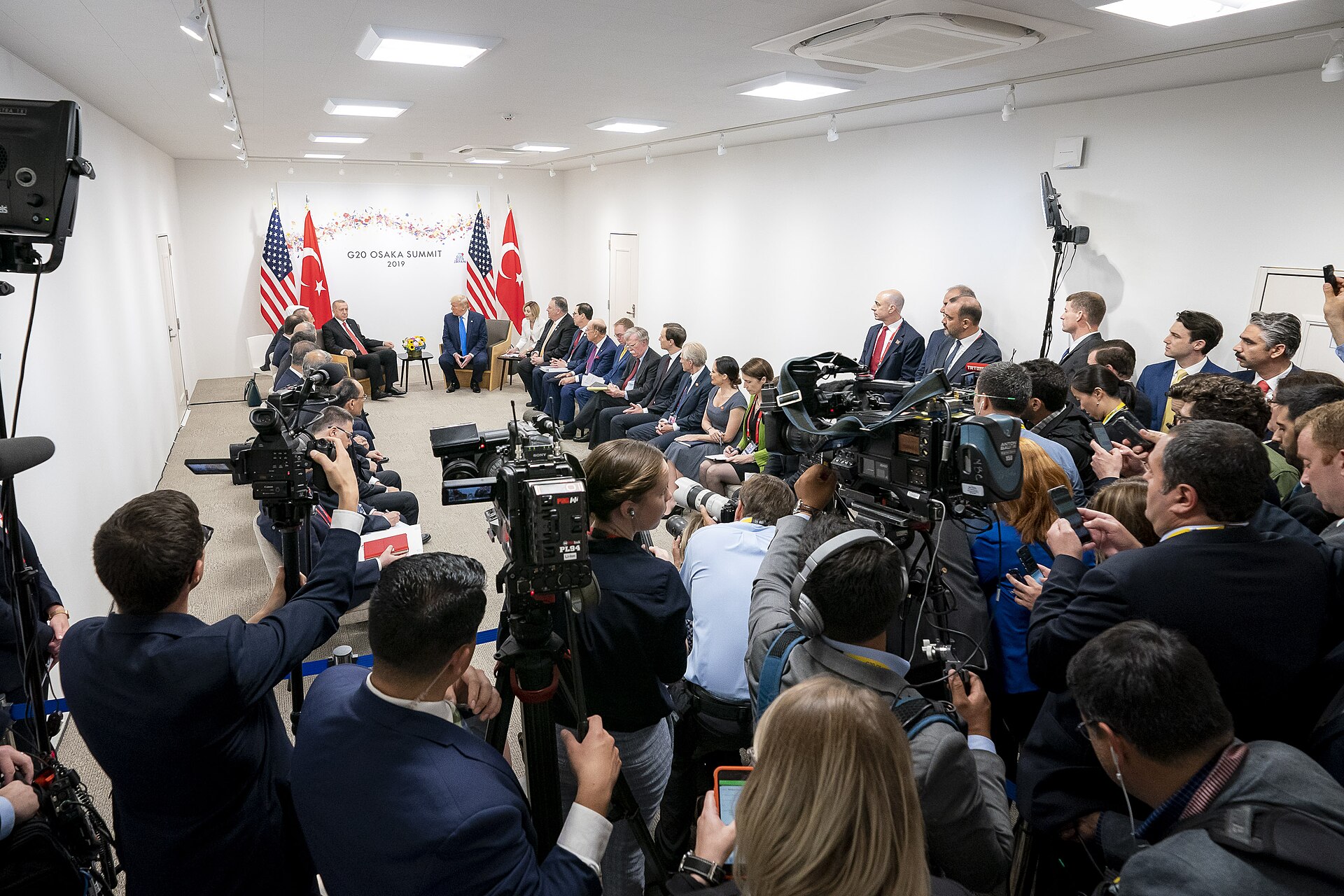

Quick Summary: Sanctions Relief for Turkey Signals Shift in U.s. Policy
- Turkish Vice President Cevdet Yılmaz confirmed the South Caucasus will be a main agenda item in Trump and Erdoğan’s meeting, highlighting the Armenia-Azerbaijan transit issue.
- Trump announced sanctions relief for Turkey and openness to restoring Turkey’s access to the F-35 program, marking a shift from speculative discussions to concrete policy signals.
- Congress could potentially block any F-35 sales due to existing restrictions tied to Turkey’s possession of the S-400 system.
- The July 7-8 NATO summit in Ankara is a critical timeframe to see if any tangible initiatives arise from the South Caucasus discussions.
- The South Caucasus issue is intertwined with broader U.S.-Turkey relations, including defense and regional diplomacy.
Source: Open external resource
Source: Read original article
The South Caucasus is emerging as a pivotal topic in the high-stakes meeting between President Donald Trump and Turkish President Recep Tayyip Erdoğan. As confirmed by Turkish Vice President Cevdet Yılmaz, the Armenia-Azerbaijan transit issue is not a side note but a central point of discussion. Sanctions Relief is at the center of this development.
Trump’s announcement of sanctions relief for Turkey and his willingness to consider restoring Turkey’s access to the F-35 program signals a significant shift from mere speculation to actionable policy. This move positions Erdoğan with leverage in defense talks, while the U.S. seeks alignment on regional issues like the Caucasus.
However, the path forward is fraught with uncertainty. Congress remains a potential obstacle to any F-35 deal, given the existing restrictions related to Turkey’s S-400 system. The upcoming NATO summit in Ankara will be crucial in determining whether these discussions lead to concrete initiatives or remain rhetorical.
The South Caucasus issue is not just about regional transit; it is a geopolitical chess piece in the broader U.S.-Turkey relationship. The outcome of these discussions could reshape trade and influence across one of Eurasia’s most contested borders, making it essential to watch how these diplomatic talks unfold.
Trump used the same appearance to pressure NATO members to spend 5% of GDP on defense, while AP reported the summit featured “billions” in arms deals and that legal hurdles still remain before Turkey could fully reenter the F-35 program after being expelled in 2019. az) The clearest and most specific new reporting came from Turkish Vice President Cevdet Yılmaz, who said on July 7 that “the situation in the South Caucasus will also be discussed” by Trump and Erdoğan and added, “The existing problems between Armenia and Azerbaijan have largely been resolved.
outlets reported Trump’s sanctions-relief announcement and his willingness to consider restoring Turkey’s access to the F-35 program, showing how quickly the meeting moved from speculative agenda-setting to concrete policy signals. Congress remains a potential brake on any F-35 move, because lawmakers previously codified restrictions tied to Turkey’s possession of the S-400 system, and The Washington Post noted it is still unclear whether Congress would try to block a sale.
The immediate deadline is the remainder of the July 7-8 NATO summit in Ankara, where any readout, joint statement, or side comment from Trump, Erdoğan, or their aides could reveal whether the South Caucasus discussion produced an actual initiative or only rhetorical support. The main people and institutions to watch next are Trump, Erdoğan, Yılmaz, the White House, Congress, and the governments of Armenia and Azerbaijan.
-Turkey bargain that also included sanctions relief and possible F-35 sales. would remove sanctions on Turkey imposed after its Russian S-400 purchase, declaring, “We’re going to be taking the sanctions off.
” But the subtext is contentious: the corridor would reshape trade and transit across one of the most militarized and disputed borders in Eurasia, and every diplomatic formulation about “opening” routes carries implications for who secures them, who regulates them, and who benefits politically. In other words, the Caucasus issue is breaking into a meeting already crowded with high-stakes bargaining over sanctions, warplanes, and NATO burden-sharing, which raises the odds that any movement on Armenia-Azerbaijan transit could emerge as part of a transactional package rather than a standalone peace initiative.
The July 7-8 NATO summit in Ankara is a critical timeframe to see if any tangible initiatives arise from the South Caucasus discussions. As confirmed by Turkish Vice President Cevdet Yılmaz, the Armenia-Azerbaijan transit issue is not a side note but a central point of discussion.
Trump’s announcement of sanctions relief for Turkey and his willingness to consider restoring Turkey’s access to the F-35 program signals a significant shift from mere speculation to actionable policy. Congress remains a potential obstacle to any F-35 deal, given the existing restrictions related to Turkey’s S-400 system.
Congress remains a potential brake on any F-35 move, because lawmakers previously codified restrictions tied to Turkey’s possession of the S-400 system, and The Washington Post noted it is still unclear whether Congress would try to block a sale. The immediate deadline is the remainder of the July 7-8 NATO summit in Ankara, where any readout, joint statement, or side comment from Trump, Erdoğan, or their aides could reveal whether the South Caucasus discussion produced an actual initiative or only rhetorical support.
The scale and speed of this development has caught many observers off guard. Each new update adds another dimension to a story that is still unfolding, and the full picture will only become clear as more verified details emerge from the people and institutions directly involved.
Analysts who have tracked this issue closely say the current moment represents a genuine turning point. The decisions made in the coming weeks are expected to set the direction for months ahead, with ripple effects likely to extend well beyond the immediate actors in the story.
For those directly affected, the practical impact is already visible. People navigating this fast-changing situation are dealing with real consequences while new information continues to reshape what is known and what remains open to interpretation.
Historical parallels offer some context, though experts caution against drawing too close a comparison. Similar situations have played out before, but the specific combination of pressures, personalities, and timing here makes this moment distinct in ways that matter for how it ultimately resolves.
The political and economic dimensions of this story are deeply intertwined. What appears as a single event on the surface is in practice the convergence of multiple pressures that have been building quietly over a longer period than most public reporting has captured.