

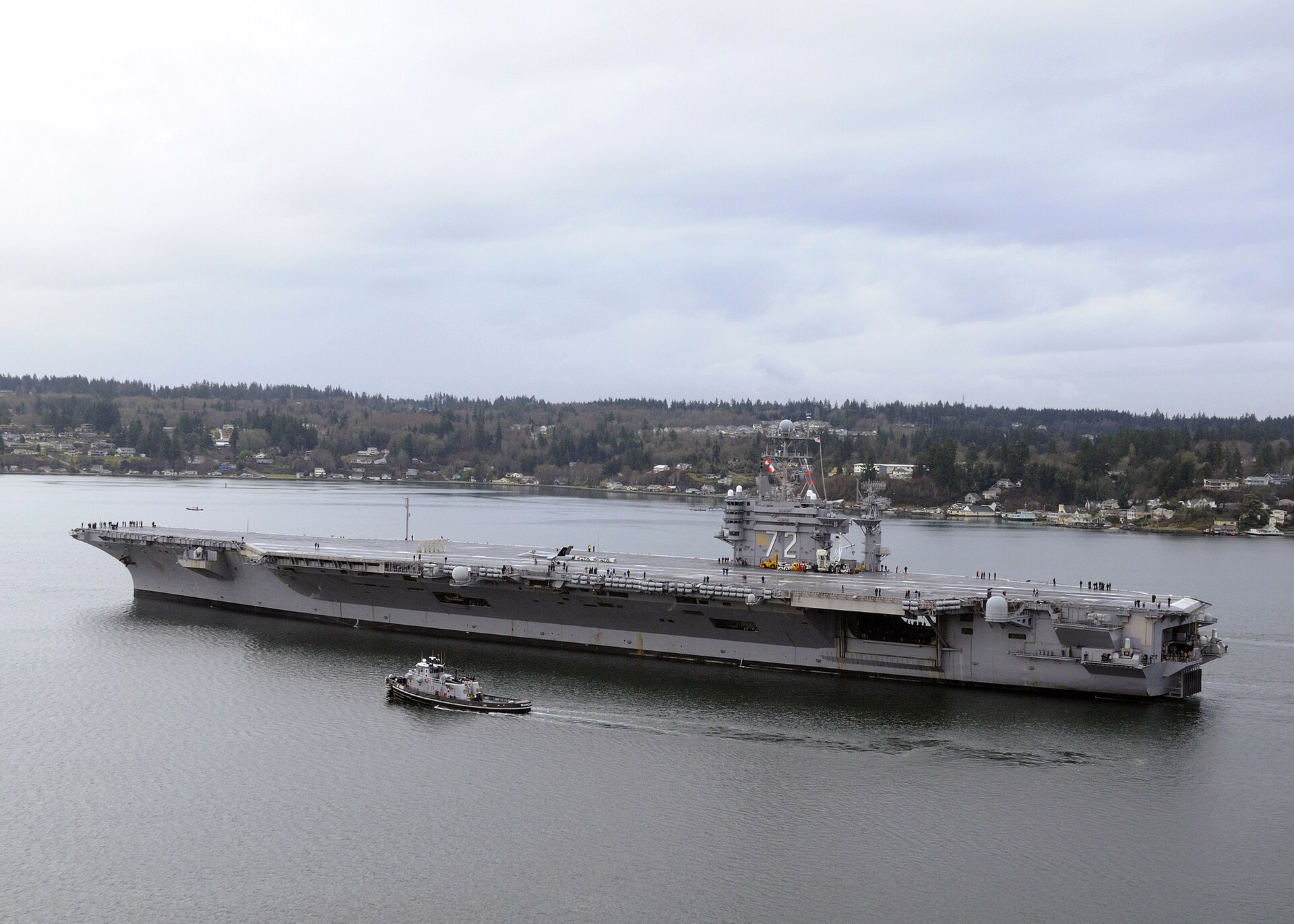

Quick Summary: Senate Democrats Demand Answers Over USS Lincolns Extended Deployment
- Defense Secretary Pete Hegseth praised the USS Lincoln crew for their resilience during an extended deployment, despite criticism of shipboard conditions.
- The USS Lincoln’s deployment included 265 days between port calls, setting a new operational record.
- Hegseth awarded the ship a Presidential Unit Citation, highlighting its achievements against Iranian forces.
- Critics, including Senate Democrats, questioned the Navy’s leadership over reported crew stress and poor conditions.
- Hegseth’s visit to the USS Lincoln was marked by a strong rebuttal of media reports on dysfunction and low morale.
Source: Open external resource
Source: Read original article
In a dramatic display of military pride and political maneuvering, Defense Secretary Pete Hegseth hailed the USS Lincoln crew for their resilience during an arduous deployment. As the ship returned to its home port in San Diego, Hegseth’s praise came amid a storm of criticism over the conditions faced by the sailors.
During the deployment, the USS Lincoln set a record with 265 days between port calls, a testament to its operational intensity. Hegseth awarded the crew a Presidential Unit Citation, emphasizing their achievements, including sinking 64 Iranian warships and launching 450 Tomahawk missiles. Yet, this praise was overshadowed by allegations of poor conditions and mental health strains aboard the ship.
Senate Democrats, led by Richard Blumenthal, have raised concerns about the Navy’s leadership and the human cost of such extended deployments. Reports of food shortages, broken plumbing, and mental health crises have fueled demands for accountability and transparency.
Hegseth, however, dismissed these reports as misrepresentations, asserting that the crew’s performance under pressure was exemplary. His visit to the USS Lincoln was not just a routine morale boost but a counterattack against media narratives portraying the ship as a symbol of dysfunction.
The USS Lincoln’s return marks the end of its operational chapter, but the political and oversight questions remain unresolved. As the Navy faces scrutiny, the debate over the balance between military achievements and the well-being of its personnel continues to unfold.
” He also admitted his direct role in prolonging the deployment, telling sailors, “I’m the only thing standing between you and home” and that he was the one who “signed that orders book twice” to extend it. 37 million pounds of ordnance against Iran.
On Thursday, October 8, the ship was due back at its home port in San Diego, ending a deployment that had become both a military milestone and a political headache. Richard Blumenthal and other Senate defense Democrats, have pressed for answers about whether Navy leadership allowed conditions to deteriorate during a deployment that kept the carrier at sea for unusually long stretches.
On Friday, the Navy announced the Lincoln would return to California on Thursday after its extended deployment. In other words, the newest reporting suggests Hegseth may have won the day’s message battle on the flight deck, but not necessarily the broader debate over whether a record-setting deployment was also a warning sign.
ABC added that the ship set a new mark with 265 days between port calls during a 10-month deployment, underscoring just how exceptional the operational tempo was. That criticism escalated into formal political pressure last month, when Senate Armed Services Committee Democrats demanded accountability from Hegseth after reports of food and water shortages, broken plumbing, and mental-health crises so serious that multiple sailors reportedly attempted to go overboard.
The people driving the latest phase of the story are Hegseth, the Lincoln’s roughly 4,000-plus sailors, congressional Democrats, and the media organizations that exposed the shipboard strain. That made the homecoming more than a routine morale stop: it became an effort to reframe the ship’s public image from a symbol of overstretch into what Hegseth cast as proof that the Trump administration’s military posture “changed the arc of history,” as one follow-on report characterized his remarks.
As the Navy faces scrutiny, the debate over the balance between military achievements and the well-being of its personnel continues to unfold. Richard Blumenthal and other Senate defense Democrats, have pressed for answers about whether Navy leadership allowed conditions to deteriorate during a deployment that kept the carrier at sea for unusually long stretches.
The USS Lincoln’s deployment included 265 days between port calls, setting a new operational record. During the deployment, the USS Lincoln set a record with 265 days between port calls, a testament to its operational intensity.
The scale and speed of this development has caught many observers off guard. Each new update adds another dimension to a story that is still unfolding, and the full picture will only become clear as more verified details emerge from the people and institutions directly involved.
Analysts who have tracked this issue closely say the current moment represents a genuine turning point. The decisions made in the coming weeks are expected to set the direction for months ahead, with ripple effects likely to extend well beyond the immediate actors in the story.
For those directly affected, the practical impact is already visible. People navigating this fast-changing situation are dealing with real consequences while new information continues to reshape what is known and what remains open to interpretation.
Historical parallels offer some context, though experts caution against drawing too close a comparison. Similar situations have played out before, but the specific combination of pressures, personalities, and timing here makes this moment distinct in ways that matter for how it ultimately resolves.
The political and economic dimensions of this story are deeply intertwined. What appears as a single event on the surface is in practice the convergence of multiple pressures that have been building quietly over a longer period than most public reporting has captured.